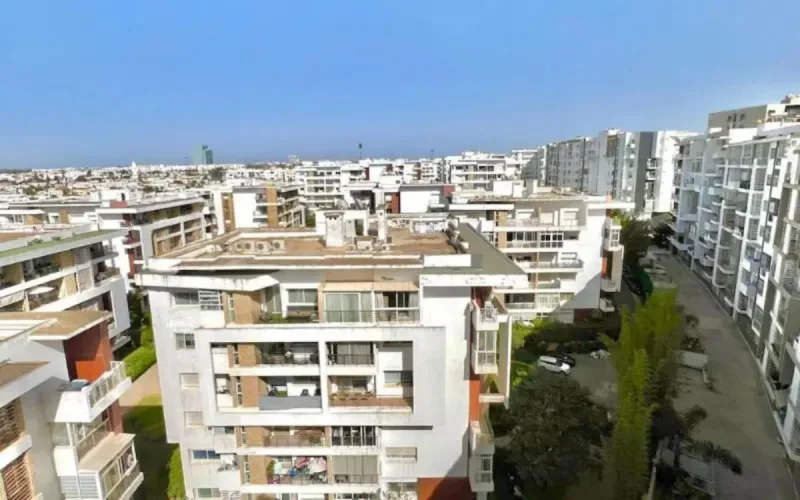
It depends on your tax residency, the country where the property is located, the tax treaty between Morocco and your country of residence, and the way that country treats foreign real estate and foreign rental income.
For Moroccans abroad, this is where things can become complicated. A property in Morocco can create reporting or tax obligations in two different countries, even when a tax treaty ultimately prevents double taxation.
First Rule: The Property Is in Morocco, but Your Tax Residence Also Matters
One of the most common mistakes is to think:
“The apartment is in Morocco, so only the Moroccan tax authorities are concerned.”
It is true that the property is located in Morocco, and income generated from it falls within the Moroccan tax framework.
However, if you are a tax resident of another country, that country may also require you to report the property, the rental income it generates, or its value as part of your assets, depending on its domestic rules.
That is where tax treaties become essential.
Declaring Does Not Necessarily Mean Paying Tax Twice
This is probably the most important point in the entire article.
Being required to report a property or foreign rental income in your country of residence does not automatically mean the same income will be fully taxed twice.
Tax treaties between Morocco and other countries are designed to determine which country has the right to tax a particular income and how double taxation should be eliminated.
For real estate income, the general principle in many treaties is that the country where the property is located has the right to tax income arising from that property.
However, your country of residence may still require you to include that income in your annual tax return, for example to calculate your overall tax rate or to apply a specific double-taxation relief mechanism.
So it is essential to distinguish between:
reporting income or assets
and
actually paying tax on them.
They are not the same thing.
If You Live in France: Moroccan Rental Income Should Not Be Ignored
For a Moroccan who is a tax resident of France, foreign-source income must be taken into account when filing a French tax return.
In the case of a property located in Morocco, the France–Morocco tax treaty gives Morocco the right to tax income arising from that real estate.
But this does not necessarily mean a French tax resident can simply leave the income out of every French declaration.
French tax authorities explain that certain foreign real estate income may still need to be reported in France even when it is exempt from French taxation under a treaty, notably because it may affect the effective tax rate applied to other income.
A Practical Example
Imagine a Moroccan tax resident living in Lyon who owns an apartment in Marrakech and rents it out all year.
The rent is paid directly into a Moroccan bank account.
Does the fact that the money remains in Morocco mean France has nothing to do with it?
No.
The bank account receiving the rent is not the only factor that determines tax obligations.
What matters is mainly the taxpayer’s residence status, the nature of the income and the treaty between Morocco and France.
The French Trap: “I Already Pay Tax in Morocco, So I Declare Nothing in France”
That assumption can be wrong.
Paying tax in Morocco does not automatically mean the income can disappear from the French return.
The treaty determines where the income is taxable and how double taxation is avoided, but it does not necessarily cancel every reporting obligation in France.
So three separate questions must always be asked:
Where is the property income taxable?
What must be reported in the country of residence?
Which mechanism prevents double taxation?
If You Live in Belgium: Your Moroccan Property Is Also on the Belgian Tax Radar
For Moroccans living in Belgium, the rules are particularly clear on one point.
Belgian tax residents are generally required to report foreign real estate and the related property income according to Belgian rules.
That means an apartment in Tangier, a house in Nador or a property in Casablanca may have reporting consequences in Belgium.
Your Moroccan Apartment May Be Given a Belgian Cadastral Income
This may surprise many Moroccans living in Belgium.
Foreign real estate can be assigned a Belgian-style cadastral income, known as revenu cadastral.
The foreign property must be registered with the Belgian tax administration, including through official online services such as MyMinfin.
This cadastral income is not itself a separate tax, but it is used to determine certain taxable real estate income in the Belgian return.
What If You Actually Rent the Property Out?
This is where the details matter.
The way foreign real estate is reported may depend on how the property is used.
A home rented to a private tenant for personal residential use may not be treated in the same way as a property rented to a company or used for professional purposes.
So it is not enough to say:
“I rent out my apartment in Morocco.”
You also need to know who the tenant is, how the property is used and what kind of rental arrangement applies.
Example: A Moroccan in Brussels Who Owns an Apartment in Casablanca
A Belgian tax resident owns an apartment in Casablanca and rents it out.
The owner must first look at the Moroccan tax treatment.
But they must also check what has to be reported in Belgium regarding the foreign property and any related property income.
Again, this does not necessarily mean paying full tax twice. Tax treaties and Belgian relief mechanisms may prevent or reduce double taxation.
If You Live in the Netherlands: The Property Value May Matter More Than the Rent
The Dutch system is quite different.
The Dutch tax administration generally treats a second home, including one located abroad, as an asset that may fall under Box 3.
This means the key question is not always:
How much rent did you receive?
It may instead be:
What is the value of the property?
Your Moroccan Apartment May Fall Under Box 3
Take the example of a Moroccan living in Rotterdam who owns an apartment in Al Hoceima.
They use it for a few weeks each summer and rent it out during the rest of the year.
Under the Dutch system, the property may be treated as part of the taxpayer’s Box 3 assets, with tax consequences based on its value and the rules applicable to wealth and investments.
This is one of the biggest differences between the Netherlands and countries such as France or Belgium.
The Rent Itself Is Not Always Treated Like Ordinary Income
In many ordinary second-home situations, every euro of rent is not simply added to employment income or treated like a salary.
Instead, the property is mainly dealt with as an asset under Box 3.
However, Dutch Box 3 rules have undergone significant changes in recent years, so the exact treatment may depend on the tax year and the taxpayer’s personal circumstances.
For Moroccans in the Netherlands, one lesson is crucial:
Do not assume the rules that apply to your relative in France or Belgium also apply to you.
The systems are very different.
If You Live in Spain: Worldwide Income Rules Come Into Play
In Spain, tax residents are generally concerned with income from multiple sources, including income arising abroad, subject to the relevant tax treaties.
Morocco and Spain have a treaty designed to prevent double taxation.
For real estate income, the country where the property is located generally has the right to tax income arising from that property.
Example: A Moroccan in Madrid Renting Out a Property in Tangier
Suppose you are a Spanish tax resident living in Madrid and own a rented apartment in Tangier.
Morocco may tax the rental income because the property is located on Moroccan territory.
At the same time, you must determine how the income needs to be reflected in your Spanish tax return and which mechanism prevents you from paying full tax twice.
Depending on the treaty and Spanish rules, relief may take the form of a foreign tax credit or another exemption mechanism.
What About Tax in Morocco?
Living abroad does not automatically exempt you from Moroccan tax rules applying to a property located in Morocco.
Rental income from Moroccan real estate is subject to the Moroccan tax framework in force.
The Moroccan tax administration also provides online services for certain income-tax declarations and payments.
So a Moroccan property owner living abroad should always look at the issue from two sides:
What do I have to do in Morocco?
and
What do I have to report in my country of residence?
That is the only way to see the full picture.
The Most Common Misconception: “The Rent Goes Into My Moroccan Bank Account, So My Country of Residence Is Not Concerned”
That way of thinking can create problems.
In France, tax residence means foreign income must be examined under French reporting rules.
In Belgium, foreign property and real estate income can create reporting obligations.
In the Netherlands, a Moroccan property may fall into Box 3.
In Spain, tax residents are generally subject to broad worldwide-income rules, subject to treaty relief.
So the bank account receiving the rent does not, by itself, remove tax or reporting obligations.
What If You Only Rent the Property During the Summer on Airbnb or Booking?
This also requires caution.
Short-term or holiday rentals may be treated differently depending on the country, especially if the owner provides additional services or if the activity starts to resemble a professional or commercial business.
The treatment may vary depending on:
the length of the rental,
how often the property is rented,
the services provided,
the use of the property,
and the platform through which it is rented.
A flat rented to the same family for twelve months may therefore not be treated in the same way as a property intensively rented through tourist platforms.
Inherited a House in Morocco? The Same Principle May Apply
Many Moroccans abroad did not buy the property they own.
They inherited it.
A family house in Fez.
An apartment in Nador.
A share in a property jointly owned with brothers and sisters.
A plot of land or apartment inherited years ago.
These can still count as foreign real estate assets in the country where you live.
In Belgium, for example, reporting obligations do not disappear simply because the property was inherited.
In the Netherlands, a share in foreign real estate may also be relevant for Box 3.
So even if you never bought the property yourself, it is wise to check your obligations from the moment you become an owner or co-owner.
What Should a Moroccan Abroad Who Rents Out Property in Morocco Actually Do?
Before filing a tax return, it is useful to gather the essential information:
the property address,
your ownership percentage,
annual rent received,
tax paid in Morocco,
the type of tenant,
the use of the property,
and the property value if your country of residence requires it.
Then check the tax treaty between Morocco and your country of residence rather than relying on advice from a friend or relative living somewhere else.
The French rules are not the Belgian rules.
The Belgian rules are not the Dutch rules.
And Spain has its own system too.
A Simple Example: 6,000 Dirhams in Monthly Rent
Suppose you own an apartment in Tangier and rent it for 6,000 dirhams per month.
That is 72,000 dirhams of gross rent over a full year.
If you live in France, you must examine the France–Morocco treaty and French foreign-income reporting rules.
If you live in Belgium, the property and its assigned cadastral income may need to be reflected in your Belgian tax return.
If you live in the Netherlands, the overall value of the property may be more important than the rental income itself because of Box 3.
If you live in Spain, the rental income must be analysed under Spanish tax residency rules and the Spain–Morocco treaty.
Same property.
Same rent.
Four different tax systems.
That is why one-size-fits-all tax advice is rarely appropriate for Moroccans abroad.
Your Apartment Is in Morocco, but Your Obligations Can Cross Borders
Owning and renting out property in Morocco while living abroad is extremely common among Moroccans around the world.
But there is one basic rule to remember:
the fact that the property is in Morocco does not mean your country of tax residence ignores it.
Some countries may want you to report the rental income.
Others may focus on the property’s value.
Belgium may assign the property a cadastral income.
The Netherlands may treat it as a Box 3 asset.
And most importantly:
Reporting in two countries does not necessarily mean paying tax twice.
Tax treaties between Morocco and countries of residence exist precisely to organise these situations and reduce or eliminate double taxation.
So the question every Moroccan abroad who rents out property in Morocco should ask is not only:
“How much tax do I have to pay in Morocco?”
It should also be:
“What does the country where I live require me to report?”
In many cases, that second question is the one that prevents unpleasant surprises later.
MM News note: This article provides general information based on official tax rules and treaty principles. The exact treatment depends on tax residence, property use, type of rental, ownership share, tenant profile and individual circumstances. Complex cases or past undeclared situations may require advice from a tax professional familiar with both countries.
Main Official Sources
MM News based this guide on official information from the Moroccan tax administration and Ministry of Economy and Finance, the French tax administration, Belgium’s SPF Finances, the Dutch Belastingdienst, the Spanish Agencia Tributaria, and the relevant tax treaties between Morocco and these countries.

💬 Commentaires (0)
Aucun commentaire. Soyez le premier !
✏️ Laisser un commentaire