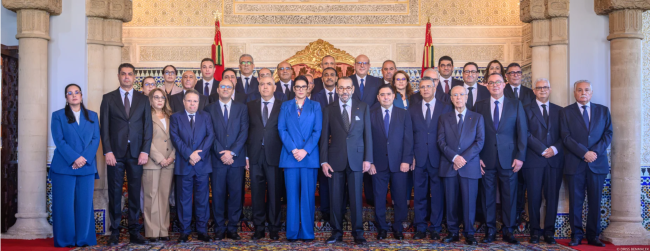
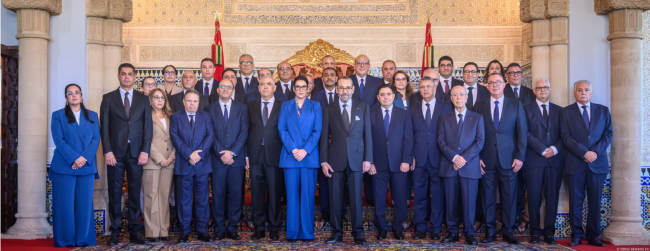
The 32-member government rests on a four-party coalition bringing together the Authenticity and Modernity Party, Istiqlal, the Socialist Union of Popular Forces and the Party of Progress and Socialism. With 207 seats, the alliance stands above the 198-seat threshold required for a parliamentary majority.
Reuters focuses on finance and policy continuity
Reuters places Fouzi Lekjaa’s appointment as Minister of Economy, Finance and Public Performance at the heart of its coverage. A former minister in charge of the budget and the head of Morocco’s football federation, Lekjaa is portrayed as a central figure in both fiscal management and the preparations for the 2030 World Cup.
The agency also highlights the retention of the ministers responsible for foreign affairs, the interior, justice, defence, infrastructure, industry and transport. Its reading is therefore one of controlled renewal rather than a major shift in Morocco’s strategic direction.
Spanish coverage reflects bilateral priorities
El País and Europa Press underline the same balance. Their coverage pays particular attention to the continuity of the Interior and Foreign Affairs portfolios, alongside the change at the Finance Ministry.
This reflects Spain’s direct interest in migration, economic cooperation, the Western Sahara issue and the joint organisation of the 2030 World Cup.
Arab media highlight the historic dimension
Al Jazeera and several regional publications lead with the unprecedented appointment of a woman as Morocco’s head of government. Coverage also notes that seven women serve across the full government team, including delegated ministers.
Deutsche Welle’s Arabic service describes the cabinet through the twin concepts of continuity and renewal: experienced officials remain in strategic positions, while new appointments have been made in education, health, energy, agriculture and technology.
Artificial intelligence becomes a cabinet-level priority
The establishment of a Ministry of Artificial Intelligence, Digital Transformation and Administrative Reform, led by Ahmed Rahhou, stands out as one of the government’s most distinctive decisions.
For international observers, it signals an ambition to connect technological development with public-sector modernisation. Its significance will ultimately depend on its regulatory authority, budget and capacity to work with Moroccan talent at home and abroad.
Social delivery will determine the verdict
Foreign coverage also points to the government’s immediate domestic challenges: youth unemployment, education, healthcare, social protection and regional inequality.
The historic nature of El Mansouri’s leadership may shape Morocco’s international image, but the government will be judged on whether it can translate that symbolism into measurable outcomes.
For Moroccans living abroad, Nasser Bourita remains responsible for Foreign Affairs, African Cooperation and Moroccans Residing Abroad. Yet diaspora policy is almost absent from the first international reports. The government’s programme before Parliament will therefore be crucial in determining how MRE representation, investment, mobility and administrative services are addressed.
The early international verdict is consequently nuanced: a historic breakthrough at the head of government, substantial continuity in strategic portfolios and a demanding test of economic and social delivery.
💬 Commentaires (0)
Aucun commentaire. Soyez le premier !
✏️ Laisser un commentaire