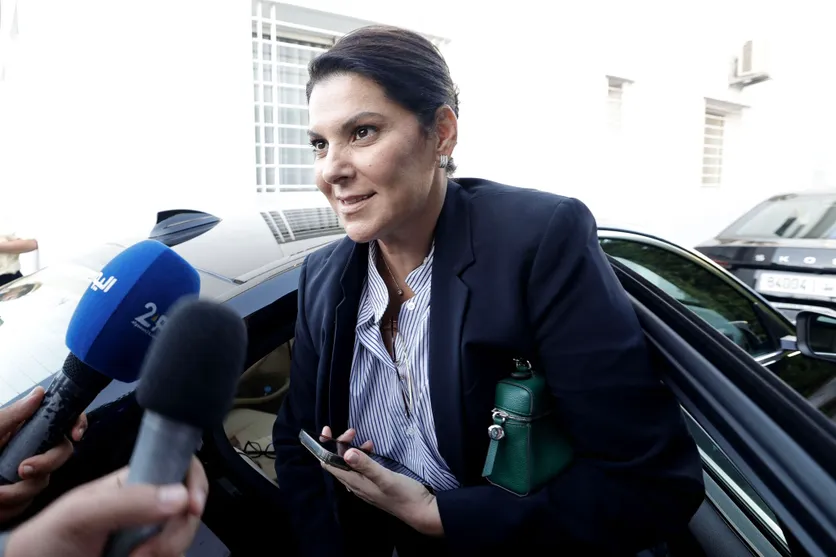
Morocco’s government-building process is moving from listening to decision-making.
Since her appointment by King Mohammed VI on 29 September, El Mansouri has met the National Rally of Independents, Istiqlal, the Popular Movement, the Socialist Union of Popular Forces and the Party of Progress and Socialism. A second day brought talks with the Constitutional Union and the Democratic and Social Movement.
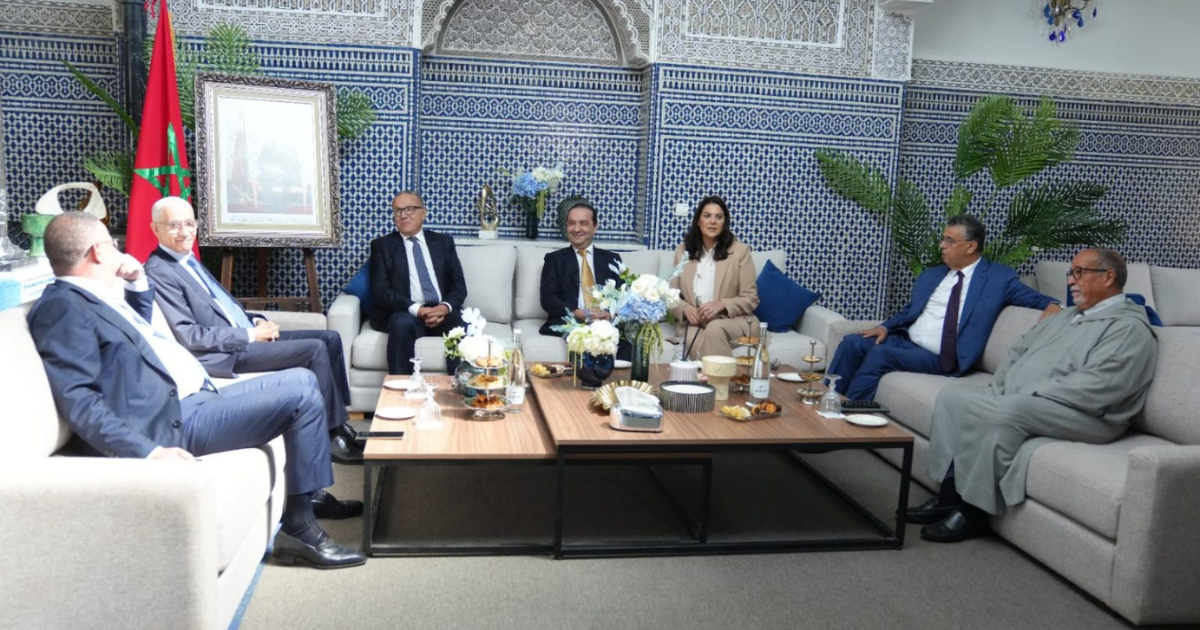
The meetings took place at PAM headquarters in Rabat, with El Mansouri supported by a committee that included Fouzi Lekjaa, Ahmed Akhchichine and Abdellatif Ouahbi. The format suggests that PAM is trying to negotiate parliamentary numbers, policy priorities and cabinet balance at the same time.
The clearest signal comes from the RNI
The RNI, which finished second with 66 seats, has formally expressed its readiness to take part in the next government, subject to final approval by its national bodies on Saturday.
That position matters because PAM and the RNI clashed sharply during the campaign. A renewed partnership would therefore be less a simple continuation of the outgoing coalition than a reversal of its leadership: PAM would head the government, while the former senior partner would return in a supporting role.
Together with Istiqlal’s 65 MPs, a PAM–RNI–Istiqlal coalition would hold 228 of the House’s 395 seats. It remains the simplest parliamentary option.
Istiqlal keeps its options open
Nizar Baraka’s delegation welcomed El Mansouri’s historic appointment and stressed that the national interest should guide the talks. It did not, however, commit the party to government. Istiqlal will put the question to its National Council.
PAM, the RNI and Istiqlal have all scheduled key internal meetings for 3 October. That synchronised timetable strengthens the expectation of a possible three-party deal, but it is not proof that one has already been reached.
The smaller parties want policy guarantees
The Popular Movement has called for a fresh start and a “positive break” with the previous phase. The USFP says it will not offer a blank cheque and wants any alliance to rest on a clear political project. The PPS has identified common ground with PAM on social policy, rights and freedoms, family-law reform and standards in public life, while reserving its final position.
The Constitutional Union highlighted youth, purchasing power, education and health. The Democratic and Social Movement also focused on household pressures and the challenges facing the country over the next five years.
These messages show that parties want the public record to be about policy, not only ministerial posts. The real test will come when general priorities are translated into budget choices, cabinet portfolios and an agreed legislative programme.
PJD remains outside the governing equation
The PJD, which returned to Parliament with 54 seats, has decided to sit in opposition. Its leader, Abdelilah Benkirane, declined the proposed meeting at PAM headquarters, while leaving open the possibility of contact in another setting. He also made clear that a meeting would not reverse the party’s opposition decision.
The Left Alliance likewise rejected the proposed venue. Neither move prevents El Mansouri from assembling a majority, but both underline that procedure and political symbolism form part of the negotiation.
The leading coalition options
The PAM–RNI–Istiqlal formula, with 228 seats, remains the frontrunner. A PAM–Istiqlal–Popular Movement–USFP combination would hold 217 seats. A PAM–Istiqlal–USFP–PPS arrangement would reach 207, while PAM–RNI–Popular Movement–Constitutional Union would command 209.
Each is mathematically viable. The difference lies in political cohesion. A stable majority will require more than enough votes; it will need an agreed method of government after a campaign marked by mutual criticism.
The diaspora question has yet to surface publicly
One issue is notably faint in the public summaries of the consultations: Moroccans living abroad. That does not prove diaspora policy was absent from the private discussions. It does show that it has not yet been presented as a visible pillar of the emerging coalition contract.
The government programme should clarify political representation, consular services, digital procedures, mobility, productive investment, cultural transmission and the mobilisation of overseas expertise. For millions of Moroccans abroad, these are not peripheral administrative subjects; they are a measure of whether the state treats the diaspora as a full political and economic constituency.
Saturday may not produce a complete cabinet. It should reveal which parties have formally authorised their leaders to enter the decisive phase. El Mansouri’s challenge is now to turn a broad consultation into a coherent majority — and that majority into a programme the public can judge.
💬 Commentaires (0)
Aucun commentaire. Soyez le premier !
✏️ Laisser un commentaire