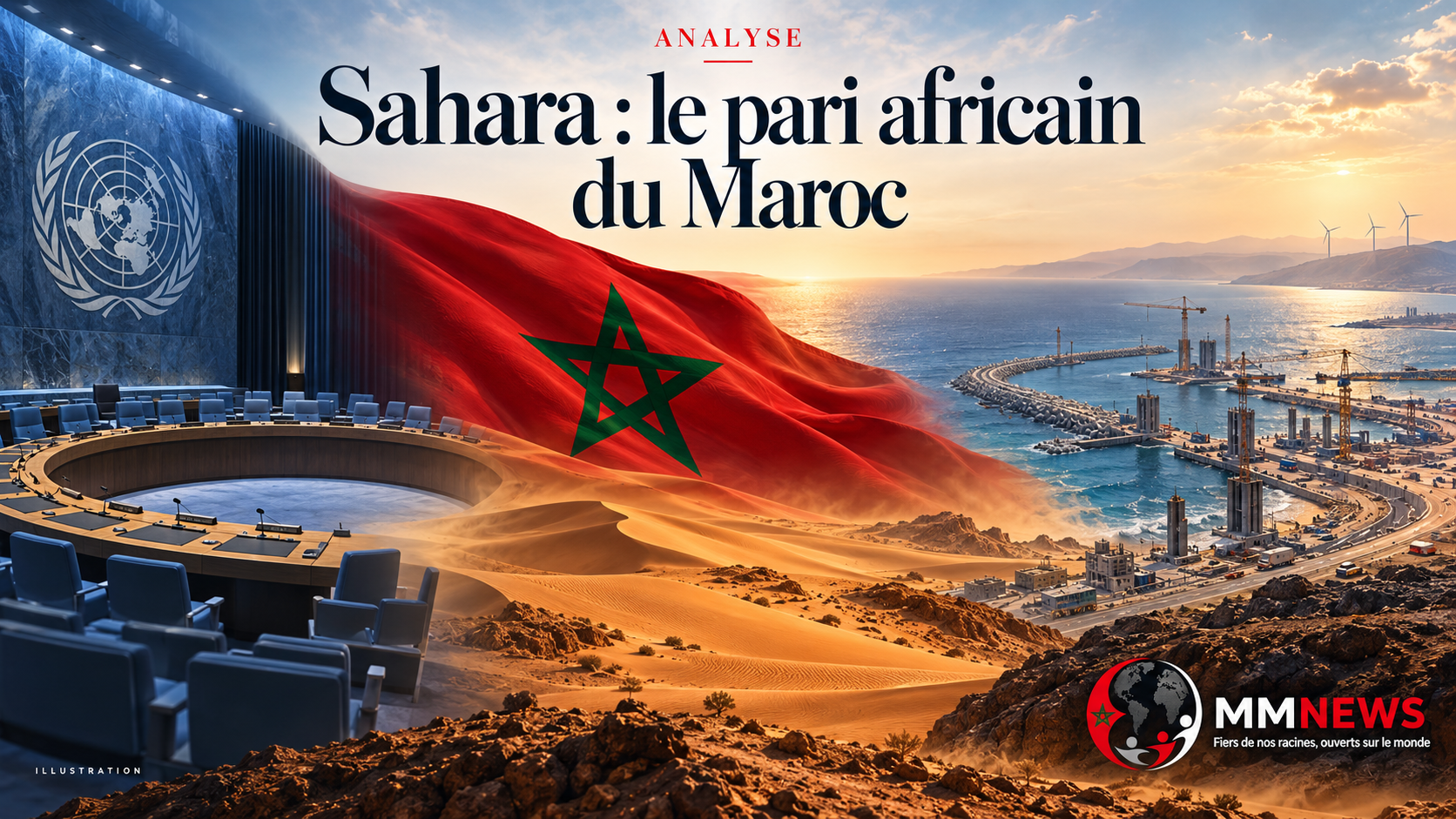
International institutions sometimes reveal their limits through what they cannot renew. On 30 October, eleven members supported the American draft on the Sahara, but Russia vetoed it. Moscow’s alternative then received three affirmative votes, one negative vote and eleven abstentions. It lacked the nine votes required, regardless of the American opposition.
Washington failed to enact its proposed changes; Moscow failed to preserve the continuity it defended. The mission’s mandate reached its 31 October expiry without a further extension adopted at that meeting.
The American proposal envisaged another year of presence under a revised framework, including removal of the referendum reference from the mission’s name. Russia sought renewal under the existing name, citing sovereignty and the need for an agreement acceptable to Morocco and the Polisario Front. The argument concerned how much of the framework inherited from 1991 should continue to define today’s possibilities.
The political uses of waiting
Established in 1991, MINURSO combined ceasefire monitoring with a referendum process that never reached its intended outcome. Over time, renewal also produced a familiar rhythm of reports, consultations and bargaining over language.
From Rabat’s perspective, challenging that cycle means asking whether institutional continuity still produces movement towards a settlement. A predictable procedure can provide stability while also allowing difficult choices to be deferred.
This is where the setback for the continuity option lies. Russia could block the American draft but could not build a majority for its own proposal. That conclusion does not require an assumption that every opponent of Morocco followed one coordinated plan.
Nor does it mean every abstaining state now endorses Rabat’s entire position. The votes show support for a change of direction alongside substantial remaining constraints.
Royal strategy across different timescales
The coherence of King Mohammed VI’s approach lies in linking diplomatic negotiation, a political proposal and long-term investment. Each works on a different timetable; together, they can make Morocco less dependent on a single annual vote.
Foreign Minister Nasser Bourita said on 2M that Russian opposition had been anticipated and that Rabat had declined to dilute its desired parameters simply to obtain adoption. This is the government’s account of its strategy, not evidence that it controlled other states.
Its significance is the preparedness it claims. A resolution reshaping the mission would have advanced Moroccan aims; non-renewal now gives Rabat an opportunity to challenge the institutional framework itself.
Adaptability is a diplomatic asset. Whether it becomes a durable gain depends on partners’ responses and the management of the next phase.
Institutional change requires a stable transition
The Royal Office described non-renewal as a step towards closing the UN file, called for the mission’s presence to end and reaffirmed Morocco’s ceasefire commitment.
Mandate expiry, withdrawal and removal of the question from the Council’s agenda remain distinct issues. Ending a mission does not remove the Council’s wider peace and security powers.
Rabat seeks to reduce the mechanisms through which the territory remains internationally exceptional. Securing acceptance of the resulting situation requires further diplomacy. It also requires restraint: incidents and miscalculation do not disappear when a monitoring mechanism ends.
An orderly transition would therefore strengthen Morocco’s position. Stability is part of the proposition it must offer governments, businesses and neighbouring countries.
The Atlantic economy and its conditions
The American-Russian clash exposes competing approaches to influence. Morocco’s interest is to retain room for manoeuvre, including dialogue beyond its established supporters. African cooperation offers a practical way to widen that room.
Development in the southern provinces predates the mandate’s expiry. The vote did not create the infrastructure programme. Greater stability could, however, improve the conditions in which it connects to regional markets.
Dakhla Atlantique is still under construction. Its eventual strategic value will depend on the businesses and services surrounding it: processing, storage, maintenance, finance and reliable transport. A port changes economic geography when it changes firms’ operating choices.
That transformation must benefit the surrounding population. Local employment, training, business participation and responsible water and energy use are central. Diaspora expertise can help connect investment to productive activity rather than an enclave economy.
Mauritania’s choices
Mauritania occupies an important position in overland links towards parts of West Africa. Its cooperation cannot simply be assumed: it has ports, commercial priorities and diplomatic choices of its own.
A durable partnership would allow Nouakchott to retain value through services, processing and energy cooperation. Morocco’s energy ministry reports progress on interconnection studies, targeted for completion before December 2026—not an electricity commissioning date.
The royal initiative for Sahel access to the Atlantic provides a wider horizon, supported again by Mali in July. Agreements, finance and safe routes remain necessary.
The strongest extension of royal strategy would be to align Morocco’s diplomatic objectives with benefits its neighbours can recognise as their own. A mandate’s expiry opens a new phase. Productive activity and reliable partnerships can give that phase a lasting foundation.
💬 التعليقات (0)
لا توجد تعليقات. كن أول من يعلق!
✏️ اكتب تعليقك