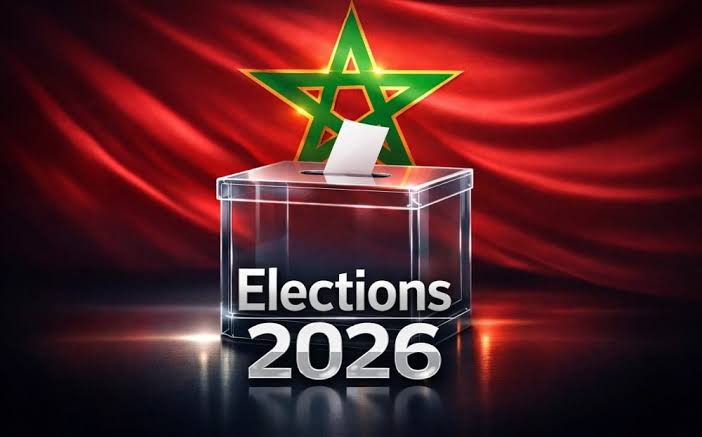
The campaign’s third act
Since the official campaign opened on 10 September, three distinct phases have emerged. The first belonged to launches: party colours, slogans, programmes and displays of organisational strength. The second, examined by MMNEWS on 19 September, brought the struggle for power into the open. The PAM declared its ambition to lead the next government, the PPS drew post-election red lines, and parties began discussing the coalitions that might follow the vote.
The third phase, beginning less than 48 hours before polling day, is more unforgiving. The offers are already on the table; headquarters have little time left to improve them. Their task is now to mobilise. Yet turnout cannot be inferred from the number of occupied chairs at a rally.
Official figures reveal the scale of the challenge. Twenty-eight political formations, including an electoral alliance, and two independent lists are contesting 395 seats. The 1,850 lists include 7,288 candidacies. Only 15.8 million citizens are registered, however, and people aged 18 to 24 account for just 4% of the electorate, compared with more than 29% for those aged 60 and above. This imbalance cannot predict turnout by itself, but it shows how many young Moroccans remain outside formal political participation before the polls even open.
The RNI closes the loop around its record
In Tetouan on Sunday evening, the RNI held its final large rally, attended by more than 13,000 people according to organisers and media reports. Aziz Akhannouch defended the outgoing government’s social reforms: direct assistance, medical coverage, wage increases, and investment in education and health. Looking to 2026-2031, he again highlighted a minimum wage of 5,000 dirhams to be pursued through social dialogue, a state-backed savings incentive and a pledge to create one million additional jobs.
The strategy is straightforward: make continuity synonymous with delivery and place rivals in the category of untested promise-makers. This is coherent for an incumbent party, but it has a cost. A party claiming credit for the record must also answer for what remains unresolved: living costs, the quality of public services, youth access to work and territorial inequality. The RNI is therefore asking voters not merely for a second term, but to judge the reforms already undertaken as more consequential than their continuing frustrations.
The PAM turns rupture into a contract
The PAM used the final weekend to strengthen an identity distinct from the coalition in which it served for five years. In Benguerir, Fatima Ezzahra El Mansouri defended proposals to raise the minimum direct social payment from 500 to 1,000 dirhams, establish a 3,000-dirham minimum pension and offer interest-free loans to support 80,000 young people. In Nador and Driouch, Fouzi Lekjaa described the party programme as a “contract” on which officeholders should be judged by 2031, emphasising water, roads, entrepreneurship and the practical implementation of Amazigh rights.
This gives the PAM a more social and managerial profile. It also exposes its central contradiction: how can a party embody an alternative to a government in which it participated? Its answer is that change can be led from within. Polling day will show whether that distinction is meaningful beyond the party’s own supporters.
Istiqlal relies on territorial depth
Istiqlal is ending the campaign less through a single spectacular event than through the depth of its networks. In Larache, Nizar Baraka linked economic sovereignty, purchasing power and the fight against conflicts of interest. In Marrakech, UGTM trade union mobilisation fed into the party campaign. In Laayoune, Moulay Hamdi Ould Errachid worked through local balances while publicly distinguishing tribal solidarity from institutional responsibility.
The party is attempting to reproduce the method that powered its 2021 gains: protect established strongholds, tailor nominations to local realities and expand in major cities. This may be less visually dramatic than a national mega-rally, but it can be more decisive in a constituency-based election where local reputation, networks and candidate selection carry considerable weight.
The opposition seeks to turn anger into a useful vote
Opposition messages are also narrowing. In Meknes, USFP leader Driss Lachgar challenged the cost and credibility of public promises and called for electoral commitments to be translated rapidly into measures put before Parliament. Nabil Benabdallah’s PPS is advocating a punishment vote and attacking conflicts of interest while presenting itself as a credible social alternative. Mohamed Ouzzine’s Popular Movement is focusing on neglected territories, young people outside employment and training, and the social fractures exposed by the recent departures towards Ceuta.
The PJD is continuing on two tracks: social and governmental criticism on one side, identity-based mobilisation on the other. In Agadir, Abdelilah Benkirane placed religion, integrity and the memory of PJD rule at the centre of his appeal. That approach may reactivate voters demoralised by the party’s 2021 collapse. It also risks crowding out economic scrutiny if identity controversy becomes more prominent than the precision of proposed solutions.
The opposition thus shares an objective — converting dissatisfaction into ballots — without offering a shared route to government. That matters. Punishing an outgoing majority does not yet identify the coalition that could replace it or the programme on which such partners would compromise.
Morocco’s real electoral contest is local
National coverage suggests a confrontation between political brands. On the ground, the election is still an accumulation of local battles. In Ifrane, water shortages, agricultural debt and the future of mountain communities frame the choice. In Berkane, employment, farming and the underused tourism potential matter more than a duel of slogans. In Chichaoua, the RNI-PAM rivalry has become an open confrontation. Across numerous constituencies, family affiliation, municipal networks or the capacity to mobilise a rural community may count as much as a national manifesto.
This does not make programmes irrelevant. It means their credibility depends on the people chosen to carry them. With 227 sitting parliamentarians standing again, claims of renewal must be measured against the candidate lists rather than accepted as campaign language.
Integrity will also be a battle over evidence
As polling day approaches, the integrity of the process matters as much as campaign content. National and international observers are deploying, including an Arab League mission. The Interior Ministry has reminded candidates that their representatives may follow voting and counting operations, record observations and receive signed copies of polling-station minutes with the same evidentiary value as the originals.
Meanwhile, the audiovisual regulator sanctioned a Chada FM programme over remarks deemed incompatible with electoral neutrality. This is not a side issue. A digital campaign allows cropped clips, unproven accusations and emotional narratives to travel rapidly. MMNEWS will therefore continue to separate partisan claims, documented facts and institutional decisions.
For Moroccans abroad, the campaign still speaks without enabling a direct vote
Parties have repeatedly invoked the skills, investment and cultural attachment of Moroccans living abroad. Several have supported reserved seats or overseas constituencies; others favour consular or electronic voting. Yet on the eve of the election, the only mechanism actually available is E-Proxy: a registered overseas Moroccan completes the procedure online and authorises an elector in Morocco to vote on their behalf.
This makes an administrative process easier. It creates neither direct voting from the country of residence nor dedicated parliamentary representation. Since MMNEWS’s 19 September review, no sufficiently precise and legally operational MRE measure has emerged to justify changing our party scores. After polling day, the test will no longer be rhetorical: manifestos must be compared with coalition agreements, and then with draft legislation.
The MMNEWS verdict
The campaign is ending with more proposals than certainties. The RNI offers the coherence of a record, but carries its liabilities. The PAM has imposed an ambition and a social narrative, without fully escaping shared responsibility for the outgoing government. Istiqlal’s territorial depth could produce a surprise. Opposition parties have identified public anger, but still need to prove they can turn it into a coherent governing majority.
The 23 September vote will therefore do more than rank manifestos. It will measure whether political parties can bring a sceptical society back into formal politics. For voters in Morocco, the ballot expresses a choice. For millions of Moroccans abroad, it also exposes a persistent anomaly: they are courted as investors, ambassadors and skilled contributors while remaining excluded from direct representation. The campaign ends at midnight on Tuesday. The real audit begins on Wednesday.
💬 Commentaires (0)
Aucun commentaire. Soyez le premier !
✏️ Laisser un commentaire