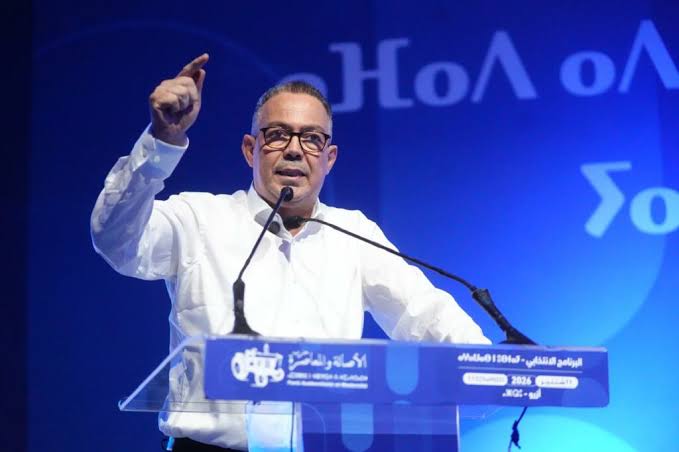
Morocco woke on Thursday to a new parliamentary order, but not yet to a new governing majority. Provisional results announced by the interior minister put the Authenticity and Modernity Party (PAM) first with 97 seats in the election held on Wednesday, 23 September. The National Rally of Independents (RNI) finished second with 66, only one seat ahead of Istiqlal on 65. The Justice and Development Party (PJD) made the night’s most dramatic comeback, rising to 54 seats.
The Popular Movement won 29 seats, the Socialist Union of Popular Forces 26, the Party of Progress and Socialism 19 and the Constitutional Union 17. The Democratic and Social Movement and the Left Alliance each secured eight. The Democratic Forces Front and the Equity Party won two apiece, while the New Democrats Party and the Unity and Democracy Party each took one.
Together, the figures account for all 395 seats. They nevertheless remain provisional and subject to the legally prescribed certification and challenge procedures. That distinction matters. Election-night arithmetic identifies the balance of power, but it does not replace the formal process that makes the result legally final.
A slow start and a late turnout surge
Voting took place from 8am to 7pm across 40,694 polling stations. Participation was subdued throughout most of the day: 4.23% by 10am, 11.34% at noon, 21% at 3pm and 28.05% at 5pm. A late rush lifted the final figure, though not enough to match the previous election.
An official closing statement put nationwide turnout at 38.02%. In the overnight address announcing provisional seat totals, the figure was given as 38.08%, representing close to six million voters out of 15.8 million registered. MMNEWS is retaining both official figures until the authorities reconcile the 0.06-point discrepancy. It does not alter the central conclusion: turnout fell markedly from 2021.
The comparison requires context. Morocco held parliamentary, regional and municipal elections on the same day in 2021, creating a different mobilisation dynamic and producing turnout above 50%. Wednesday’s vote concerned the House of Representatives alone. The decline is politically significant, but no single explanation can account for it without more granular evidence.
There were also striking regional differences. According to the interior minister, turnout reached 77% in Laâyoune-Sakia El Hamra, 61% in Dakhla-Oued Eddahab and 53.48% in Guelmim-Oued Noun. Those figures stand well above the national average and show why one nationwide percentage cannot capture the full electoral map.
A broadly orderly vote, pending independent reports
Polls closed at 7pm and counting began in the presence of candidate-list representatives. Records from polling stations were forwarded to central counting offices and tabulation commissions chaired by judges. The Interior Ministry said voting proceeded under normal and satisfactory conditions nationwide, apart from a small number of isolated incidents that did not affect the election’s overall conduct.
More than 3,000 accredited observers covered the process: 783 from the National Human Rights Council, 2,023 representing Moroccan civil-society organisations and about 200 foreign observers. On Wednesday evening, the Associative Collective for Election Observation said field reports were still being checked and consolidated. Its final assessment is therefore essential before any definitive judgment is made about the day’s integrity.
The same caution applies to partisan claims and footage circulated online. A video may justify scrutiny, but it does not by itself establish who was responsible, how widespread an alleged practice was or whether it affected a result. Where judicial inquiries exist, allegations must remain allegations until competent authorities establish the facts. MMNEWS will address documented irregularities separately once official and independent reports are available.
PAM advances, RNI retreats, PJD returns
PAM’s rise from 87 seats in 2021 to 97 is the election’s first major political fact. The ten-seat gain moves it into first place but leaves it far short of governing alone. An absolute majority requires 198 seats. With less than a quarter of the chamber, the winner must negotiate.
The second message is the RNI’s setback. The party that won 102 seats in 2021 now holds 66. Istiqlal falls from 81 to 65. The three parties in the outgoing majority remain central actors, but their internal ranking has been reversed. Their combined numbers should not be treated automatically as a renewed alliance; campaign positions, policy conditions and leadership choices will shape the next phase.
The PJD’s recovery is equally consequential. Reduced to 13 seats five years ago, it has provisionally secured 54 — a gain of 41. It did not win the election, but it regained substantial parliamentary leverage. Its decision on whether to join negotiations or rebuild a leading opposition force could reshape both coalition talks and the chamber’s political balance.
Several mathematical combinations exceed the 198-seat threshold. Politics, however, is not simple addition. A workable coalition requires a shared programme, an agreed distribution of responsibility and enough internal coherence to last a five-year term. The campaign is over; bargaining and compromise now begin.
What happens next
Article 47 of Morocco’s Constitution provides that the King appoints the head of government from the political party that comes first in elections to the House of Representatives, and in view of their results. PAM therefore holds the political initiative that follows from finishing first. The result does not, however, establish which individual will be asked to form the government.
Several institutional steps remain: consolidation of the results, appointment of the head of government, coalition negotiations, formation of a cabinet, and presentation of a government programme to the House for a confidence vote. Winning the most seats is the beginning of the governing process, not its completion.
The missing measure of diaspora participation
Moroccans living abroad were able to vote by proxy, with an electronic service facilitating the preliminary paperwork. The ballot itself was still cast in Morocco by a designated proxy. Diaspora citizens do not elect representatives through overseas constituencies, and the nationwide turnout figure does not isolate their participation.
That missing number matters. How many proxies were validated? How many were actually used, and in which constituencies? Publishing such data would allow the mechanism to be evaluated and would help turn constitutional citizenship into measurable electoral participation.
The new parliament will also be judged by Moroccans abroad on practical questions: consular services, property protection, investment, taxation, mobility, cultural transmission and political representation. A shift in the balance of parties will matter only if it produces clearer rights and a more tangible diaspora presence in public decision-making.
A winner without a blank cheque
The election placed PAM first and punished important parts of the outgoing balance. It also sent a broader warning: roughly six in ten registered voters did not cast a ballot. The next majority cannot read 97 seats as an unlimited mandate. It must govern in a fragmented chamber, face a stronger opposition and address a deep crisis of electoral trust.
Morocco has entered the coalition phase. The decisive question is no longer who won election night, but whether the next majority can answer concerns over living costs, jobs, public services and territorial inequality with measurable results. The ballot provides legitimacy. Performance must now sustain it.
💬 Commentaires (0)
Aucun commentaire. Soyez le premier !
✏️ Laisser un commentaire