Five days after Morocco’s parliamentary election, the country is still waiting for the first decisive step in the formation of its next government.
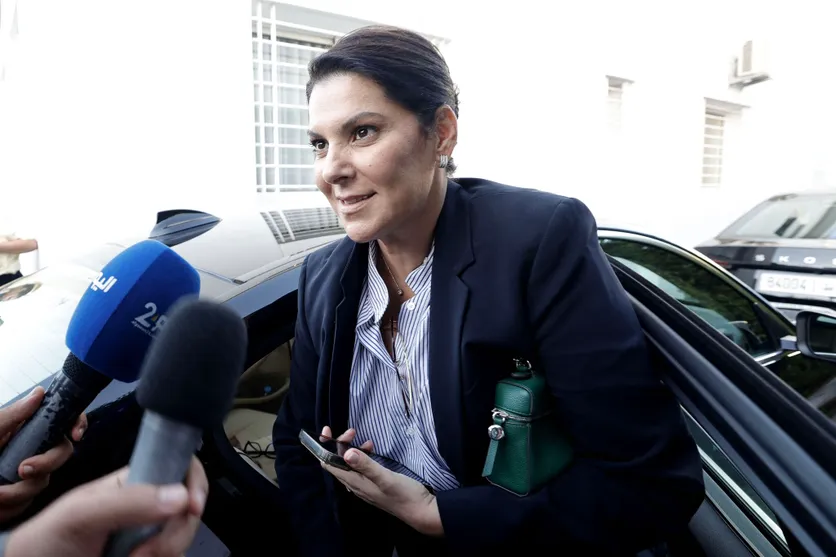
Over the past 24 hours, political attention has focused on Fatima Ezzahra El Mansouri, national coordinator of the Authenticity and Modernity Party’s collective leadership. Moroccan media reported on Sunday night that she was expected at the Royal Palace on Monday morning.
The reports cited sources described as reliable. By the time this article was completed, however, no official Royal Cabinet statement had confirmed either an audience or an appointment. The report is therefore a political signal, not proof that El Mansouri has been asked to form a government.
The final parliamentary map
The Interior Ministry has confirmed that the final results fully match the provisional national totals.
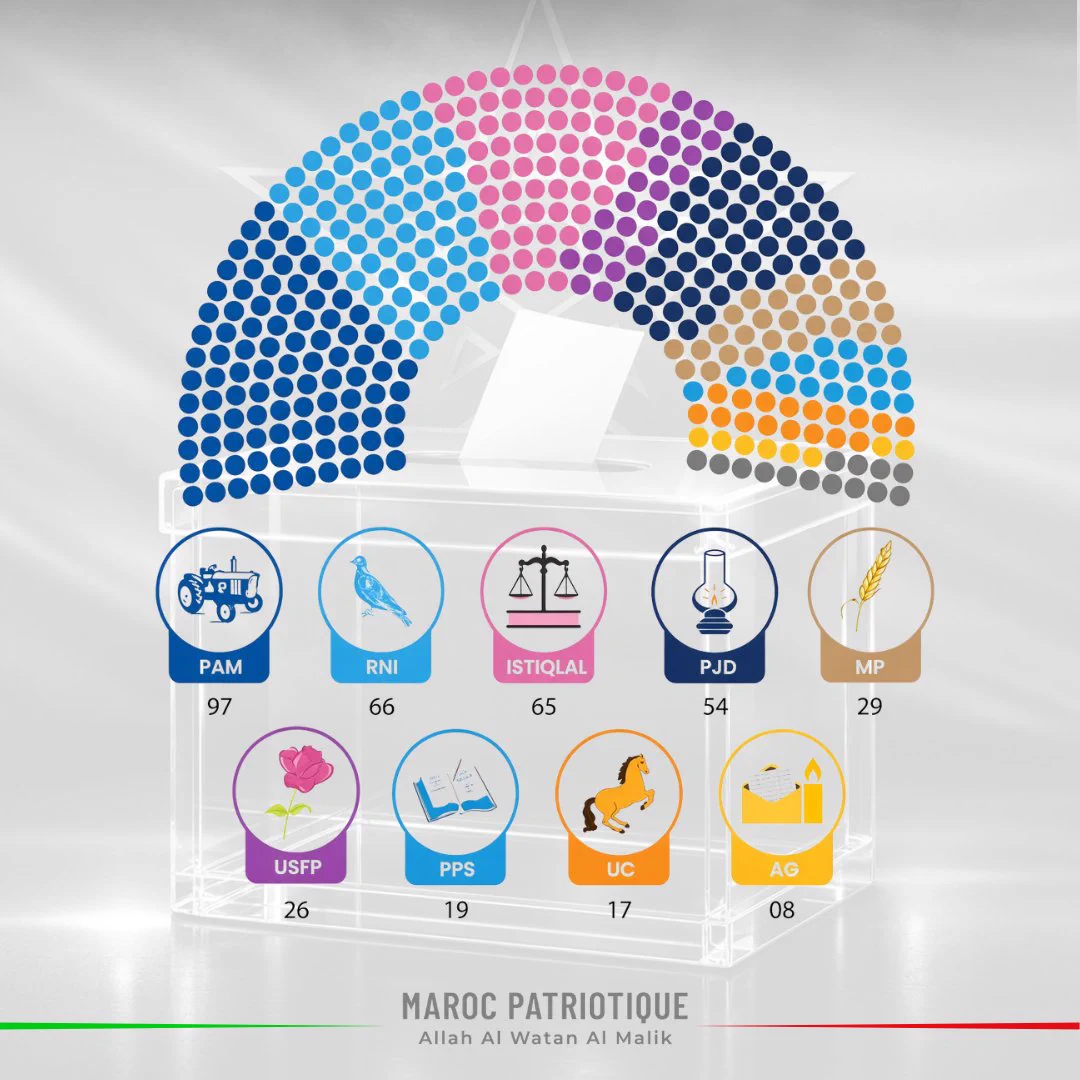
The Authenticity and Modernity Party, or PAM, won 97 of the House of Representatives’ 395 seats. The National Rally of Independents, known as the RNI, came second with 66 seats, narrowly ahead of the Istiqlal Party with 65.
The Justice and Development Party, or PJD, staged a significant parliamentary return with 54 seats. The Popular Movement secured 29, the Socialist Union of Popular Forces 26, the Party of Progress and Socialism 19 and the Constitutional Union 17. Smaller parties share the remaining 22 seats.
With 198 seats required for an absolute majority, the PAM needs the support of at least 101 additional lawmakers.
Why El Mansouri is the frontrunner
Article 47 of Morocco’s Constitution requires the King to appoint the head of government from the party that finishes first in the House of Representatives election. The next head of government must therefore come from the PAM, but does not automatically have to be its most senior leader or an elected member of Parliament.
El Mansouri nevertheless has the clearest political claim. She coordinates the party’s collective leadership, played a central role in its campaign and has acted as its principal public voice since the results were announced.
Asked whether she would accept the position, she said it would be a “great honour”, while stressing that the decision belongs to the King. She also made clear that she would support another PAM member if a different person were selected.
Her appointment would make her the first woman to lead Morocco’s government. Yet without an official announcement, she remains the frontrunner rather than the designated head of government.
Fouzi Lekjaa remains a credible alternative
Fouzi Lekjaa is the other name most frequently discussed. The minister delegated in charge of the Budget and president of Morocco’s football federation joined the PAM’s political bureau in July 2026.
His profile combines budget management, major infrastructure projects and Morocco’s preparations to co-host the 2030 World Cup. Although he ultimately did not stand in the parliamentary election, the Constitution does not require the head of government to hold a parliamentary seat.
El Mansouri currently has stronger public indicators in her favour: party leadership, post-election visibility and reports of a possible royal audience. Lekjaa, however, remains a serious alternative if the choice favours a more technocratic figure closely associated with national investment programmes and the 2030 agenda.
Mehdi Bensaid and Abdellatif Ouahbi have also been mentioned, although there is currently less public evidence pointing towards either of them.
The PJD changes the coalition arithmetic
The clearest political development affecting coalition talks is the PJD’s decision to remain in opposition.
At an extraordinary meeting, the party’s National Council unanimously approved a position in what it described as a strong and responsible parliamentary opposition.
That decision makes two otherwise viable combinations highly unlikely. A PAM–Istiqlal–PJD coalition would have controlled 216 seats, while a PAM–RNI–PJD government would have held 217.
With 54 lawmakers, compared with only 13 after the 2021 election, the PJD is now positioned to become one of the main opposition forces.
Continuity remains the simplest option
The most straightforward coalition would reunite the three parties that governed together during the outgoing parliamentary term: the PAM, the RNI and Istiqlal.
Together, they control 228 seats. The arrangement would provide a comfortable majority, institutional continuity and partners already familiar with working together.
The balance of power would nevertheless be reversed. The PAM would lead the executive, while the RNI — the largest party in 2021 — would become a junior partner under a head of government from a rival party.
The three main scenarios are:
| Coalition | Seats | Political assessment |
|---|---|---|
| PAM–RNI–Istiqlal | 228 | Most stable and currently the most plausible |
| PAM–Istiqlal–Popular Movement–USFP | 217 | Excludes the RNI but requires four partners |
| PAM–RNI–Popular Movement–Constitutional Union | 209 | Excludes Istiqlal and offers a narrower majority |
A fourth option combining the PAM, Istiqlal, the USFP and the PPS would hold 207 seats. It is arithmetically viable but politically more complex.
Formal talks are still waiting for an appointment
The PAM says it has imposed no advance “red lines” on potential partners. El Mansouri has said that programmes and political compatibility should determine the next coalition.
She has also stated that effective coalition consultations will begin only after the head of government is appointed.
This sequencing helps explain the absence of a public agreement. Before negotiating ministries, policy priorities and the distribution of responsibilities, the parties are waiting to learn who will lead the talks on behalf of the PAM.
The next government will face immediate pressure to agree on a programme, present a cabinet and handle the 2027 Finance Bill. El Mansouri has already signalled that the PAM wants a stronger social emphasis in the budget while maintaining policies that support investment.
A period of suspense, not yet a deadlock
The absence of an appointment during the timeframe circulated by some media outlets does not, by itself, amount to a political blockage. Morocco’s Constitution sets no precise deadline for the appointment.
The past 24 hours have instead produced two clear trends. El Mansouri’s position in public discussion has strengthened, while the PJD’s move into opposition has reduced the number of realistic coalition combinations.
The next decisive development will have to come through an official announcement naming the PAM figure asked to form the government. Until then, El Mansouri remains the frontrunner, Lekjaa the leading alternative and a PAM–RNI–Istiqlal coalition the simplest route to a stable majority.
💬 Commentaires (0)
Aucun commentaire. Soyez le premier !
✏️ Laisser un commentaire