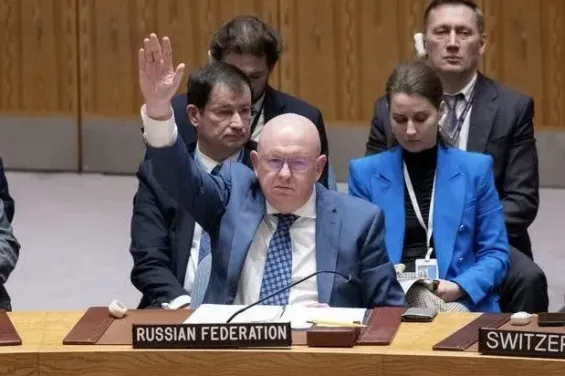
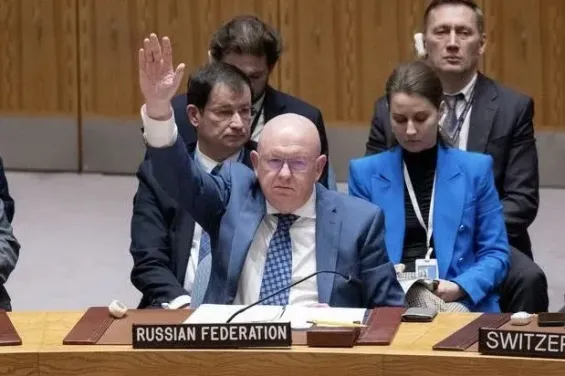
The US proposal received eleven votes in favour, with Russia voting against and three members abstaining. Moscow’s competing draft then attracted three votes in favour, one against and eleven abstentions. It lacked the nine affirmative votes required for adoption, regardless of the American negative vote.
The outcome illustrates a familiar imbalance at the Council: a permanent member can prevent action without winning broad support for a different course. Russia demonstrated its institutional power. The second vote exposed the limits of its coalition.
The disagreement concerns the direction of a settlement. The American draft proposed renewing the mission for a year and removing the reference to a referendum from its name. Moscow argued that the Council should not prejudge sovereignty and that a settlement must be acceptable to Morocco and the Polisario Front.
That position deserves accurate reporting. It also invites scrutiny. Preserving a negotiating framework requires an explanation of how it can deliver progress. Continuity has a purpose when it supports stability and a workable political agreement. Continuity alone cannot supply either outcome.
Morocco’s autonomy proposal already has an explicit place in Resolution 2797, adopted in 2025. The resolution calls for negotiations based on that proposal while retaining the objective of a mutually acceptable political settlement providing for self-determination. Russia’s veto prevents the adoption of a new text; it does not erase the previous resolution.
Britain criticised the Russian decision and reaffirmed its support for Morocco’s autonomy proposal as a credible, viable and pragmatic basis for a lasting settlement. For Rabat, such backing is valuable, but the votes show the further diplomatic work required.
The strongest Moroccan response is to deepen support and explain the proposed settlement in practical terms: local powers, institutional guarantees, representation and relations with the central state. An autonomy proposal becomes more persuasive when people can understand how it would operate.
The mission’s mandate reaches its scheduled expiry on 31 October. Without a further Council decision, renewal remains unresolved. That deadline should not be confused with an established timetable for the departure of personnel.
For Moroccans abroad, precision strengthens advocacy. The American draft was blocked. The Russian alternative failed to secure a majority. Both facts belong in the account. Morocco faces a serious diplomatic obstacle, while Moscow still has to show that its preferred approach can command support and produce an agreement.

💬 Commentaires (0)
Aucun commentaire. Soyez le premier !
✏️ Laisser un commentaire