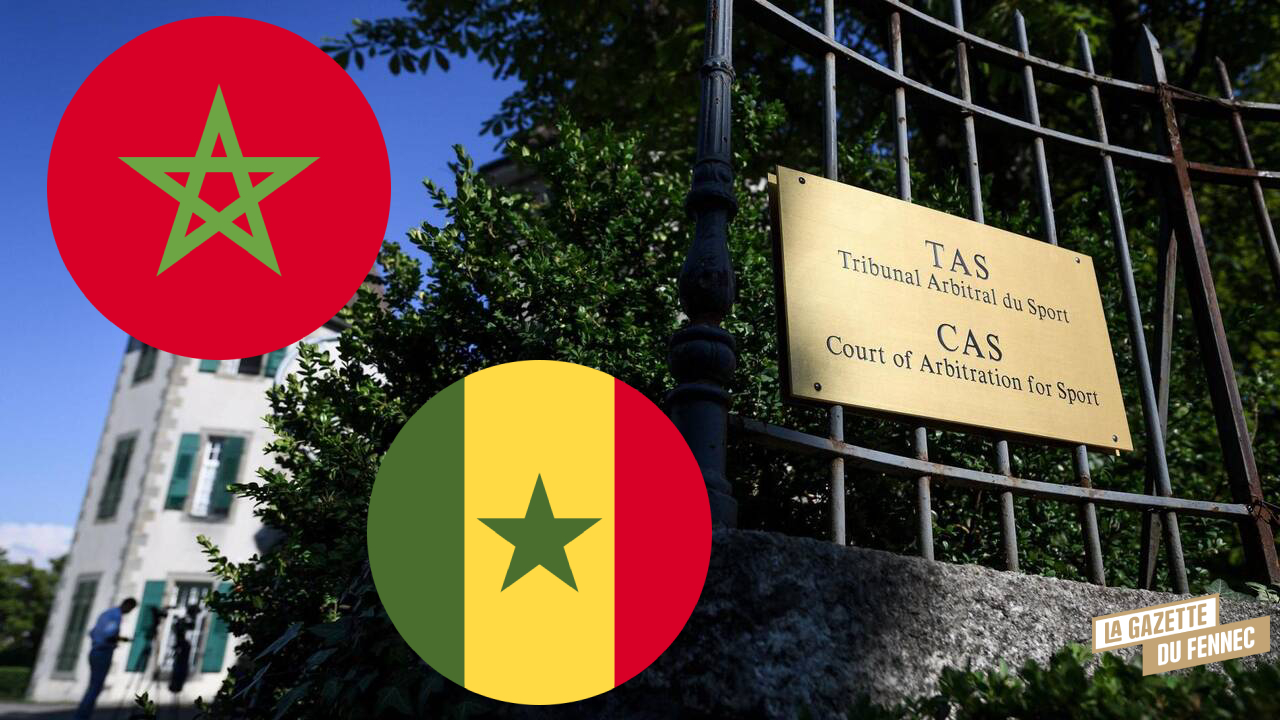
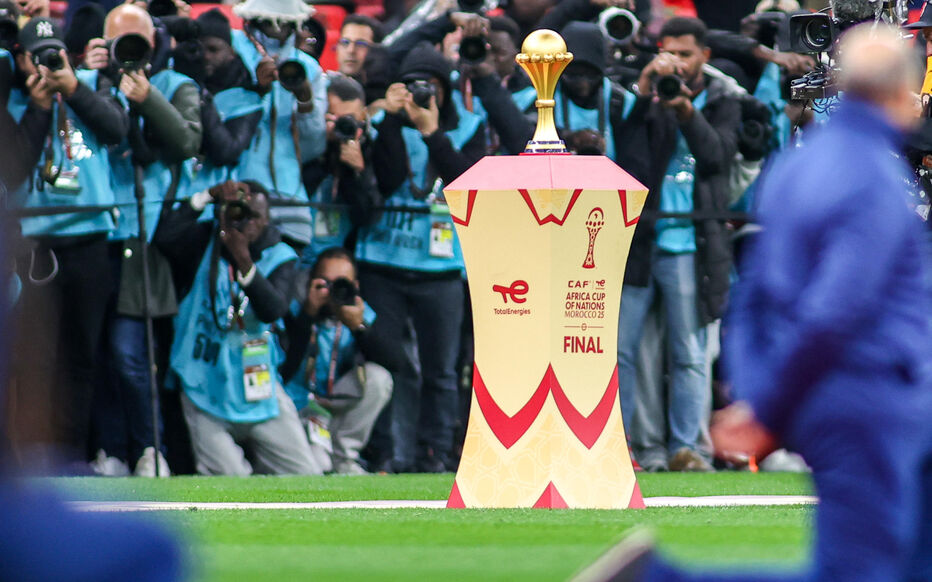
The 2025 Africa Cup of Nations final was first decided in the rain in Rabat. It is now being contested in a hearing room in Lausanne.
Deep into stoppage time on 18 January, referee Jean-Jacques Ndala awarded Morocco a penalty after a VAR review. Senegal coach Pape Bouna Thiaw then instructed his players to leave the pitch. Play was halted for around 14 minutes. Senegal eventually returned, Brahim Díaz missed the penalty and Pape Gueye scored the only goal in extra time.
The 1–0 result was initially recorded. Morocco’s federation, however, argued that restarting the game did not erase the walkout. It relied on Articles 82 and 84 of the AFCON regulations, which address a team refusing to play or leaving the field before the end without the referee’s authorisation and provide for a 3–0 forfeit.
CAF’s Disciplinary Board first rejected Morocco’s protest on 28 January, while imposing substantial sanctions for the final’s disorder. The FRMF appealed. On 17 March, CAF’s Appeal Board set aside that part of the first ruling, found Morocco’s protest well-founded and held that Senegal’s conduct fell within Articles 82 and 84. It recorded the match as a 3–0 Moroccan victory.
That distinction matters: Morocco did not award itself the trophy. A CAF judicial body reached the decision after an appeal. Senegal is now exercising its own right to challenge it before CAS.
No fifteen-minute threshold
Morocco’s strongest case is not built on whether the stoppage lasted exactly 14 or 15 minutes. The wording relied upon by CAF contains no express minimum duration. The relevant questions are whether Senegal left before the end, whether the referee authorised it and whether the collective action was attributable to the team’s leadership.
Publicly established facts give the Moroccan case substance. The departure was collective, followed a refereeing decision and was ordered by the coach. CAF also suspended Thiaw for five matches and fined him $100,000 for unsporting conduct and bringing the game into disrepute.
The delay demonstrates the seriousness of the incident, but Morocco need not invent a “15-minute rule” that does not appear in the cited provisions. Its case is cleaner without it: the alleged regulatory breach was leaving without authorisation, not the final digit on the clock.
Restarting does not necessarily erase misconduct
Senegal has a serious counterargument. Under IFAB Law 5, the referee has broad authority over the match. He allowed play to resume, the penalty was taken and the final was completed. Dakar therefore argues that the 1–0 result should remain the sporting truth.
That argument deserves fair consideration, but it is not automatically conclusive. A referee’s authority over events on the field and a competition body’s authority to enforce tournament regulations are not necessarily identical. A referee may conclude that play can safely restart; a judicial panel may later determine whether conduct during the interruption constituted a separate regulatory offence.
Finishing a match does not invariably grant immunity from later disciplinary or administrative consequences. If a collective walkout carried no sporting risk whenever a team eventually returned, the deterrent effect of the rule would be badly weakened. Teams could use withdrawal as leverage after a penalty, red card or disputed goal.
That would be a dangerous precedent for African football, not merely for Morocco.
The disruption was not neutral
The stoppage came at the most delicate possible moment: a potentially title-winning Moroccan penalty in added time. It broke the rhythm, heightened tension and coincided with wider disorder in the stadium.
MMNEWS cannot claim that Brahim Díaz would have scored without the delay; that would be speculation. But Morocco plainly had to take a decisive penalty after circumstances far removed from the normal flow of a match. If Articles 82 and 84 impose a strict consequence once their objective conditions are met, the FRMF may not need to prove the interruption’s precise psychological effect.
Defending Morocco’s case does not require diminishing Senegal’s quality or denying the goal scored after the restart. Sporting merit and regulatory responsibility can exist at the same time.
Morocco followed the institutional route
The FRMF did not order its own players off, proclaim a result or bypass the system. It filed a protest, accepted an adverse first ruling, used the available appeal mechanism and prevailed before CAF’s Appeal Board.
Credibility also requires acknowledging Moroccan misconduct. The Appeal Board maintained a $100,000 fine against the FRMF for interference around the VAR review area, while reducing sanctions relating to ball boys and lasers. Supporting Morocco does not mean demanding impunity for Morocco; it means seeking consistent enforcement for everyone.
What happens on 8 October
Senegal’s appeal, registered as CAS 2026/A/12295, is directed against CAF and the FRMF. The closed hearing will take place at CAS headquarters in Lausanne. Moroccan and Senegalese federation representatives will attend in person, with CAF represented by counsel. CAS has stated that no award will be issued on the hearing day and has given no date for the final ruling.
The panel will examine the interpretation of Articles 82 and 84, the relationship between the referee’s authority and CAF’s judicial powers, and the legal character of Senegal’s walkout. It may uphold, overturn or amend the CAF decision.
For now, the accurate formulation is clear: CAF has declared Senegal to have forfeited the final and recorded a 3–0 victory for Morocco; that ruling remains in force but is under appeal before CAS. Claiming the case is finally settled would be premature. Claiming Morocco has no regulatory case would be equally misleading.
This dispute should not become a quarrel between peoples. Morocco and Senegal share ties deeper than a football final. The strongest Moroccan position is neither triumphalism nor hostility. It is a rule-of-law argument: refereeing decisions must be challenged through established procedures, not through a collective walkout.
Morocco is not asking for an exception. It is arguing that, at the highest level of African football, rules must remain stronger than anger.
💬 Commentaires (0)
Aucun commentaire. Soyez le premier !
✏️ Laisser un commentaire