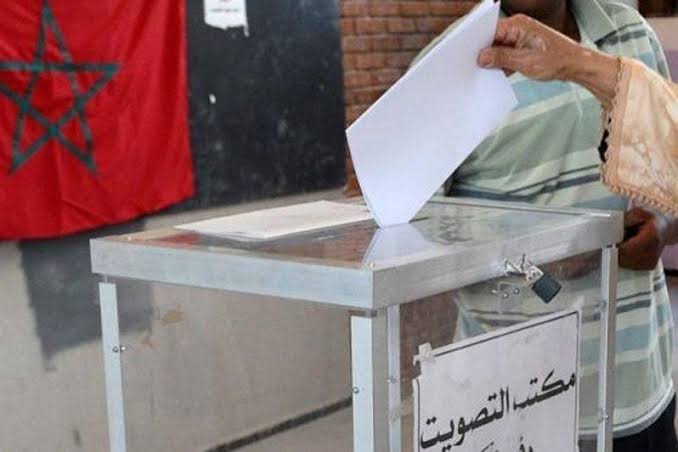
Their average score is 26.7%. This is not a judgment on their national programmes, ideology or candidates. It measures something narrower: can a Moroccan abroad identify a right, delivery mechanism, responsible authority, budget and deadline in the public material? The answer is usually incomplete. Missing evidence does not prove that no internal thinking exists; during a campaign, however, an unpublished proposal cannot be compared, challenged or audited.
The PUD is the only party with the beginnings of a dedicated diaspora policy
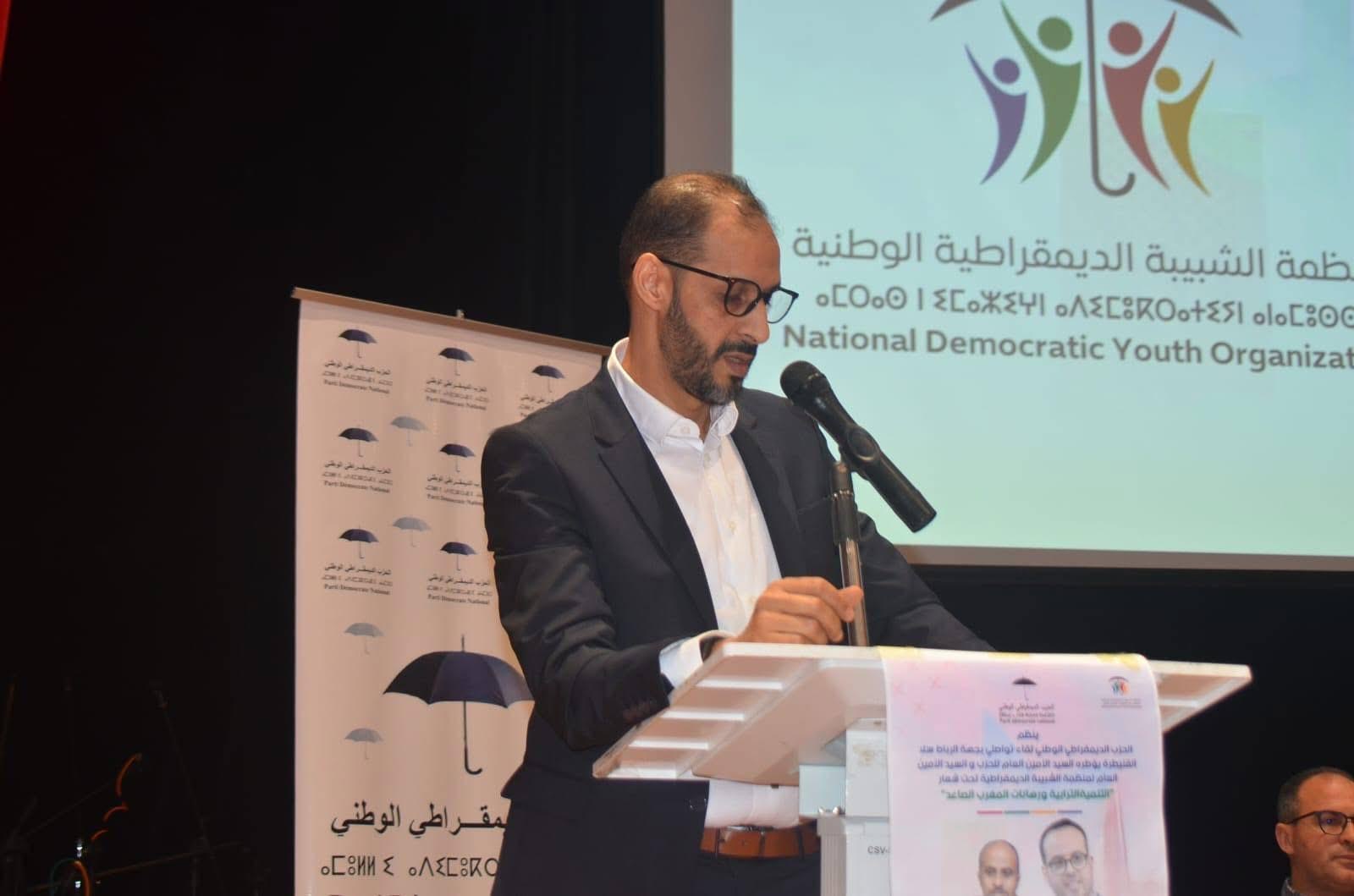
At 39%, the PUD stands clearly above the other eight. Its official website explicitly includes Moroccans abroad in the party’s constituency, pledges to defend their interests and seeks to maintain political, social and cultural ties across generations. It also calls for simpler investment procedures and new forms of political participation. An internal diaspora committee could turn consultation into sustained policy work.
These are meaningful features, but they do not yet support a majority score. “New forms of political participation” could mean consular polling stations, electronic voting, a revised proxy system or overseas constituencies; the party does not say which. Simplifying investment is not tied to a named one-stop service, maximum processing times or a route of appeal. The PUD has built a policy frame. It now needs to fill it with instruments.
PCI and UMD approach citizenship indirectly
The Choura and Istiqlal Party scores 28%. Its electoral memorandum promotes political renewal, including a proposal to limit parliamentary service to two terms. That could open the system to new profiles, potentially including diaspora professionals. But the connection is inferred rather than stated. The material reviewed does not explain how Moroccans abroad would vote, stand as candidates from overseas or secure dedicated representation. PCI earns credit for institutional reform while leaving unanswered whether that renewal would actually include citizens outside the country.
UMD scores 27%. It emphasises local democracy, renewed participation and candidate preparation. Those themes could include Moroccans abroad, but they are not developed into a cross-border policy and do not explain how someone thousands of kilometres away would access the promised service, ballot or appeal.
The weakness is not the absence of a hundred-page manifesto. A two-page diaspora annex could define the voting mechanism, consular reform, investment protection, cross-border social rights, responsible authority and deadline.
PDN publishes a national platform; the Action Party remains hard to assess
PDN, on 26%, publishes a structured 2026–2030 platform covering productive growth, small businesses, digital administration, healthcare, training and jobs. Investment simplification and digital services could benefit the diaspora, but the document does not name Moroccans abroad or address overseas voting, social-security portability or return. The score recognises genuine programme capacity without relabelling domestic measures as diaspora commitments.
The Action Party receives 21%. Its candidacy is confirmed through 32 local and nine regional lists, but MMNEWS found no publicly accessible 2026 programme addressing the nine diaspora tests by 13 September. The lowest score therefore signals a transparency gap above all: without a verifiable text, the party’s historical orientation cannot be treated as a promise for the next parliamentary term.
Al Amal, Annahda and PCS show why domestic social policy is not automatically diaspora policy
Al Amal, Annahda and the Social Centre Party each receive 25%. Al Amal communicates a recognisable domestic agenda centred on free health and education services, state responsibility and reduced social and territorial inequality. These goals may matter to families considering a return. They do not, by themselves, address life between legal systems: combining pension contribution periods, maintaining health cover during resettlement, educating children who studied in another language or recognising qualifications gained abroad.
Annahda stresses social cohesion, attachment to the country and proximity. Such language can resonate with diaspora families, particularly younger generations. Yet the public material identified by MMNEWS does not convert this symbolic connection into tools for Arabic or Amazigh learning, digital cultural programmes, youth mobility or support for overseas associations. The party receives limited credit for its social and cultural orientation, but it does not yet offer a contract that diaspora voters can verify.
PCS has a national framework derived from its seventh congress and organised around seven broad priorities, with an emphasis on moderation and social responsibility. Having a programme structure is an advantage. The material available to the public, however, does not provide a sufficiently detailed diaspora chapter. A healthcare or employment policy may benefit someone after returning to Morocco; it becomes a diaspora measure only when it addresses mobility, entitlements built abroad and remote access.
PSD remains near the bottom, largely because of an evidence deficit
At 24%, the Democratic Society Party remains near the bottom of the group. Its language of inclusion, participation and proximity is consistent with equal citizenship for Moroccans abroad. Available reporting, however, focuses more on candidate organisation and territorial presence than on overseas citizens. MMNEWS found no sufficiently identifiable consular reform, investment vehicle, return pathway or international social-protection mechanism that could be credited to PSD.
The score needs to be read carefully. It does not label the party hostile to the diaspora. It records the fact that voters cannot establish from the public offer what would change during the next parliamentary term. The same caution applies to all nine parties: MMNEWS evaluates documented commitments, not assumed intentions.
Political participation leads; savings and return barely register
Aggregating the criteria reveals a telling hierarchy. Political participation leads, with 59 of 135 possible points, or 44%. Parliamentary representation reaches 36%. These remain limited results, but they show that the vocabulary of citizenship and renewal has entered the parties’ discourse.
Next-generation issues and skills mobilisation each reach 29%, social protection 26% and investment 25%. Consular services fall to 22%, return to 16%, while savings and remittances register 9%. It is easier for these platforms to invoke participation than to specify its everyday machinery: a consular appointment, a pension earned in two countries, an investor’s appeal or a return pathway.
Morocco’s diaspora is not a single constituency. A pensioner in France, an entrepreneur in Côte d’Ivoire, a researcher in Canada, a seasonal worker in Spain and a Dutch-born student do not share one policy problem. Their relationship with Morocco cannot be reduced to remittances or permanent return. A credible platform must combine political voice, services, social mobility, economic security and cultural transmission.
Five commitments could change this picture before election day
There is still time for each party to publish a short, usable diaspora annex. Five commitments would make the offers immediately comparable: define how Moroccans abroad should participate politically; establish measurable consular service standards; create a secure investment and appeals chain; list priority agreements on pensions and healthcare; and organise both skills contribution and return without making permanent relocation a condition.
Each pledge should name the authority responsible, the implementation timetable and a public indicator. Budgets can remain proportionate to each party’s wider project; precision is inexpensive. For smaller parties, a well-designed diaspora chapter could become a genuine point of distinction from larger competitors.
MMNEWS verdict: electoral pluralism without a complete diaspora contract
These nine parties contribute to Morocco’s pluralism, but their contract with Moroccans abroad remains fragmented. PUD provides the clearest starting point. PCI and UMD open institutional doors without linking them closely enough to overseas citizens. PDN offers a national programme without a diaspora chapter. Al Amal, Annahda, PCS and PSD advance social or participatory values that have not crossed the administrative border, while PA exposes too little programme material.
The 26.7% average is less a permanent verdict than a democratic warning. Moroccans abroad need to know where they can vote, how they will be represented, whom they can contact, how their rights will be protected and when results can be judged. Until those answers are published, the diaspora remains present in Morocco’s national story but peripheral to the mechanics of these platforms.
Ranking of the nine parties
| Rank | Party | Diaspora score | MMNEWS assessment |
|---|---|---|---|
| 1 | Party of Unity and Democracy (PUD) | 39% | Names the diaspora; participation, investment and its internal structure still need delivery tools |
| 2 | Choura and Istiqlal Party (PCI) | 28% | Supports political renewal without an explicit diaspora mechanism |
| 3 | Moroccan Union for Democracy (UMD) | 27% | Participation and proximity, but no published cross-border delivery chain |
| 4 | National Democratic Party (PDN) | 26% | Structured national platform, but no identifiable diaspora chapter |
| 5 | Al Amal Party | 25% | Domestic social priorities without detailed international portability |
| 5 | Annahda Party | 25% | Cultural connection invoked, but few tools for younger generations |
| 5 | Social Centre Party (PCS) | 25% | National framework exists; diaspora application remains insufficient |
| 8 | Democratic Society Party (PSD) | 24% | Inclusion is affirmed, but almost no identifiable diaspora mechanism |
| 9 | Action Party (PA) | 21% | Participation confirmed, but no publicly accessible diaspora programme found |
| Average | 26.7% | The collective offer remains largely declarative |
💬 Commentaires (0)
Aucun commentaire. Soyez le premier !
✏️ Laisser un commentaire