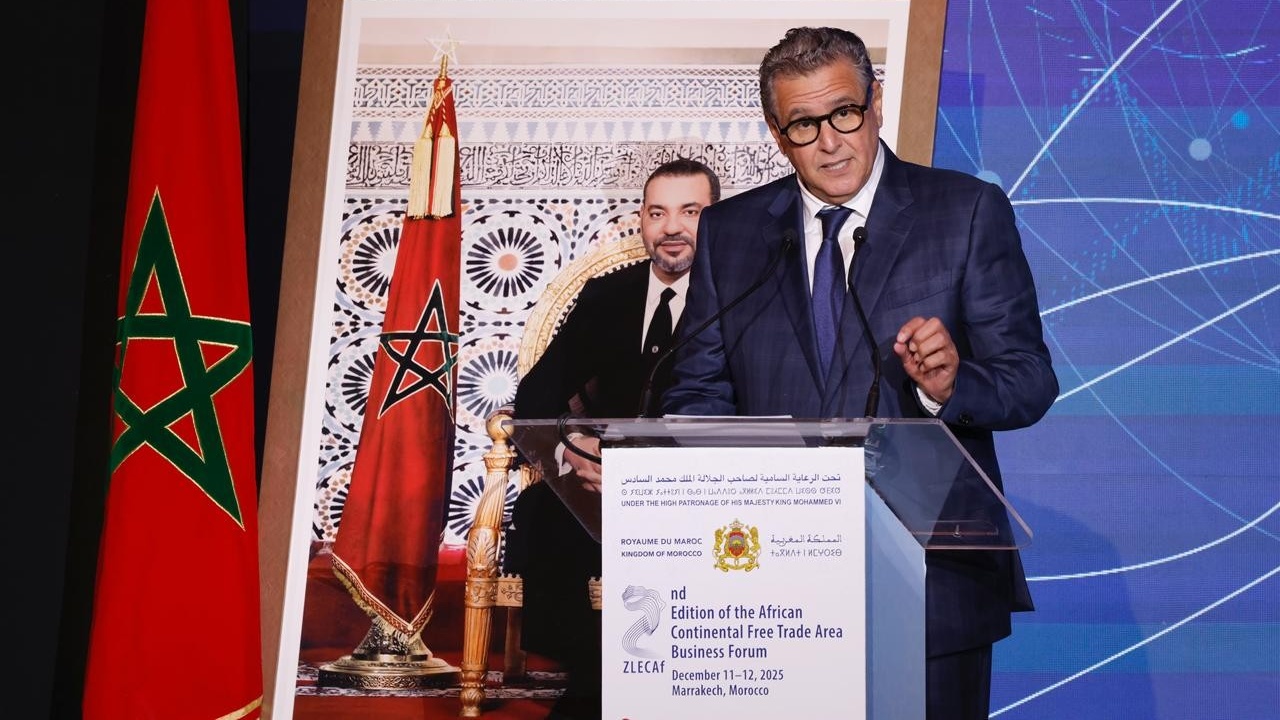
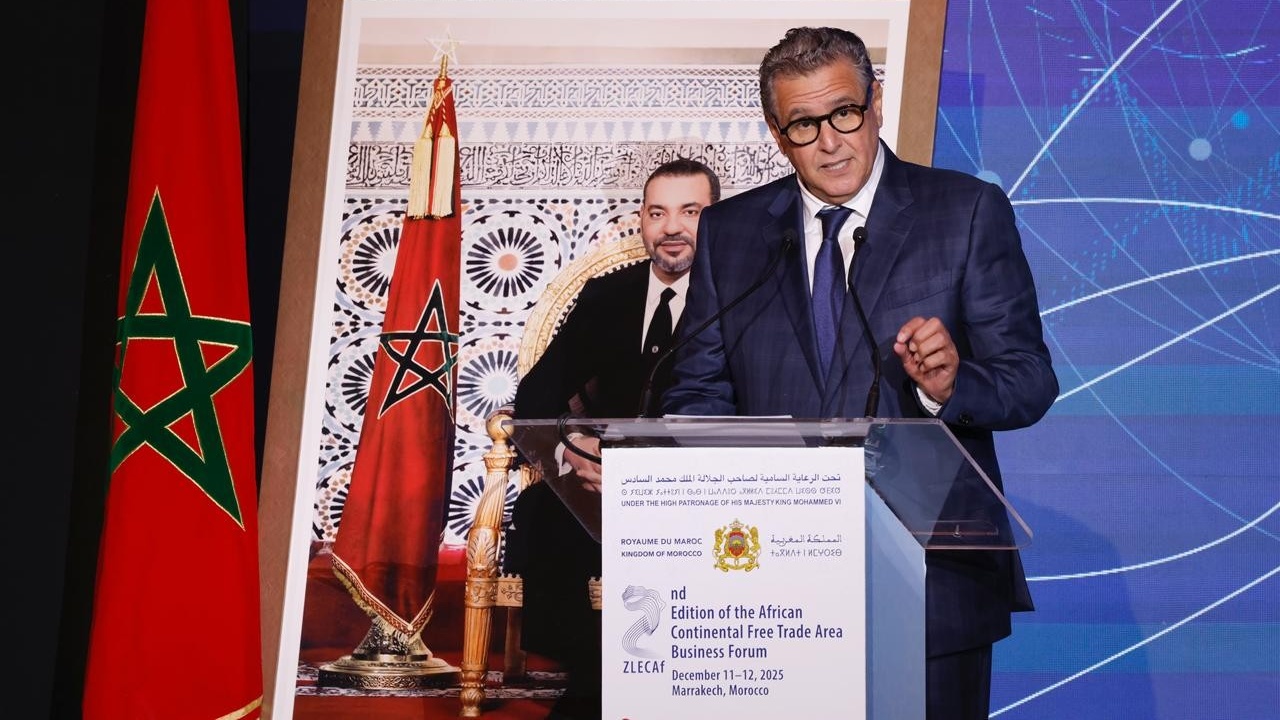
Held under the High Patronage of His Majesty King Mohammed VI, the forum brought together government officials, public institutions, economic stakeholders, banks, the Moroccan employers’ association, and investors from the Moroccan diaspora.
The main objective was clear: to strengthen the contribution of Moroccans abroad to productive investment and to turn their strong attachment to the country into tangible economic projects.
A New Role for Moroccans Abroad
In his opening remarks, Head of Government Aziz Akhannouch highlighted the economic and social importance of Moroccans abroad. Their financial contribution remains significant, with remittances to Morocco exceeding 122 billion dirhams in 2025.
However, the key message of the forum went beyond the volume of remittances. Morocco now aims to encourage part of this savings potential to move toward productive investment in sectors such as industry, services, tourism, agriculture, technology, and renewable energy.
The vision is both clear and practical: to transform the emotional and national attachment of Moroccans abroad into concrete projects that create jobs, generate added value, and support regional development.
Making Morocco a Natural Destination for Diaspora Investment
Aziz Akhannouch also stressed the government’s ambition to make Morocco the natural destination for investments by Moroccans abroad. To achieve this, several reforms were highlighted, including the new Investment Charter, improvements to the business climate, the simplification of administrative procedures, and the digitization of services related to business creation.
These measures respond to long-standing expectations among many members of the diaspora. Many Moroccans abroad wish to invest in Morocco, but they may face challenges related to lack of information, complex procedures, limited support, or uncertainty about the right institutions to contact.
The challenge, therefore, is to make the investment journey clearer, smoother, and more reassuring for Moroccan expatriate investors.
Karim Zidane: Supporting Projects, Not Just Encouraging Them
Minister Delegate in charge of Investment, Convergence and Evaluation of Public Policies Karim Zidane focused on the practical side of supporting Moroccan investors living abroad. In his view, it is not enough to call on the diaspora to invest; there must be real support from the idea stage through to the implementation of the project.
In this context, an “MDM Desk” has been set up within the Moroccan Investment and Export Development Agency. This structure is intended to serve as a guidance and support point for Moroccan investors abroad, providing reliable information, helping them understand procedures, and directing them toward suitable opportunities.
Dedicated focal points have also been planned within Regional Investment Centers to support projects led by Moroccans abroad at the territorial level. This regional dimension is particularly important, as many members of the diaspora wish to invest in their cities or regions of origin.
For Karim Zidane, Moroccans abroad can play an important role in reducing territorial disparities by launching local projects capable of creating jobs, modernizing economic activities, and connecting regions to new markets and expertise.
Driss El Yazami: Trust Remains the Key to Investment
For his part, Driss El Yazami, President of the Council of the Moroccan Community Abroad, offered a more analytical reading of diaspora investment. He stressed that the relatively limited contribution of Moroccans abroad to productive investment does not reflect a lack of interest or a lack of resources.
The willingness exists. The resources also exist. The issue often lies in insufficient trust, lack of clarity, and the absence of financial and institutional tools adapted to the needs of the diaspora.
Many Moroccans abroad hesitate to invest because they do not always know where to turn, how to secure their projects, or which mechanisms are available for support and financing. As a result, a significant portion of their savings remains directed toward real estate, consumption, or family support rather than structured economic projects.
To address this situation, Driss El Yazami called for reflection on dedicated financial tools, including diaspora bonds. Such instruments could help mobilize the savings of Moroccans abroad to finance structured projects with greater transparency, clarity, and security.
CGEM Seeks to Structure the Economic Link with the Diaspora
From the private sector side, Mehdi Tazi, the new president of the General Confederation of Moroccan Enterprises, stressed the strategic importance of Moroccans abroad for the national economy.
He pointed to the emergence of a new generation of Moroccans abroad, including engineers, entrepreneurs, investors, executives, researchers, technology experts, and start-up founders.
These profiles are active in promising sectors such as artificial intelligence, renewable energy, new technologies, finance, industry, and scientific research.
From this perspective, CGEM believes that the challenge is no longer limited to the volume of money transferred to Morocco. The real issue is how to transform remittances, savings, and expertise into structured, sustainable investments that create value.
The “13th Region” as an Economic Bridge
CGEM intends to continue playing this role through its “13th Region”, a structure dedicated to Moroccan entrepreneurs living abroad. This platform aims to create a permanent link between diaspora project leaders, Moroccan companies, banks, public institutions, and economic partners.
The objective is not limited to organizing occasional meetings. It is about building a continuous space for dialogue, networking, support, and project implementation.
CGEM also aims to relaunch a structured dialogue with the diaspora in coordination with relevant ministries, banks, and international partners. This approach could help improve incentives, facilitate access to financing, and further simplify the journey of Moroccan investors living abroad.
Ismaïl Lamghari: Toward a Win-Win Relationship
Ismaïl Lamghari, Secretary General of the department in charge of Moroccans residing abroad, placed the forum within the broader framework of the Royal Guidelines calling for renewed public policies dedicated to the Moroccan diaspora.
He recalled several mechanisms launched in recent years to support investors from the diaspora, including products developed with Tamwilcom and other support tools for investment projects.
However, the central message of his remarks was the need to build a win-win relationship with Moroccans abroad.
This means moving beyond a relationship based solely on emotional attachment to the homeland. That attachment remains strong, but it must be supported by a serious, modern, and competitive economic offer.
In this framework, Moroccans abroad should find in Morocco a credible environment to develop their projects, while the Kingdom benefits from their capital, skills, networks, and international experience.
Investing in Morocco Remotely
Ismaïl Lamghari also emphasized the importance of modern technology in facilitating investment. Today, a Moroccan living abroad does not necessarily need to be physically present in Morocco to launch or monitor a project.
Thanks to digitization, many projects can now be prepared, managed, and supported remotely, particularly in digital and technology-related sectors.
This opens important prospects for Moroccans abroad living in Europe, North America, the Gulf countries, or elsewhere, who may not be able to travel regularly to Morocco.
This possibility is especially relevant for projects related to technology, consulting, online training, e-commerce, artificial intelligence, and digital services. In these fields, distance is no longer necessarily an obstacle; it can become a way to connect Morocco to international markets.
Tangier: A Symbolic and Strategic Choice
The choice of Tangier to host the forum was far from incidental. The city now represents the image of an industrial, open, and globally connected Morocco. Through Tanger Med, industrial zones, logistics infrastructure, and proximity to Europe, the region has become one of the Kingdom’s most visible economic showcases.
For Moroccans abroad, Tangier sends a clear message: Morocco wants to channel the energy of its diaspora toward productive and future-oriented sectors, beyond traditional investments or real estate.
Tangier also represents a bridge between Morocco and the world, which mirrors the role the diaspora itself can play by connecting the Kingdom to international markets, ideas, skills, and networks.
Toward a New Economic Pact with Moroccans Abroad
The different interventions showed that Morocco is moving toward building a new economic relationship with its citizens living abroad.
This relationship is based on four key elements.
First, trust, as it remains the essential condition for any investment decision.
Second, support, because Moroccan investors abroad need guidance before launching their projects, during implementation, and after operations begin.
Third, structuring the economic link, through permanent platforms, professional networks, and suitable financing mechanisms.
Fourth, territorial anchoring, since many Moroccans abroad wish to invest in their regions of origin. To support this momentum, it is important to improve the visibility of local opportunities, better structure proposed projects, and strengthen coordination between investors, local authorities, Regional Investment Centers, and local economic stakeholders.
A Promising Initiative to Strengthen Partnership with the Diaspora
The National Forum on Investment and Moroccans Abroad represents an important initiative in strengthening economic ties between Morocco and its diaspora.
The remarks delivered by Aziz Akhannouch, Karim Zidane, Driss El Yazami, Mehdi Tazi, and Ismaïl Lamghari reflected a shared direction: to better leverage the economic, human, and entrepreneurial potential of Moroccans abroad while strengthening mechanisms for support, information, and trust-building.
The forum also highlighted the importance of a structured approach based on clear mechanisms, regional proximity, private-sector mobilization, and a simplified investor journey.
In this regard, the initiatives announced — particularly stronger institutional support, the mobilization of Regional Investment Centers, the role of CGEM, and the promotion of financing tools — send positive signals toward a more effective partnership with the diaspora.
Beyond the discussions held in Tangier, the challenge will be to maintain this momentum over the long term through regular follow-up, operational tools, and stronger coordination among all stakeholders involved.
Moroccans abroad not only maintain a deep attachment to the Kingdom; they also bring valuable skills, networks, and experience. From this perspective, the Tangier Forum opens encouraging prospects for a renewed partnership with the Moroccan diaspora in support of investment, employment, innovation, and balanced development across Morocco’s regions.
💬 Commentaires (0)
Aucun commentaire. Soyez le premier !
✏️ Laisser un commentaire