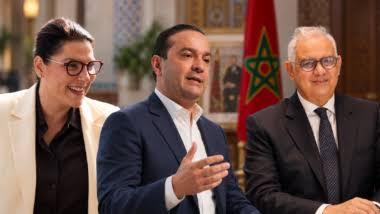
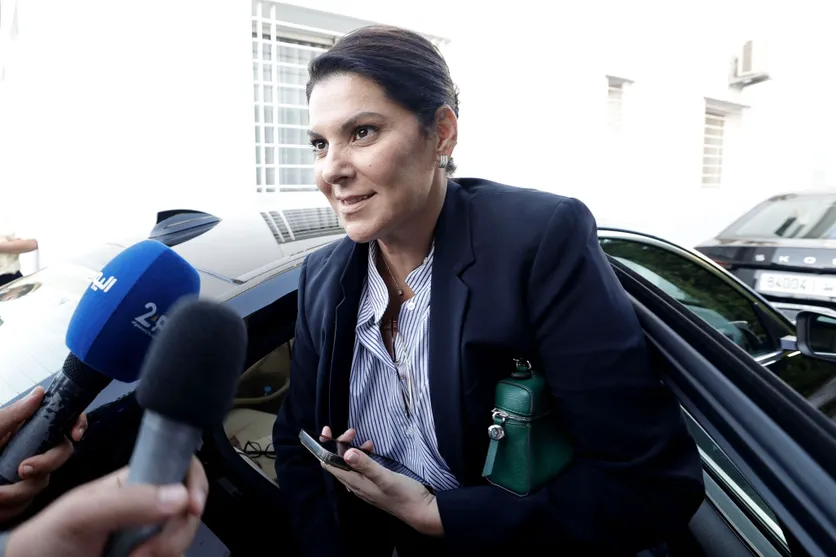
The historic image is already fixed. On 29 September, King Mohammed VI appointed Fatima Ezzahra El Mansouri as head of government and asked her, under Article 47 of the Constitution, to form the next cabinet. She is the first woman to hold the office.
History, however, does not produce a parliamentary majority.
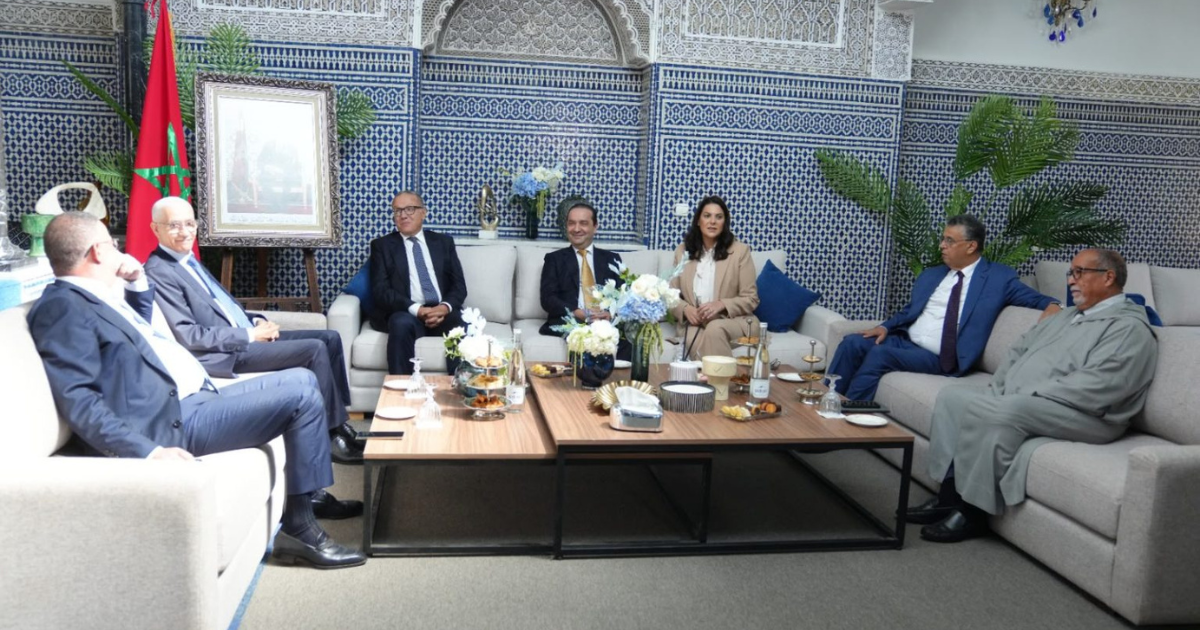
El Mansouri’s Authenticity and Modernity Party holds 97 of the 395 seats in the House of Representatives. She needs 198 for an absolute majority — another 101 votes. Since 30 September, she has consulted the RNI, Istiqlal, the Popular Movement, the USFP, the PPS, the Constitutional Union and the Democratic and Social Movement. The PJD, with 54 seats, has chosen opposition.
Formal bargaining now begins. Every available route comes with a political bill.
The RNI is the easiest partner to count — and the hardest to explain
A PAM–RNI–Istiqlal coalition would command 228 seats. It would be compact, experienced and familiar: the same three parties governed together during the previous term, although in a different order.
That familiarity is precisely the problem.
PAM campaigned against the record of the outgoing RNI-led government, while the two parties exchanged blame over social policy and rising living costs. The RNI’s fall to 66 seats was widely interpreted as an electoral rebuke. Returning it immediately to office could make the election look like a change in hierarchy rather than a change in government.
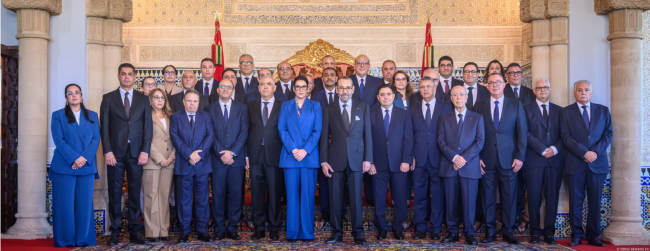
PAM’s own national council exposed the tension on 3 October. Some members wanted red lines against particular alliances. The meeting ended by unanimously authorising El Mansouri and a negotiating committee — including Abdellatif Ouahbi, Fouzi Lekjaa and Ahmed Akhchichen — to continue the talks.
There is still no fully formalised exclusion of the RNI. Istiqlal leader Nizar Baraka said PAM had decided not to renew that coalition, but PAM’s national council adopted no public resolution explicitly barring it. The RNI says it is ready to participate and has mandated its president, Mohamed Chouki, to negotiate.
El Mansouri’s first challenge is therefore to preserve room for manoeuvre without looking indecisive — and to respect her party base without becoming trapped by its preferred red lines.
Without the RNI, four parties are needed
PAM and Istiqlal together have 162 seats. Add the USFP’s 26 and the total reaches 188, still ten short. Adding the PPS would produce a four-party majority of 207.
Another route would bring together PAM, Istiqlal and the Popular Movement for 191 seats, then add the Constitutional Union, PPS or USFP. Again, at least four parties would be required.
| Coalition | Seats | Political meaning |
|---|---|---|
| PAM–RNI–Istiqlal | 228 | Efficient arithmetic, limited appearance of change |
| PAM–Istiqlal–USFP–PPS | 207 | A political alternative to RNI, but more complex bargaining |
| PAM–Istiqlal–MP–UC | 208 | Viable four-party coalition with several internal balances |
| PAM–Istiqlal–MP–USFP | 217 | Comfortable majority, potentially heterogeneous programme |
Four parties bring four leaderships, organisational cultures and sets of priorities. Cabinet seats are only part of the discussion. The coalition must agree on budget choices, social reform, governing methods and who carries responsibility when unpopular decisions arrive.
A large numerical majority can still be politically brittle.
Istiqlal holds the strongest negotiating hand
With 65 MPs, Istiqlal is not mathematically unavoidable in every theoretical combination, but it is the most natural partner for building a government with political and territorial weight.
Its national council authorised further talks while linking participation to the treatment of its campaign commitments. That position gives Nizar Baraka leverage. The more El Mansouri needs Istiqlal to exclude the RNI, the higher its political asking price becomes.
The smaller parties understand the same equation. Once their votes become necessary to cross 198, their influence is no longer proportional only to their size. It is proportional to their indispensability.
Symbolism will quickly give way to delivery
El Mansouri’s appointment broke a political barrier. It does not provide an unlimited grace period.
Her government must prepare the 2027 budget, oversee investments linked to the 2030 World Cup and answer campaign demands on jobs, prices, health, education, housing and regional inequality. Turnout fell to around 38%, adding pressure to demonstrate that elected institutions can still produce visible change.
She is solving two equations at once. The first is to assemble 198 seats. The harder one is to give that majority a political purpose.
If she chooses continuity, she must prove that new leadership changes priorities and method. If she excludes the RNI, she must show that a broader coalition can remain coherent and decisive.
Moroccans abroad are still outside the public bargaining agenda
For the diaspora, the first consultation round has revealed a familiar gap. MRE communities are praised in political speeches, but their priorities have not yet emerged publicly as a distinct part of the coalition agreement.
Political representation, evaluation of electronic voting proxies, administrative simplification, property protection, productive investment, recognition of diaspora expertise and cross-border social rights should not be an afterthought. These issues concern millions of citizens and affect Morocco’s economic and diplomatic links with the world.
Any coalition claiming a new beginning should publish clear commitments, timetables and measures of delivery for Moroccans abroad.
El Mansouri is not facing a deadlock. She has several paths to office. Her real difficulty is choosing the one that can survive parliament, cabinet trade-offs and public judgement.
The RNI offers easy arithmetic but carries the outgoing government’s burden. A coalition without it offers a cleaner break but requires more partners. Istiqlal offers stability while demanding influence. Smaller parties provide decisive votes and will price them accordingly.
The talks will determine more than who gets a ministry. They will reveal what it means to win a Moroccan election in 2026 without being able to govern alone.
💬 Commentaires (0)
Aucun commentaire. Soyez le premier !
✏️ Laisser un commentaire