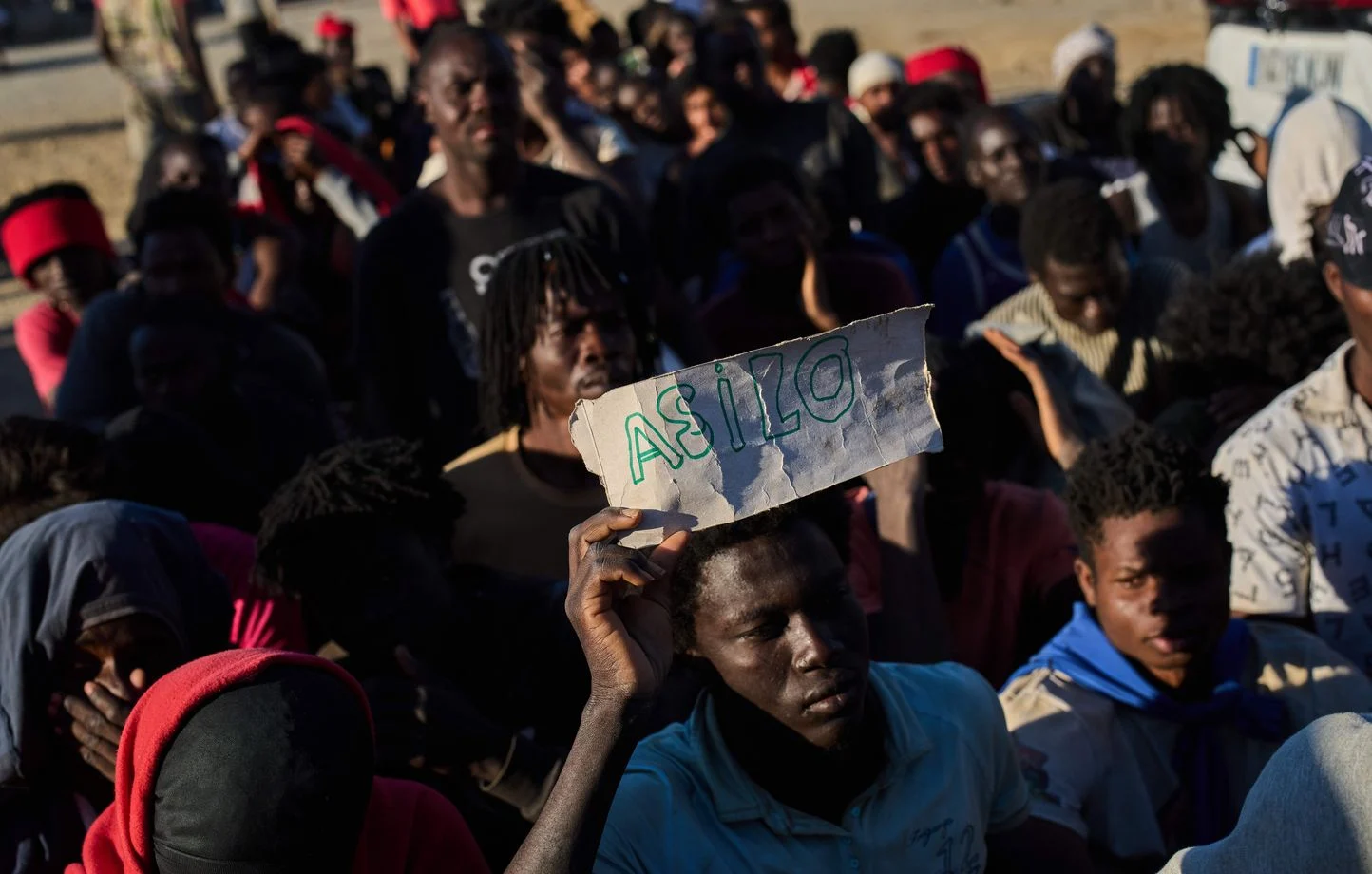
The Ceuta border has returned to relative calm, but the crisis is far from over. On Friday, August 7, the main challenge is no longer the arrival of large numbers of migrants, but the management of those who remain in the enclave, especially unaccompanied minors, as well as the identification of victims.
Spanish authorities are currently working to identify 80 bodies, only four of which had been formally identified according to the latest available information. DNA samples and fingerprints have been collected to help families locate missing relatives, while 19 official missing-person reports have also been registered.
Morocco moves from defence to initiative
The most important development on the Moroccan side is the Kingdom’s formal announcement that it is ready to cooperate in the return of unaccompanied Moroccan minors currently in Spain, following Royal instructions addressed to the Ministries of the Interior and Foreign Affairs.
Around 1,100 unaccompanied minors are believed to be in Ceuta, although not all of them necessarily arrived during the latest surge.
Their return cannot, however, take place automatically. Spanish law requires each case to be examined individually, taking into account the best interests of the child, verification of identity, family circumstances and the conditions under which reunification could take place.
This is precisely where the Moroccan position becomes important.
Rabat is not refusing to take back its minor nationals. It is offering to cooperate within a legal framework that respects the required safeguards.
This removes a significant argument from the debate in Spain: Morocco is not blocking returns, while Spanish legal procedures themselves prevent collective or automatic repatriations.
The minors issue becomes a domestic political crisis in Spain
The situation of unaccompanied minors has become one of the most sensitive aspects of the crisis inside Spain.
A total of 1,342 minors have reportedly been registered in Ceuta, and Madrid is seeking to redistribute them among Spain’s autonomous regions in order to relieve pressure on the enclave.
The plan is already facing resistance from some regional governments, particularly those controlled by right-wing parties.
Spain’s public prosecutor has also entered the debate, warning regional authorities that they must comply with their legal obligations regarding the protection of minors.
A crisis that began at the border has therefore become an internal political confrontation over who should provide accommodation, care and funding.
For the Spanish government, the problem is now as much legal and administrative as it is security-related.
For Morocco, the position is clearer: the Kingdom is prepared to cooperate in returning minors, but Spain’s own legal framework prevents mass or indiscriminate removals.
The memory of the 2021 crisis returns
The current situation inevitably recalls the Ceuta crisis of 2021.
At the time, Spanish authorities attempted to carry out rapid returns of Moroccan minors, but Spanish courts later ruled that the procedures had failed to respect the legal guarantees required for child protection.
Madrid is therefore acting more cautiously today.
Any new return procedure must be based on an individual assessment.
This means that delays in returning minors cannot simply be attributed to Moroccan reluctance. A significant part of the delay results from Spanish legal obligations themselves.
That distinction is important in the public debate.
In Ceuta’s morgues, another emergency begins
Away from political arguments, a much harsher reality is unfolding.
Forensic teams in Ceuta are working under intense pressure to identify the bodies of victims.
Additional specialists have been deployed, and temporary facilities have been prepared to cope with the number of bodies.
Initial findings suggest that many victims died by drowning while attempting to cross.
Spanish authorities are working with their Moroccan counterparts to establish identities and contact families.
Bodies that cannot be identified quickly may be buried in Ceuta, with arrangements expected to respect Muslim burial rites.
At this stage, Moroccan-Spanish cooperation is therefore extending beyond border management to include the identification of victims, the search for missing persons and support for families.
Madrid opens a new front with Rome
At the same time, the Ceuta crisis continues to generate tensions inside the European Union.
Spain has reportedly issued an ultimatum to Italy to end strengthened controls on travellers arriving from Spain.
Madrid argues that such restrictions are no longer justified, particularly because those who entered Ceuta have not moved in large numbers to mainland Spain or other European countries.
The dispute exposes another European contradiction.
When the border was under pressure, several countries demanded stronger security measures.
Once the situation was contained, in part through Moroccan-Spanish cooperation, some governments continued to impose their own restrictions.
Ceuta is therefore becoming not only a migration issue, but a crisis of trust within the European Union itself.
Brussels signals a tougher approach
At European level, voices are emerging in favour of using stronger leverage in dealings with partner countries on migration, including visa and trade policies.
Some European officials argue that the EU becomes vulnerable when control of its borders depends heavily on cooperation with a single neighbouring state.
But that approach carries a political risk.
The relationship with Morocco cannot be sustainably built on pressure and conditionality alone.
The crisis itself has shown that the Kingdom is not a peripheral actor that Brussels can simply instruct whenever pressure increases.
Morocco provides Europe with security cooperation, intelligence, operational capacity and geographic depth that cannot be easily replaced.
If Europe wants that cooperation to continue, the Kingdom must therefore be treated as a strategic partner rather than merely as an executor of European migration policy.
The beginning of a third phase
August 7 may mark the beginning of a new phase in the crisis.
The first phase was the mass crossing.
The second was the restoration of border control.
The third is now about managing the consequences.
And in this new stage, Morocco’s position appears stronger than it did during the first hours of the crisis.
The Kingdom has offered to take back minors.
It is cooperating in identifying victims.
It continues to secure the border and prevent new mass movements.
This allows Morocco to shift from defending itself against accusations to acting as a partner helping to resolve the crisis.
Madrid, meanwhile, is now dealing with problems that largely fall under its own domestic legal system:
How will the minors be distributed?
Who will care for them?
How will they be returned legally?
And who bears political responsibility for the lack of preparation during the first hours of the crisis?
Europe must also make a choice.
It can continue treating Morocco as a neighbour expected to absorb migration pressure whenever it rises.
Or it can acknowledge that the Kingdom is a strategic partner directly linked to the security of the EU’s southern border.
The Ceuta crisis has provided a fairly clear answer.
Europe can debate how dependent it wants to be on Morocco. It can no longer pretend that this dependence does not exist.
One week after images of crowds crossing the border, Ceuta has regained calm.
But in reception centres for minors, forensic laboratories and families still searching for loved ones, the emergency continues.
Morocco’s offer to cooperate in the return of minors creates a genuine path out of part of the crisis, provided Spain applies its own legal procedures quickly and effectively.
For Rabat, the challenge now is to continue acting with clarity and transparency.
Because the best way to defend the Kingdom’s interests is not to minimise the tragedy.
It is to demonstrate, through facts and actions, that when it comes to restoring order, identifying victims, taking responsibility for its nationals and contributing to stability in the western Mediterranean, Morocco fulfils its responsibilities.
💬 Comments (0)
No comments yet. Be the first!
✏️ Leave a comment