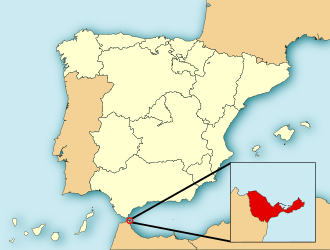
Morocco keeps pressure contained upstream
After the events of July 30 and 31, and renewed mobilisation calls around August 15, Moroccan authorities significantly reinforced security around Fnideq. Road checks, monitoring of gathering points and preventive interventions have so far prevented another large movement towards Ceuta. That is now one of the key facts of the crisis: migration pressure has not disappeared, but more of it is being contained before reaching the border. The distinction matters enormously for Spain.
When a group is stopped near Fnideq, it remains primarily a migration and public-order issue managed in Morocco. Once the border is crossed, the same movement can become for Spain a matter of accommodation, asylum, health care, child protection and justice.
Several thousand people are still in Ceuta
The exact number of people remaining in the enclave is still difficult to establish. Spanish estimates vary considerably. Some place the figure at around 5,000, while others are higher.
For MMNEWS, the most accurate formulation remains therefore: several thousand people are still in Ceuta, without a single consolidated total recognised by all authorities.
That uncertainty alone illustrates the administrative challenge. Authorities must identify people, determine their legal status, process protection claims and organise returns where legally possible.
Minors have become the most sensitive issue
The situation of minors is now at the centre of the crisis.
Spanish authorities had identified 2,168 minors since July 30 by August 18. Around 1,400 were subsequently reported to be housed in child-protection facilities, while others remained outside the formal system. Madrid is also considering transferring several hundred girls considered particularly vulnerable to mainland Spain.
The issue therefore goes far beyond border enforcement. A minor cannot be processed in the same way as an irregular adult migrant. Age, identity, family circumstances and the child’s best interests must be examined before any decision is taken. Rabat, for its part, wants the return of Moroccan minors to be accelerated when family reunification is possible.
Spain is beginning to pay the institutional cost
Madrid is no longer operating solely in emergency mode. The Spanish government is preparing a broader financial and institutional response designed to stabilise Ceuta.
Millions of euros are expected to support the local economy, reinforce accommodation capacity and help cover the cost of caring for minors. Judicial and forensic services also need additional resources.
The crisis has forced Madrid to coordinate several ministries, including Interior, Defence, Foreign Affairs, Migration, Justice and Youth. That fact alone shows that Ceuta is no longer facing a simple border incident. It is dealing with a full institutional crisis.
The dead keep the human dimension at the centre
On August 21, the first victims of the late-July disaster began to be buried at the Muslim cemetery of Sidi Embarek. Some graves remain numbered pending possible identification. Moroccan families are still searching for missing relatives. Behind the statistics lies another reality: parents waiting to know whether a son or brother survived.
A European border that also depends on Morocco
The current situation highlights a strategic fact. The stability of this section of Europe’s external border depends heavily on cooperation with Morocco. That does not mean Rabat should become “Europe’s border guard”.
Morocco acts first to protect its own territory, combat trafficking networks and maintain public order. But the effect is obvious: every movement contained around Fnideq directly reduces pressure on Ceuta and on Spanish institutions.
As of August 22, Ceuta is calmer than it was at the end of July, but the crisis is entering a longer and probably more expensive phase. Spain must now manage thousands of people, protect minors, organise returns, identify victims and repair the economic consequences. Morocco, meanwhile, continues to act upstream to prevent another major breach.
The Ceuta crisis shows that preventing a crossing is costly, but managing its consequences after the border has been crossed costs even more. And along this Western Mediterranean route, one reality is becoming increasingly clear: a significant part of the protection of Europe’s external border begins today in Morocco.

💬 Comments (0)
No comments yet. Be the first!
✏️ Leave a comment