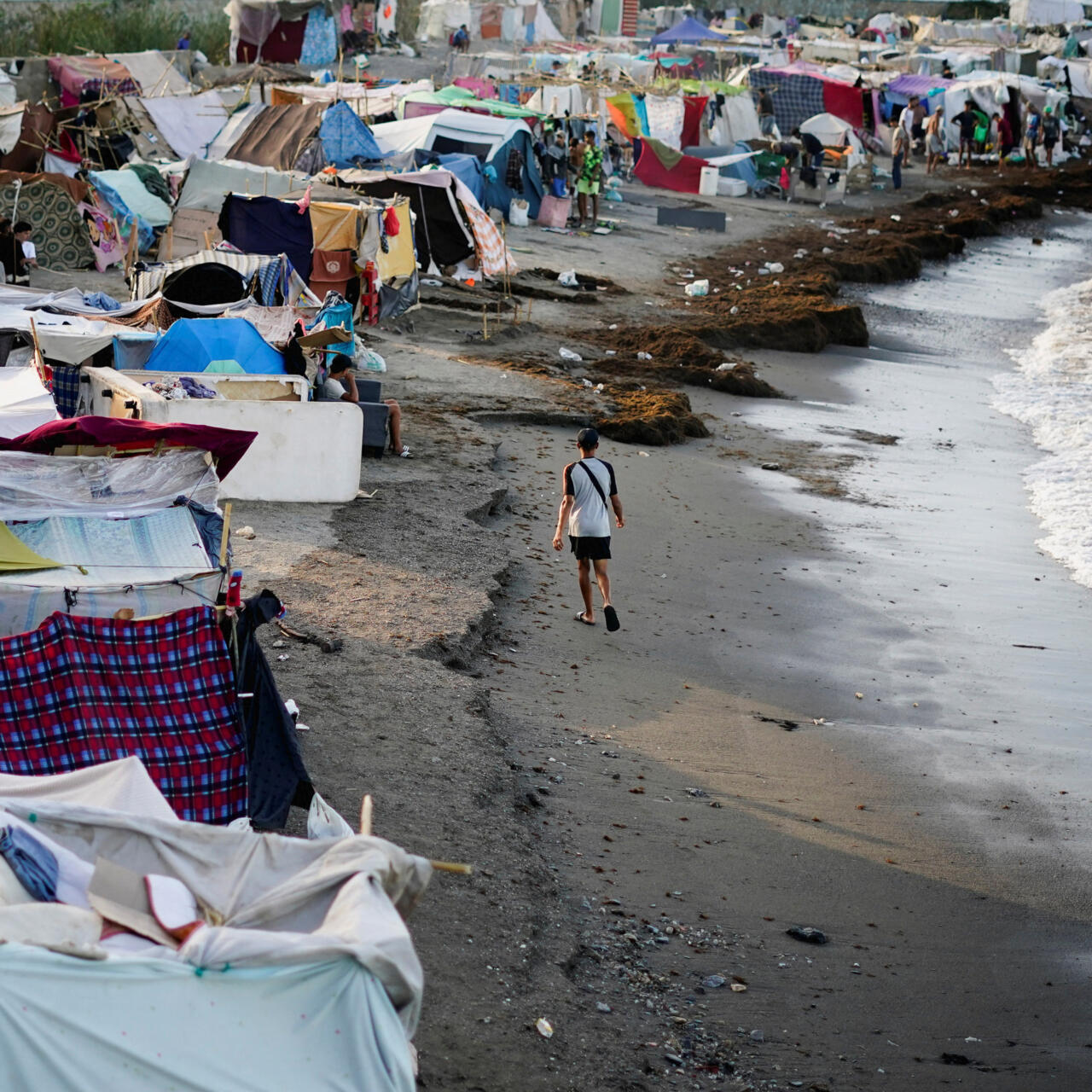
Ceuta has largely disappeared from the international news cycle. The humanitarian crisis inside the Spanish-administered enclave has not.
Spanish authorities say the beaches and the largest makeshift camps have been cleared. Thousands of people have crossed back into Morocco, while others have entered temporary accommodation or applied for international protection. Yet potentially thousands more remain unregistered, sleeping rough, moving between informal shelters or hiding from the police.
The central question is no longer simply how they entered Ceuta. It is what is now happening to them.
Twelve thousand returns — but no complete register
Spanish Interior Minister Fernando Grande-Marlaska says roughly 12,000 people have voluntarily returned to Morocco since mid-August. Madrid denies that covert deportations are taking place and insists that those crossings were voluntary.
Humanitarian organisations have challenged that account in some individual cases. Migrants have reportedly claimed that they were taken towards the border without fully understanding where they were going or without first receiving legal advice. These allegations have not been established by a court, but several organisations have submitted a complaint to Spain’s ombudsman.
No authoritative figure exists for the number of people still in Ceuta. A police union representative has estimated that between 7,000 and 8,000 migrants may remain. The Spanish government has not endorsed that number, arguing that people hiding in hills, abandoned buildings and residential areas cannot be accurately counted.
That gap matters. Without a consolidated register, it is impossible to establish how many Moroccans have applied for asylum, how many are waiting to be identified and how many have left without appearing in public statistics.
An asylum system struggling with the caseload
Spanish officials say as many as 1,200 international protection applications have been lodged and around 700 resolved. By mid-October, however, police teams were reportedly registering only about 100 people a day.
The backlog has created an exhausting state of limbo. Charities are operating beyond their normal capacity. Other migrants are sleeping outdoors or moving around the city to avoid identification. Local doctors have reported cases of scabies, tuberculosis and gastrointestinal illness associated with prolonged exposure and poor sanitation.
The Spanish government says it is combining border control with humane treatment. Extra police and asylum personnel have been deployed, while hundreds of millions of euros have been mobilised for security, accommodation and support for Ceuta’s economy.
Officials described the removal of beach camps as a turning point. Clearing visible encampments, however, is not the same as resolving every individual case.
Moroccan nationality does not cancel the right to seek asylum
Many Moroccan arrivals may ultimately be classified as economic migrants and ordered to return. That conclusion cannot lawfully be applied to the entire group without examining individual circumstances.
European rules require an individual assessment. Coming from a country treated as generally safe does not automatically remove a person’s right to request protection. Moroccan nationals may raise specific risks linked to persecution, sexual orientation, domestic violence, medical vulnerability or other personal circumstances.
The EU Pact on Migration and Asylum, in force since 12 June 2026, introduces faster border procedures but retains legal safeguards. Irregular arrivals must undergo registration, identity and security checks, health screening and a vulnerability assessment before being directed towards an asylum or return procedure.
Detention is meant to remain a last resort, based on an individual assessment and subject to judicial oversight.
Spain’s Interior Ministry also says applicants at the border are entitled to legal assistance, potential involvement by the UN refugee agency and an opportunity to have a decision reviewed.
Unaccompanied children face the greatest risks
The position of unaccompanied minors is particularly sensitive. At least 262 children have reportedly been transferred to mainland Spain since July. Others may still be waiting to be registered or placed in child-protection accommodation.
Local reporting has documented young migrants sleeping outside police premises after being removed from an informal site. The scenes exposed the limits of a system attempting to determine age, identity and protection needs while operating under severe pressure.
EU rules require the rapid appointment of a representative for unaccompanied minors. Border procedures should not normally be applied to them unless exceptional security considerations arise. Any possible return must therefore include an assessment of family circumstances and the child’s best interests. It cannot be handled as an ordinary adult removal.
Three possible paths, but no reliable timetable
Three broad outcomes now face the Moroccans who remain in Ceuta.
Those with admissible protection claims may continue through Spain’s asylum process. Vulnerable people may be transferred to more appropriate facilities, including on the mainland. People who do not seek asylum, or whose applications are definitively rejected, may be returned to Morocco under the applicable legal procedures.
The unresolved issue is how long this will take. The EU’s twelve-week target appears difficult to meet because of the scale of the caseload, limited administrative capacity and the number of people who have not yet been located or registered.
Moroccan families searching for missing relatives face an additional obstacle: no single public list brings together those who returned, those still in Ceuta, hospital patients and children taken into care. Clearer cooperation between Spanish authorities, Moroccan consular services and humanitarian organisations is urgently needed.
Ceuta cannot be allowed to become a waiting room without records, information or a credible exit. Restoring border control is a legitimate public responsibility. The real measure of success, however, will be the number of people identified, claims individually examined, children protected and families finally given reliable answers.


💬 Commentaires (0)
Aucun commentaire. Soyez le premier !
✏️ Laisser un commentaire