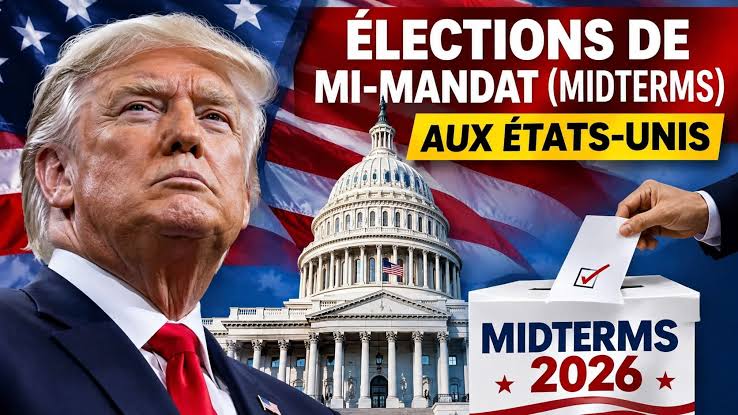
Associated Press and Reuters report Democratic victories in both the House of Representatives and the Senate. Donald Trump remains president, but an opposition-controlled Congress will have greater leverage over his legislative agenda and administration.
The immediate significance is institutional. Voters have changed who can scrutinise presidential decisions and negotiate the terms of federal legislation. They have not replaced the president or automatically enacted the Democratic platform.
An economic verdict
Early voter surveys reported by Reuters identify living costs as a central concern and show strong demand for Congress to exercise greater checks on the president. These findings help explain the result without capturing every voter’s motivation.
The political implication is that cultural and security arguments could not fully offset dissatisfaction with economic conditions. Voters assessed the administration against their experience of prices and financial pressure.
For Moroccans in the United States, that is a crucial part of the story. Diaspora interests include housing, healthcare, transport and the viability of small businesses. Immigration matters, but it is not the only lens through which this election should be understood.
Power to constrain is not unlimited power to legislate
Democrats will gain leverage over legislation and oversight. Their Senate majority will also influence the confirmation of federal officials and judges.
Yet a congressional majority does not remove institutional obstacles. Ending debate on much Senate legislation normally requires 60 votes. The president can veto bills, and overriding a veto requires a two-thirds vote in each chamber.
Two broad scenarios follow. Targeted compromises could allow both parties to claim practical achievements. Alternatively, confrontation could produce legislative stalemate and difficult budget negotiations. These are analytical possibilities, not established outcomes.
Democrats now face their own test: turning opposition to the president into a credible record of government influence.
Immigration remains a contested policy field
For Moroccan nationals, the new majority may mean stronger scrutiny of immigration agencies and different legislative priorities. It does not itself create a regularisation programme, issue visas or expand green-card eligibility.
The meaningful developments will be enacted provisions, appropriations and administrative decisions. Readers should distinguish a proposal from an adopted measure and an adopted measure from one that has entered into force.
Political sympathy, on its own, does not change an individual immigration case.
Canada’s exposure is primarily economic
For Moroccans in Canada, the larger potential effects run through trade and investment. In July, the Canadian government described ongoing discussions with Washington over tariffs affecting steel, aluminium, automobiles and softwood lumber, alongside the CUSMA review process.
An opposition-controlled Congress may offer Ottawa additional channels for engagement. It does not guarantee an end to trade disputes or Democratic agreement with Canadian priorities.
Moroccan employees and business owners in Canada should therefore watch decisions affecting orders, supply chains, investment and operating costs. Any employment consequences will depend on those decisions rather than on the election result alone.
Morocco’s relationships will require attention across Congress
The membership and leadership of foreign affairs, defence and appropriations committees will be worth following. Our assessment is that examining individual lawmakers’ positions will be more useful than labelling the new Congress broadly favourable or hostile to Morocco.
The election itself establishes no change in US policy on the Sahara or bilateral cooperation. Such a conclusion would require explicit statements or documented decisions.
The new congressional terms begin on January 3, 2027. The central question is what Democrats do with their new leverage: negotiate, obstruct, investigate—or combine all three.
For Moroccan communities across North America, the lasting significance will lie in the policies that follow.


💬 Comments (0)
No comments yet. Be the first!
✏️ Leave a comment