Winning parliamentary confidence establishes the authority to govern. Sustaining public confidence requires evidence that commitments can be delivered.
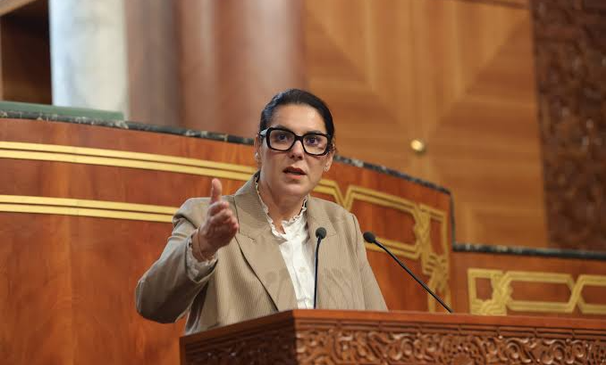
On 22 October, Morocco’s House of Representatives approved Fatima Ezzahra El Mansouri’s programme by 204 votes to 127, following its presentation on 19 October. The vote completed the government’s parliamentary investiture.
The administration must now convert that support into a consistent legislative programme. Budget votes, implementing rules and negotiations within the majority will reveal how effectively its political backing can support its ambitions.
Women’s authority becomes a defining issue
El Mansouri’s exchange with the PJD revived an older metaphor comparing women to chandeliers illuminating the home.
The context deserves care. The comparison refers to past remarks by Abdelilah Benkirane. In a 2016 clarification published by the PJD, he denied opposing women’s employment. It would therefore be inaccurate to treat the metaphor as evidence of a blanket ban on women working.
The political criticism remains legitimate. A description intended to honour women’s family contribution can also suggest that their value belongs within a predetermined domestic setting.
El Mansouri rejected that implication and invoked women who work and support households. Her intervention asserted that women’s standing in public life rests on competence and responsibility.
That principle deserves support. Its practical strength will depend on employment opportunities, access to leadership, care services and enforceable rights. Political recognition must be accompanied by conditions that allow women to exercise meaningful choices.
Social protection and the credibility of implementation
On 23 October, Finance Minister Fouzi Lekjaa presented the 2027 Finance Bill, opening a distinct stage in scrutiny of the government’s commitments.
The proposed pension measures include a MAD 1,700 monthly minimum in 2027, rising towards MAD 3,000 by the end of the term, and an increase in widows’ survivor pensions from 50% to 100%. Implementation must reflect the pension schemes concerned and protect other beneficiaries’ rights.
The social case is strong. Bereavement can sharply reduce income while leaving housing, healthcare and children’s expenses largely unchanged.
Support for reform should therefore come with precise scrutiny. Families need clear eligibility rules, effective dates and straightforward procedures. An announced entitlement becomes meaningful when beneficiaries can understand and access it.
Planned increases in direct assistance, support for qualifying electricity bills and tax relief pursue the same objective: improving household finances. Their effectiveness will depend on targeting, actual purchasing-power gains and sustainable funding.
The opposition’s responsibility
The PJD is entitled to challenge financing and implementation deadlines. Its published criticism includes objections to postponing some objectives until the end of the term.
Arguments over who first proposed a measure can clarify the political record. They cannot substitute for examining the current proposal.
A useful opposition identifies weaknesses and offers corrections. A responsible government answers those objections on their merits. Policies may develop across administrations; public benefit should remain the central measure of success.
The RNI’s position also needs accurate description. Its published stance opposed granting confidence, citing insufficient clarity and implementation guarantees. Characterising this episode as simple abstention would misstate its announced position.
Its credibility will depend on explaining where it supports continuity and where it proposes a different course. Amendments and consistent voting will matter more than assumptions about its motives.
Moroccans abroad need measurable commitments
El Mansouri has referred to activating the Mohammedia Foundation for Moroccans residing abroad and improving diaspora-related services. It would be excessive to claim that the government has announced nothing for overseas citizens.
The stronger question concerns implementation: responsibility, resources, deadlines and accessible remedies when services fail.
Remittances reached MAD 89.215 billion through August 2026, up 9% year on year, according to the Office des Changes. These funds support families and economic activity. They are not revenue directly allocated to the state budget’s new social measures.
That distinction sharpens the political issue. The diaspora’s relationship with Morocco extends beyond money transfers and investment. It includes property protection, administrative access, reliable consular services and participation in public life.
A credible policy should publish objectives against which citizens can assess progress. Supporting stronger protection for women and vulnerable households is entirely compatible with demanding the same precision for Moroccans abroad.
The government has secured parliamentary confidence. Its next task is to make the results of that mandate visible to citizens wherever they live.


💬 Comments (0)
No comments yet. Be the first!
✏️ Leave a comment