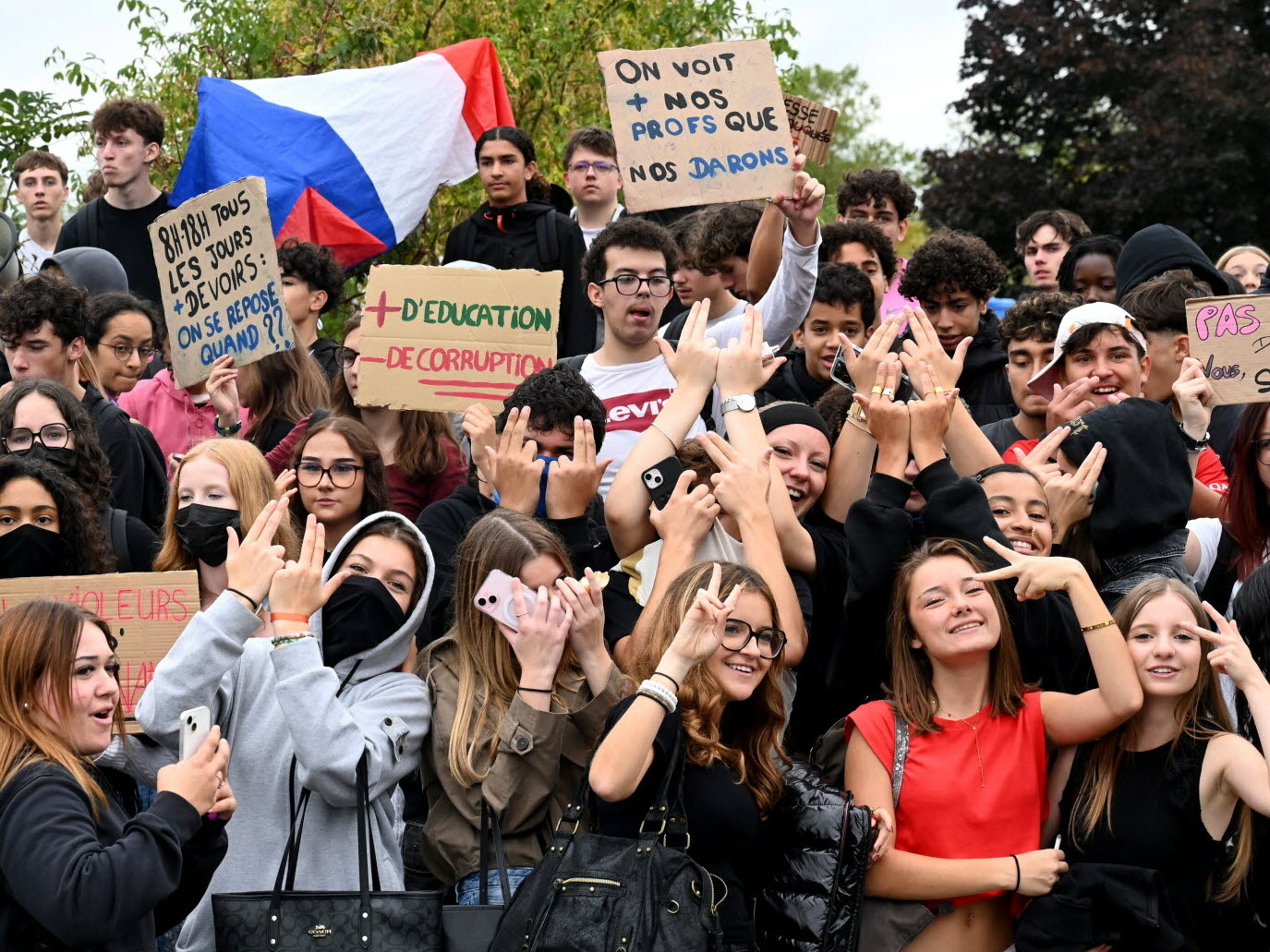
The concerns expressed by French students deserve to be heard. Young people have cited exhausting schedules, under-resourced schools, teacher shortages and a feeling that decision-makers do not listen to them. Those issues call for dialogue and public action.
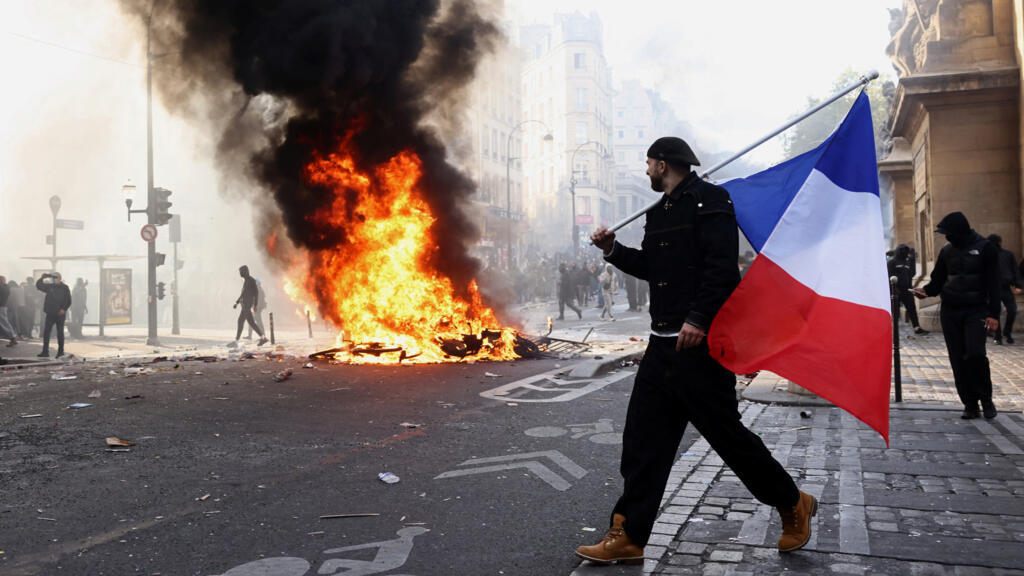
Yet violence has emerged on the margins of the movement. Reuters reported that just over 400 schools and educational institutions were expected to remain closed on Friday, 2 October. France’s justice minister said around 2,000 people had been arrested since the protests began, with roughly two-thirds placed in police custody. Fires were reported at at least two schools, a car was torched in Strasbourg and clashes occurred in Toulouse. In Marseille, a fire engine was set alight and transport workers were injured. These are provisional figures in a fast-moving situation.
Two facts must not be confused: student grievances can be legitimate, while arson, assault and vandalism remain unacceptable. The peaceful majority should not be conflated with those committing violence.
Speaking out is civic action; destroying property is not
Peaceful protest, debate, petitions, contacting elected officials and joining student or trade-union bodies are legitimate forms of participation. Organisers of demonstrations on public roads are generally required to submit a prior declaration to the relevant French authority.
Setting fire to a bin, vehicle or school, smashing a shop window, throwing projectiles or attacking firefighters, teachers, public servants or demonstrators is not political expression. Such conduct can lead to criminal prosecution.
Under Article 322-1 of the French Criminal Code, destroying, damaging or defacing property belonging to another person may be punishable by two years’ imprisonment and a €30,000 fine, except where only minor damage results. Penalties can be far heavier when fire, explosives, violence or danger to others are involved. A crowd may also be dispersed after two unanswered orders to leave.
Minors are not outside the law. A minor suspected of an imprisonable offence may be taken into police custody under juvenile-justice safeguards, including mandatory legal assistance. Parents exercising parental authority are, in principle, jointly liable under civil law for damage caused by their minor children.
A direct message to young Moroccans in France
Your future is worth more than a viral clip, an online dare or a few minutes of adrenaline. A provocateur will not serve your police custody, face your court case, endure your injury or repair the damage you caused.
If you attend a protest:
- check its route, legal framework and organisers’ safety instructions;
- carry no weapon, projectile or flammable substance;
- do not amplify calls for violence or expose victims online;
- leave promptly if arson, looting or clashes begin;
- comply with lawful dispersal and safety instructions;
- tell a trusted relative where you are;
- in an immediate emergency in France, call 17 or 112.
Leaving a dangerous crowd is not cowardice. It protects people and preserves the cause you want heard. A demand for better schools loses its moral force when a school is burned.
Parents, associations, educators, elected officials and community leaders also carry responsibility. They should listen without dismissing young people’s frustrations, correct misinformation and explain legal consequences. The message must not be “stay silent,” but “organise, document, petition, debate and demonstrate peacefully.”
Every Moroccan living abroad can be an ambassador in a moral—not diplomatic—sense: representing family, upbringing and a heritage shaped by dignity, respect, solidarity, restraint and care for one’s neighbour. This is personal responsibility, never collective guilt. No evidence reviewed by MMNEWS shows disproportionate involvement by young Moroccans in the violence, and no individual offence should be used to stigmatise an entire community.
The line is clear: to demonstrate is to speak; to vandalise is to lose that voice. Young Moroccans can be outspoken without violence, proud without provocation and engaged without sacrificing their future.
💬 Commentaires (0)
Aucun commentaire. Soyez le premier !
✏️ Laisser un commentaire