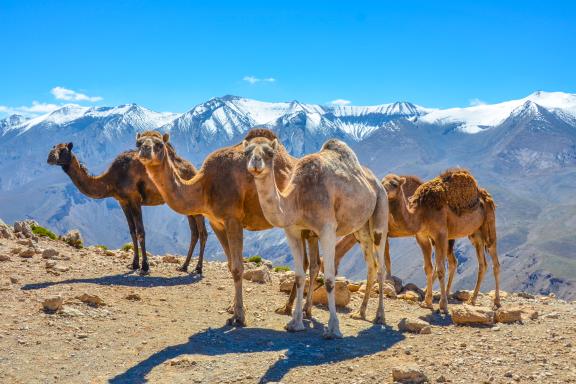
The first turn out of Marrakesh changes the scale of the journey. City walls give way to mountain roads; the colours shift from ochre to stone, then back to earth. This is not a race to the Sahara. The road — through Telouet, Aït Ben Haddou, Skoura, the Dadès Valley, Nkob and M’Hamid — is the experience.
An eight-day route designed to slow travel down
Day 1: Marrakesh. Begin with the medina in the early hours, architectural heritage, artisan workshops and a small riad. For younger Moroccans raised abroad, the city can bridge the Morocco inherited at home and the country evolving before them.

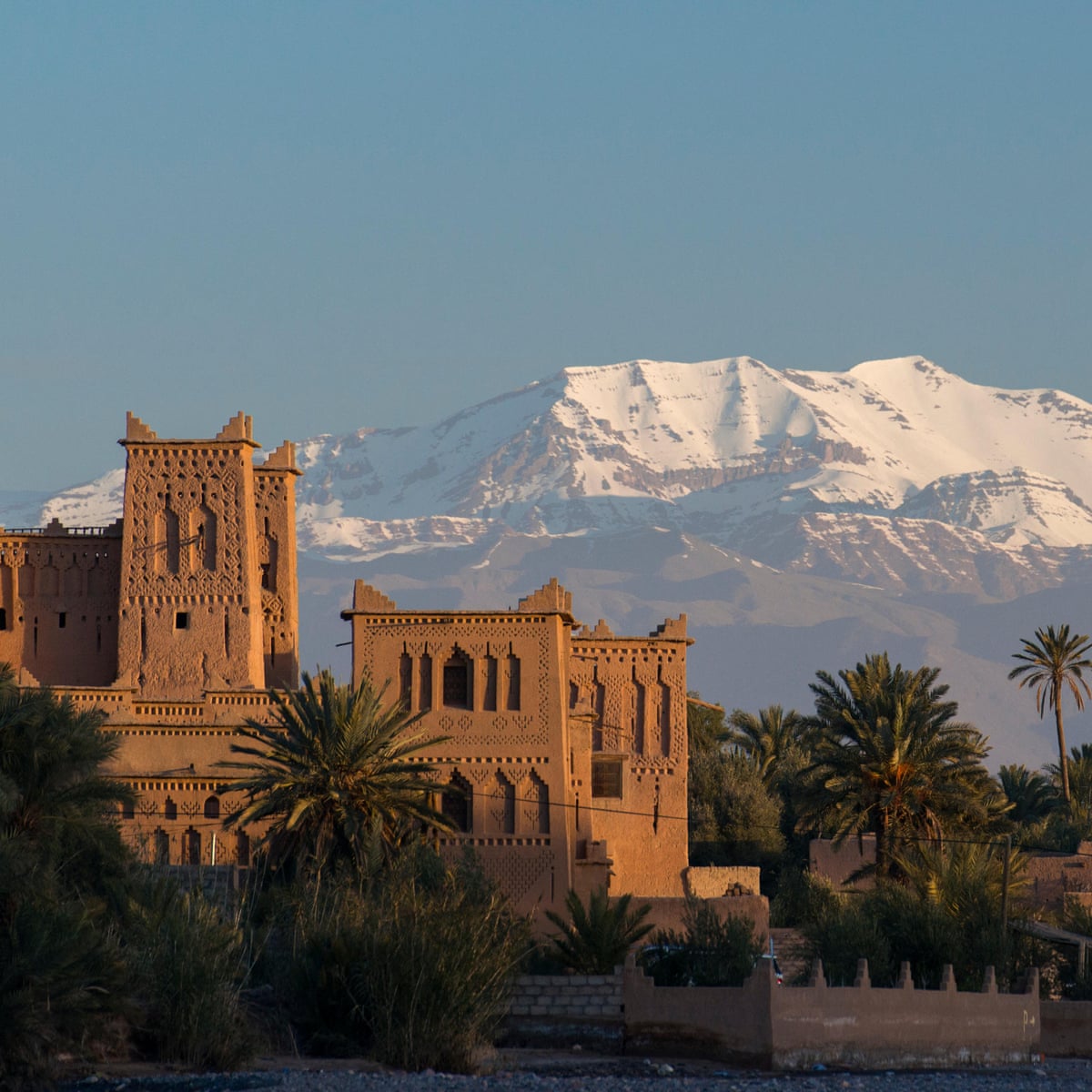
Day 2: Telouet and the Ounila Valley. Cross the High Atlas without rushing. Villages appear to grow from the mountainside, and earthen architecture reveals how communities have adapted to the terrain. Mountain roads may be affected by snow, rain or works; conditions must be checked before departure, and night driving should be avoided.

Day 3: Aït Ben Haddou and Skoura. UNESCO describes Aït Ben Haddou as a striking example of southern Moroccan earthen architecture and pre-Saharan settlement. Visit early, ideally with a resident or licensed guide, and treat the inhabited ksar as a living place rather than a film set. Continue through Ouarzazate to the Skoura palm grove.
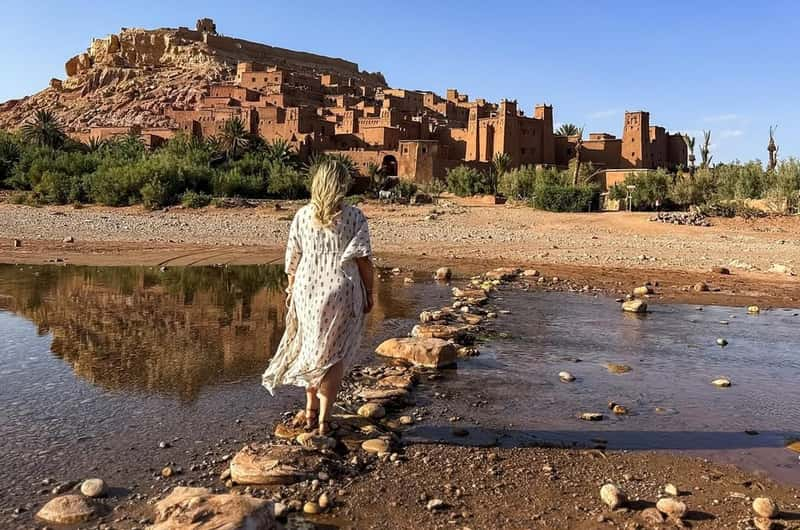
Day 4: Skoura. Walk or cycle through the palmery with someone who understands its irrigation channels and family farms. Stay at a small guesthouse that employs locally and manages water and waste responsibly.
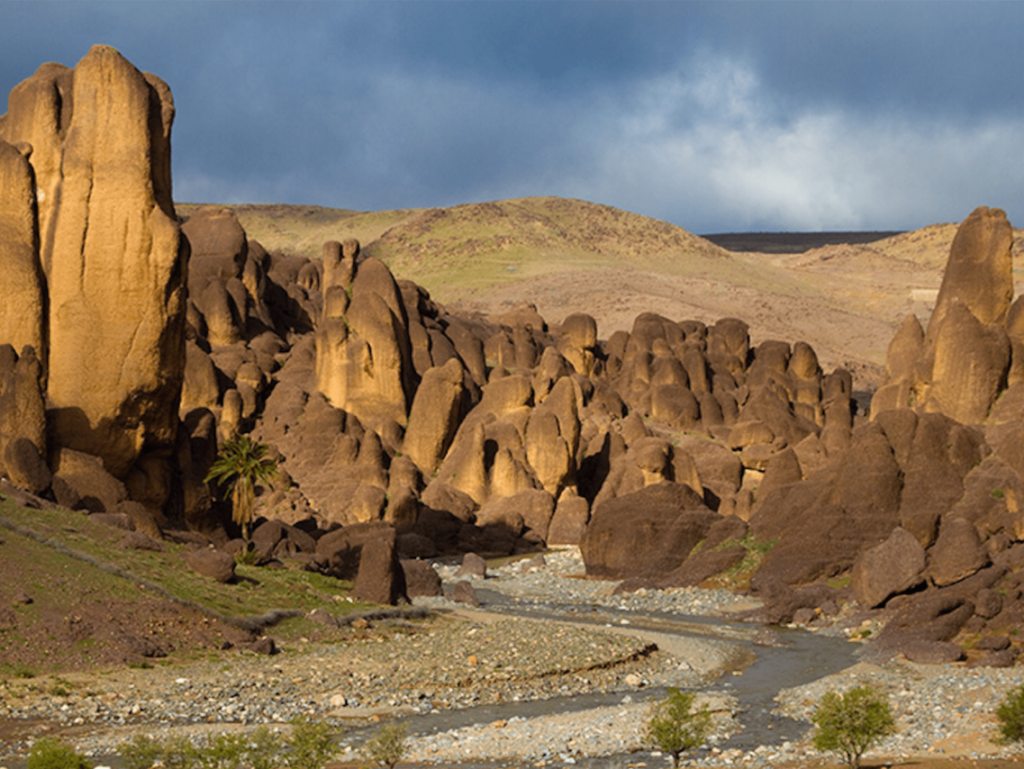
Day 5: The Dadès Valley. Go beyond the famous bends in the road. A locally guided walk reveals rock formations, cultivated gardens and villages. Heat, floods or trail conditions may require changes; flexibility is part of safe travel.

Day 6: Nkob. Set beneath Jbel Saghro, Nkob is the journey’s quieter anchor. Its earthen kasbahs, market, home cooking and surrounding mineral landscape reward travellers willing to stop. For the Moroccan diaspora, this is a chance to discover a homeland wider than family geography and major cities.
Day 7: M’Hamid and Erg Chigaga. Beyond M’Hamid, desert tracks require a professional driver and a suitable vehicle. The reward is not constant entertainment but sunset, a shared meal and an unusually dark sky. A responsible camp limits waste and light, protects scarce water and pays its team fairly.

Day 8: The Drâa Valley and return. The drive back through Agdz and Ouarzazate is substantial. Families may prefer a ninth day rather than compressing the return to Marrakesh. The journey ends without claiming to have “done” southern Morocco; it has merely opened a door.
Who is it for?
The route suits couples, families with teenagers and small groups interested in heritage, landscapes and local encounters. It is not a demanding expedition, but travellers must be comfortable with long drives, temperature changes and occasionally simple accommodation.
Families with young children, older travellers and people with reduced mobility should request shorter stages, accessible rooms and alternatives to walks or the desert camp.
The MMNEWS approach
Any future bookable version should use small groups, registered guides and drivers, locally inspected accommodation and transparent payment to providers. Encounters must never be staged and sold as spontaneous “authenticity.”
This feature is an editorial itinerary, not yet a contractual travel offer. Prices, opening conditions, road access and weather must be confirmed at booking with a licensed tour operator.
Practical outline
| Item | Recommendation |
|---|---|
| Duration | 8 days minimum; 9 is more comfortable |
| Start/end | Marrakesh |
| Best window | Spring and autumn, subject to weather checks |
| Transport | Vehicle with a driver experienced in southern routes |
| Group size | 6–12 travellers |
| Activity level | Easy, with optional moderate walks |
| Desert access | Professional driver and appropriate vehicle only |
| Check before travel | Roads, heat, rain, flash floods and mountain weather |


💬 Commentaires (0)
Aucun commentaire. Soyez le premier !
✏️ Laisser un commentaire