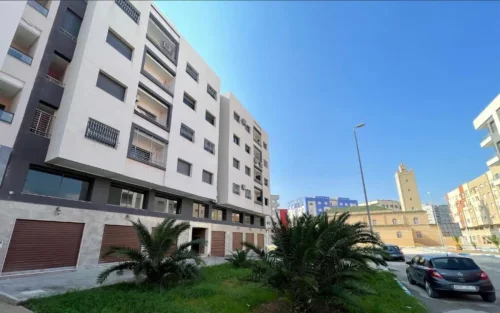
Annual condominium charges continue even when the apartment is occupied for only a few weeks. Meetings may take place while the owner is abroad. Accounts can be difficult to obtain. Neighbours may stop paying. Repairs may be approved without clear explanations. A professional management company may replace a volunteer syndic without necessarily solving the transparency problem. And then comes the question almost every absentee owner asks at some point: “Why should I pay twelve months of service charges if I only use the apartment for one month?”
An apartment can be empty, but the building cannot switch itself off
From a purely human perspective, the question is understandable. A Moroccan living in France, Belgium, Canada or the Netherlands may spend only three or four weeks a year in the apartment. During the remaining eleven months, that person barely uses the lift, parking area, garden, swimming pool or entrance hall. But condominium ownership does not work like a subscription that can be paused.
Under Morocco’s co-ownership framework, owners contribute to expenses linked to the maintenance, preservation and management of common areas, as well as collective facilities according to the rules applying to their property. The building still needs security. The lift still needs maintenance. The common areas still need lighting and cleaning. The gate, garden, pumps, insurance and other collective services still have to function. In other words, the apartment may be empty, but the condominium is not dormant.
So can an MRE refuse to pay for a lift or swimming pool they barely use?
Not simply because they are absent. The way charges are divided normally depends on the co-ownership regulations, the share attached to each unit and the usefulness of certain collective facilities.
An owner who believes the allocation is unfair can challenge it through the mechanisms provided by law. But the individual owner cannot simply decide: “I do not use the lift, so I am not paying for it.” That distinction is essential. The legitimate debate is not necessarily about whether charges should exist. It is about whether they are fairly calculated, properly approved and transparently spent.
For many MREs, the real problem is not paying — it is not knowing where the money goes
This is where the discussion becomes much more sensitive. A resident owner can see whether the entrance is cleaned, whether repairs were carried out and whether the gardener is actually working. An MRE living 2,000 kilometres away may receive little more than a WhatsApp message saying:
“You owe 4,800 dirhams.”
That difference creates a major imbalance. The absentee owner may have no easy way to know:
- what the approved annual budget is;
- whether the amount requested matches their legal share;
- which suppliers were paid;
- whether the condominium has unpaid debts;
- or whether money is sitting in a proper account belonging to the co-owners’ association.
And this is where confidence can collapse.
The syndic is supposed to manage money — not operate on blind trust
Moroccan law gives the syndic significant responsibilities. The role includes collecting co-owners’ contributions, maintaining records, executing decisions adopted by the general assembly and managing funds belonging to the condominium. For an MRE, one principle should therefore become automatic:
a request for money should come with traceability.
That means receipts. An identifiable condominium account. A clear individual balance. Approved budgets. Minutes from general meetings. And, when necessary, supporting invoices. Paying money into an individual’s personal bank account without documentation may be convenient, but it creates unnecessary risk.
A newer accounting framework is meant to improve transparency
Morocco has also moved toward more structured accounting rules for condominiums. That development matters particularly to owners living abroad. For years, one of the most frustrating answers given to absentee co-owners has been something similar to:
“The accounts are in the syndic’s notebook. Come and see them when you are in Morocco.” That model is increasingly difficult to defend.
A modern condominium should be able to provide financial information in a form that an owner in Paris, Brussels, Montreal or Amsterdam can understand without taking a flight.
The same complaints have appeared online for years
Public forums and social-media discussions are not court records, and individual stories cannot automatically be treated as verified facts.
But they are useful when the same problems keep appearing. One older testimony published on Yabiladi came from a person presenting himself as an MRE who owned a studio in Marrakech.
He complained that he was paying annual charges comparable to owners of much larger apartments and wanted the allocation formula discussed at the general meeting. The testimony is old, and MMNEWS cannot establish what eventually happened in that particular residence. But the underlying question remains relevant today:
should a small unit pay exactly the same amount as a much larger one, and what does the co-ownership regulation actually say?
“As soon as I arrive in Morocco, the concierge comes asking for the charges”
Another public testimony in the same discussion came from a woman presenting herself as an MRE who said she spent only about twenty days a year in Morocco. She described continuing to pay charges despite maintenance problems and claimed that some residents living locally were not paying their own contributions.
The detail that stood out was familiar: she said that almost as soon as she arrived in Morocco, someone would come to remind her what she owed. That type of account feeds a particular frustration among diaspora owners.
They sometimes feel that the MRE who appears predictably every summer is the easiest person to collect money from, while long-term debtors living in the same building appear harder to pursue. That perception does not cancel the MRE’s legal obligation to pay. But it raises a legitimate issue:
are all owners being treated equally when charges are recovered?
When neighbours do not pay, everyone eventually pays
There is another side to this story. Not every condominium problem is caused by the syndic. Some buildings are financially weakened because too many owners simply stop paying. A documented case reported in Casablanca described a relatively new residence where only a minority of owners initially contributed regularly.
As arrears accumulated, common bills went unpaid, the lift stopped working and the building began to deteriorate. This is why the argument “I am rarely there, so I will not pay” becomes dangerous when adopted by many people at once. The consequences eventually reach everyone.
An owner may save a few thousand dirhams in charges and later discover that the building has lost far more in market value because the entrance, lift, lighting and security were neglected.
Volunteer syndic or professional management company? Neither model is automatically safe
Many buildings eventually turn to professional property-management companies. The promise is attractive: professional accounting, maintenance, security coordination, cleaning, supplier management and better communication. In some residences, professionalisation genuinely improves the situation. But the word “professional” does not automatically mean transparent.
Public complaints have also been made by MRE owners about private management companies, particularly over access to accounts, unclear decisions, weak communication or disputed expenses.
Such complaints should be described carefully. Without judicial findings, it would be irresponsible to label a company a fraud. But owners are fully entitled to ask for transparency.
What should immediately raise questions?
An MRE should be cautious when several of the following appear together: payments are repeatedly requested without a clear budget; money is requested through a personal account; no proper receipt is issued; general meetings rarely happen; owners abroad receive no minutes; large works are approved without clear quotations; the management company changes frequently; or nobody can explain precisely how much an individual owner owes and why. One irregularity may have a simple explanation. A pattern is different.
Distance is the MRE’s biggest weakness
The structural problem is simple: the building is managed in Morocco while the owner lives abroad.
That distance affects everything. A leak can continue for months. A neighbour can alter a common area. A general meeting can be held during the winter. A contractor can carry out work. A dispute can develop on the building’s WhatsApp group.
And the MRE may discover the entire story during three weeks of summer holiday. This is why digital communication and proper representation at general meetings are not luxuries. They are essential.
General meetings are where absentee owners lose influence
The annual general meeting is where budgets, repairs and management decisions are often approved. An owner who ignores every meeting because they live abroad effectively gives up much of their influence over how the residence is run. The practical solution is often representation.
If attending is impossible, an owner should understand the rules governing proxies and ensure someone trustworthy can represent their interests. At the same time, management cannot use the owner’s absence as an excuse to stop informing them. Distance does not cancel ownership rights.
A Marrakech residence with many MRE owners ended up in court
The problem is not merely theoretical. A case documented by Moroccan media concerned a 167-apartment residence in Marrakech where a majority of owners were reportedly MREs.
A dispute reached court over issues that included, according to the report, the presentation of financial and accounting documents.
The significance of the case goes beyond one building. It captures the main tensions perfectly: owners abroad, information asymmetry, accounting transparency and conflict when trust disappears.
Then there are the neighbours
Even a perfectly managed syndic cannot eliminate neighbourhood disputes. Common complaints include unauthorised occupation of shared areas, alterations to façades, objects left in corridors, noise, parking disputes and arguments linked to short-term rentals.
For MRE owners, these conflicts can be especially frustrating because they are often not present when the problem begins. An owner may arrive in August and discover that a dispute has been developing since February.
Short-term rentals are becoming a major source of tension
Summer makes these conflicts particularly visible. A quiet building during most of the year can suddenly fill with returning owners, children, guests and holiday tenants.
Parking becomes scarce. Swimming pools become crowded. Lifts work harder. Noise increases. Rules about guests and access may be interpreted differently by different residents. That is why the co-ownership regulations matter. Arguments with a concierge or neighbour are rarely a substitute for knowing what the building’s rules actually permit.
The syndic has powers, but it does not have unlimited authority
A syndic is not the private government of a residence. Its role is to administer the common areas, execute decisions, maintain accounts, collect contributions and represent the co-owners’ association within the legal framework.
Disputes over unpaid charges should therefore be handled through lawful recovery procedures. At the same time, owners cannot simply decide that dissatisfaction with the syndic gives them permission to stop paying altogether. Both sides have rights. Both sides also have obligations.
What an MRE should ask for before paying
The most useful approach is neither blind payment nor automatic refusal. Ask for: the co-ownership regulations; the latest general-meeting minutes; the approved budget; the method used to calculate your share; your individual account statement; the condominium’s bank details; and a proper payment receipt. If major works are being financed, ask what was approved and on what basis. These are normal ownership questions. They are not acts of hostility toward the syndic.
Before buying an apartment, investigate the building as carefully as the apartment
This may be the most important lesson. Buyers often inspect the kitchen, tiles, view, parking space and sunlight. They spend much less time investigating the condominium itself. Yet the biggest long-term problem may be hidden there.
Before buying, ask: How many owners regularly pay their charges? How much is outstanding? Who manages the residence? When was the last general meeting? Are there major works planned? Does the lift have a maintenance contract? Can the accounts be reviewed? A beautiful apartment inside a financially dysfunctional building can become a poor investment. A well-run residence, by contrast, protects the value of an apartment even when the owner is living abroad.
The real issue is rebuilding trust
It would be unfair to reduce this subject to “bad syndics versus victimised MREs”. Some managers spend enormous amounts of time chasing owners who refuse to contribute. Some absentee owners disappear for years and then expect spotless common areas when they return in August. And many professional management companies do serious work.
But the opposite problems also exist: opaque accounts, poor communication, weak representation of absentee owners and expenditure that owners struggle to verify. The central issue is therefore trust. And trust in a condominium cannot rest on promises alone. It needs documents, rules and transparency.
An empty apartment does not mean a suspended condominium
The hardest rule for some MREs to accept is also one of the easiest to understand once the building is viewed as a whole:
you continue contributing to the preservation of the residence even when you are not sleeping in your apartment.
But that obligation should have an equally clear counterpart:
if you are paying, you should be able to understand what you are paying for.
For many Moroccan families abroad, an apartment in Morocco is not merely an asset. It is a link to the country, a future retirement home and something they hope to pass on to their children. Protecting that investment means paying attention not only to the apartment itself, but also to the building around it.
Buying an apartment in Morocco also means buying into a condominium — with rights, obligations, accounts, meetings… and neighbours.


💬 Comments (0)
No comments yet. Be the first!
✏️ Leave a comment