When a Meal Becomes a Ceremony
Pastilla is never served casually. It arrives at the table with presence.
Its round shape, golden surface and decorative dusting of powdered sugar, cinnamon or almonds immediately catch the eye. Then comes the moment when the knife breaks through the crisp pastry and reveals the aromatic filling inside.
That first sound matters: the light crack of the pastry, followed by the scent of cinnamon, saffron, ginger, coriander or lemon. Pastilla engages the senses before the first bite even begins.
In Moroccan homes, it is closely associated with weddings, family celebrations, important guests and festive gatherings. Serving pastilla is a way of saying that the guest has been expected, valued and welcomed with care.
Chicken Pastilla: The Art of Balancing Sweet and Savory
Chicken pastilla remains the best-known and most symbolic version.
It usually combines slowly cooked chicken, onions, eggs blended into the sauce, toasted almonds, cinnamon and fine pastry sheets folded into a golden crust.
Its magic comes from contrast.
The chicken gives depth. The almonds add crunch. The cinnamon and powdered sugar bring a gentle sweetness. The spices connect everything together.
At first, the combination of sweet and savory may seem surprising. But after one bite, it makes perfect sense. Pastilla works like a conversation between flavors, with no single element overpowering the others.
This balance is often what fascinates first-time visitors. They expect a savory pie, then discover an elegant sweetness, layered textures and a taste unlike anything else.
Seafood Pastilla: The Refined Flavor of Morocco’s Coasts
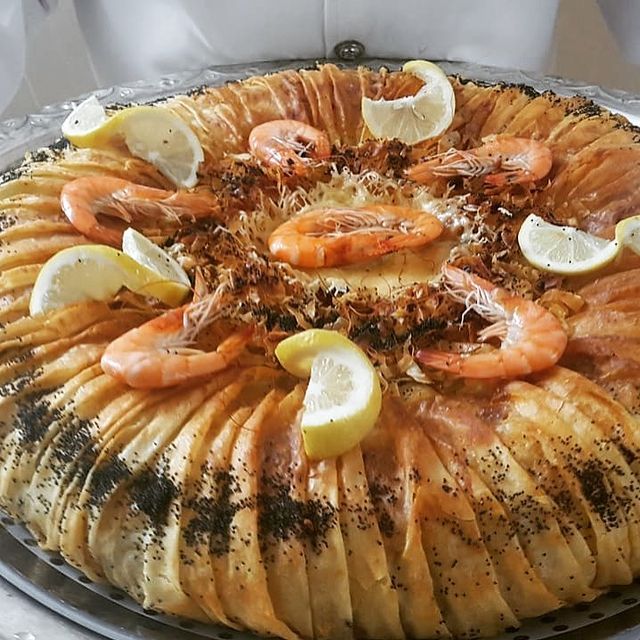
The fish and seafood pastilla offers a different interpretation of the same culinary tradition.
It often includes white fish, shrimp, squid, Chinese vermicelli, coriander, parsley, garlic, lemon and spices. In this version, sweetness usually gives way to freshness, citrus and the rich flavors of the sea.
This pastilla naturally evokes Morocco’s Atlantic and Mediterranean cities: Casablanca, Rabat, Essaouira, Agadir, Tangier, Tetouan and El Jadida.
In these places, fresh seafood meets Moroccan spices and traditional craftsmanship. The result is a dish that feels elegant without becoming heavy, festive without losing its connection to everyday coastal life.
Seafood pastilla perfectly reflects Morocco’s ability to renew its traditions while preserving their soul.
A Recipe Built on Patience and Precision
The finished dish looks effortless, but preparing a successful pastilla requires care.
The filling must be rich but not too moist. The pastry must remain flexible before baking and crisp afterward. The folding has to be precise, and the cooking time must be carefully controlled so that the outside turns golden without drying the inside.
Making pastilla is almost a form of architecture. Layer by layer, the dish is built, closed and strengthened.
That is why the recipe is often passed down from one generation to the next. Children first learn by watching, then by helping to toast almonds, fold pastry or check the oven.
Over time, the dish becomes more than a recipe. It becomes family knowledge.
Fes, Marrakech and Rabat: Every City Adds Its Own Touch
Pastilla is closely linked to Morocco’s great urban culinary traditions, especially Fes, widely regarded as one of the country’s major gastronomic capitals.
In the old homes of the medina, it often appears during important meals and celebrations. In Marrakech, it may be richer and warmer in spice. In Rabat, Casablanca or Tangier, it evolves according to local products, family habits and regional influences.
There is no single Moroccan pastilla. There are many versions.
Some are light and delicate. Others are richer. Some emphasize almonds and cinnamon, while others focus on lemon, herbs and seafood.
That diversity is part of the dish’s charm.
Traveling Through Morocco With One Plate
Tasting pastilla in Morocco is also a way of traveling.
In Fes, it may be served in a traditional riad after a walk through narrow alleys, fountains and ancient gates.
In Marrakech, it may arrive in a tiled courtyard surrounded by lanterns, orange blossom and carved wood.
On the Atlantic coast, a seafood pastilla can become the perfect end to a day by the ocean. In Tangier or Tetouan, it may come with a lighter northern touch influenced by the Mediterranean.
Each plate becomes part of the journey. The traveler no longer discovers a city only through monuments, but through flavor, gesture and hospitality.
A Dish That Captures the Soul of Moroccan Cuisine
Pastilla reflects several essential qualities of Moroccan cooking.
It is generous because it brings together many ingredients. It is precise because it requires real skill. It is refined, yet deeply connected to family life. It is old, but constantly capable of renewal.
It also shows that Moroccan cuisine does not believe in simple oppositions.
Sweet can meet savory. Seafood can become part of a ceremonial dish. Crisp pastry can protect a soft and aromatic filling. Elegance can remain deeply popular.
Like Morocco itself, pastilla is built through encounters.
An Invitation to Travelers and Moroccans Abroad
For tourists, tasting pastilla should be part of the Moroccan experience, just like visiting a medina, crossing the Atlas Mountains or exploring the desert.
For Moroccans abroad, pastilla often carries memory. Its aroma can recall a wedding, a family gathering, a grandmother’s kitchen or a summer return home.
That is its strength: it can be both discovery and nostalgia.
It speaks to the curious traveler and to the person returning to their roots.
Conclusion: Beneath the Crisp Pastry Lies an Entire Morocco
Moroccan pastilla is a dish of contrast, patience and generosity.
With chicken, it combines the sweetness of almonds with the warmth of spices. With seafood, it reveals the freshness of Morocco’s coasts and the elegance of its maritime cuisine.
In both versions, pastilla tells the story of a country where food is a meeting, recipes are inherited memories and hospitality is an art.
Traveling to Morocco without tasting pastilla is like standing before an open door and choosing not to enter. One bite is enough to understand that Moroccan cuisine is not just food. It is a destination.


💬 Comments (0)
No comments yet. Be the first!
✏️ Leave a comment