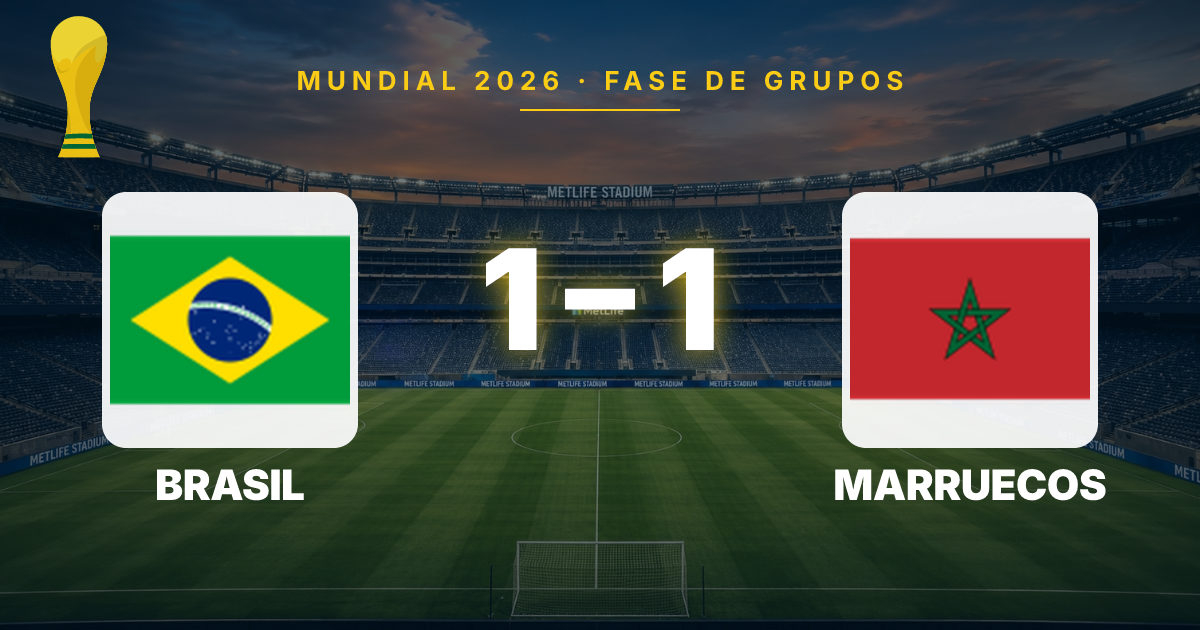
Whatever the final score says, the message from the pitch was clear: Morocco no longer approaches these games with an inferiority complex. The Atlas Lions now play with the mindset of a team that knows its strengths, understands its plan and believes it can impose problems on any opponent.
Morocco Without Fear Against Brazil
From the opening minutes, Morocco showed that it had not come simply to defend. The lines were compact, the pressing was measured, and the team tried to play out with confidence whenever possible.
Against a Brazilian side full of individual quality, Morocco’s idea was clear: deny the Seleção comfort in central areas, reduce the space between the lines, force play wide, and attack quickly after winning the ball.
This gave Morocco strong moments in the game, especially when the midfield managed to disrupt Brazil’s passing rhythm. The Atlas Lions did not allow Brazil to settle easily, and that is already a sign of a team with tactical personality.
The Moroccan Plan: Organized Pressing and Fast Transitions
What stood out most was that Morocco’s pressing was not chaotic. It was not about running blindly after the ball. It was a coordinated press, triggered by the forwards, supported by the midfield, with the defensive line staying alert behind them.
Once the ball was recovered, Morocco looked forward quickly. The team did not overuse sideways passing. It tried to find vertical options, use speed, and connect with players capable of breaking lines.
In that structure, Brahim Diaz was important as a link between midfield and attack, while Ismael Saibari offered movement, timing and presence in advanced areas.
At this level, these details matter. The teams that grow are the ones that know when to press, when to accelerate and when to slow the game down.
Ismael Saibari, a Symbol of Morocco’s Vertical Game
Saibari’s presence was one of the positive signs for Morocco. His movement between the lines, his ability to arrive in dangerous zones and his personality in the final third gave the team a more vertical dimension.
Morocco is no longer a side that depends only on set pieces or isolated counter-attacks. The Atlas Lions are increasingly capable of building structured attacking situations, even against elite opponents.
Brahim Diaz also played a key role. By dropping deeper to receive the ball, attracting pressure and opening passing lanes, he helped Morocco breathe in difficult moments. Players like him are valuable in major matches because they can turn pressure into progression.
Brazil: Individual Quality, Collective Discomfort
Brazil, of course, does not need much to create danger. A player like Vinicius Junior can change the rhythm of a match in a few seconds. Even when the Seleção looked less comfortable collectively, the threat remained present in every acceleration, every duel and every transition.
But collectively, Brazil found it difficult to fully impose its usual rhythm. The midfield did not always control the game, and the defense was pushed into uncomfortable situations by Morocco’s transitions.
That is to Morocco’s credit. The Atlas Lions made Brazil look less comfortable than usual, and that is never accidental.
Second Half: Managing Difficult Moments With Maturity
In the second half, Morocco’s intensity naturally dropped at times. Against a team with Brazil’s technical quality, that is expected. But the most important point is that Morocco did not lose its balance.
The team accepted defending deeper when necessary, protected the central areas and forced Brazil to search for solutions from wider positions. This is an important sign of competitive maturity.
Big teams are not judged only by what they do when they dominate. They are also judged by how they suffer. Morocco showed that it can suffer without falling apart.
The Moroccan Supporters: A Real Source of Energy
Once again, Moroccan fans brought strong energy from the stands. Supporters from the United States, Canada and around the world gave the match a special atmosphere. Red flags, chants and constant encouragement reminded the players that they are never far from home.
This support is not just symbolic. In high-level matches, crowd energy can give players a real psychological boost, especially during difficult moments. The Moroccan diaspora in North America is proving that it can be a true twelfth player.
What Morocco Still Needs to Improve
Despite the positive performance, there are areas to work on. The first is attacking efficiency. When Morocco creates strong moments against a team like Brazil, those moments must be turned into clear chances or goals.
The second is physical management. High pressing and quick transitions require a lot of energy. The challenge for the coaching staff will be to maintain aggression without exposing the team behind the block.
The third is concentration in small details. Against elite teams, one positional mistake or one late cover can be punished immediately.
Morocco Can Look the Giants in the Eye
The match against Brazil confirmed that the Atlas Lions are building a serious football identity. Morocco did not only defend. It did not collapse under the weight of the opponent’s name. It played with structure, courage and tactical clarity.
The result matters, but the performance says even more: Morocco is now capable of competing with the biggest teams, not by accident, but through organization, belief and collective maturity.
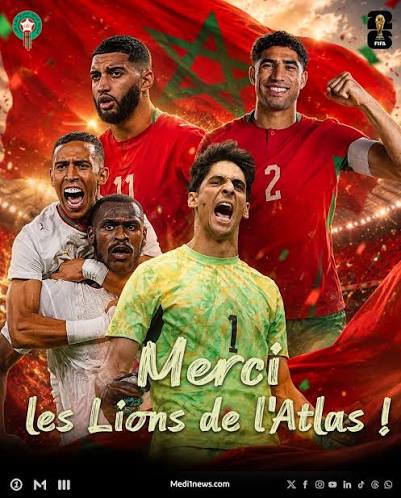
In the end, the message is simple: the Atlas Lions no longer fear the big names. They now belong on this stage.
💬 Commentaires (0)
Aucun commentaire. Soyez le premier !
✏️ Laisser un commentaire