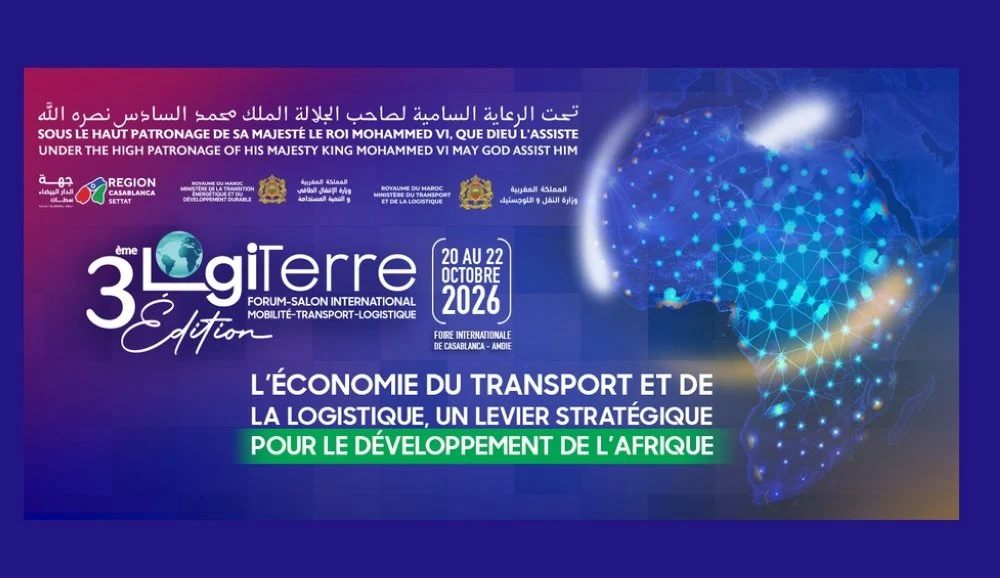
A shipment needs more than a road to reach its destination. It needs reliable information, workable procedures and partners who can take responsibility at every stage. That practical challenge provides a useful way to read LogiTerre, the international mobility, transport and logistics forum held in Casablanca from 20 to 22 October 2026. Its third edition focused on the sector’s contribution to African development.
For Morocco, the opportunity extends beyond moving greater volumes of goods. It involves building services that make cross-border trade easier to plan. An exporter needs to know when a consignment will arrive, what it will cost and whom to contact if something goes wrong.
The businesses behind the connections
Several companies identified in coverage of the event illustrate how widely those needs extend.
La Voie Express Group showcased Atlas, its AI-based commercial agent. Kounhany, whose co-founder Hamid Labriki contributed to discussions, brought the perspective of digital logistics and fleet operations. Together, their presence reflected a growing emphasis on the information supporting transport decisions.
French company Pysae confirmed its participation at stand B19 bis. Its public transport technology covers vehicle tracking, operational management and passenger information. These services address a familiar problem: a transport network becomes harder to use when people cannot rely on its information.
Chavanon Conseil, founded by Lilian Chavanon, represented another essential field: risk management and dangerous goods transport. SNRTnews reported its establishment in Tangier. Compliance expertise matters because a weak link in documentation or safety procedures can disrupt an otherwise efficient journey.
An African strategy tested by everyday operations
At the opening, Transport and Logistics Minister Abdessamad Kayouh discussed connections towards Guergarat, the Dakhla Atlantic port project and Atlantic access for Sahel countries. These priorities place logistics within Morocco’s wider African strategy.
The commercial test will be practical. Can operators provide predictable departures? Can businesses obtain clear prices and dependable local support? Will information move smoothly between the organisations handling a shipment?
For smaller companies, these questions often determine whether entering another market is manageable. Infrastructure creates an opening; operating conditions determine how many businesses can use it.
Where the Moroccan diaspora fits
Moroccans abroad can contribute through procurement, software, regulatory knowledge and commercial networks, as well as investment.
Hajar El Haddaoui was listed in the official programme for discussions on digital transformation and logistics data sovereignty. Her Moroccan origins and Swiss base are documented, and Swiss Leaders lists her on its national committee. This establishes a diaspora connection in the programme, rather than evidence of a diaspora-owned exhibiting business.
Publicly available sources reviewed for this article do not establish which of the companies mentioned are owned by Moroccans abroad.
The opportunity nevertheless deserves attention. International experience can help a Moroccan operator reach customers, adapt a service or build trust with an overseas partner. The most meaningful outcome of LogiTerre would be collaborations that make those capabilities available to businesses working across Africa.


💬 التعليقات (0)
لا توجد تعليقات. كن أول من يعلق!
✏️ اكتب تعليقك