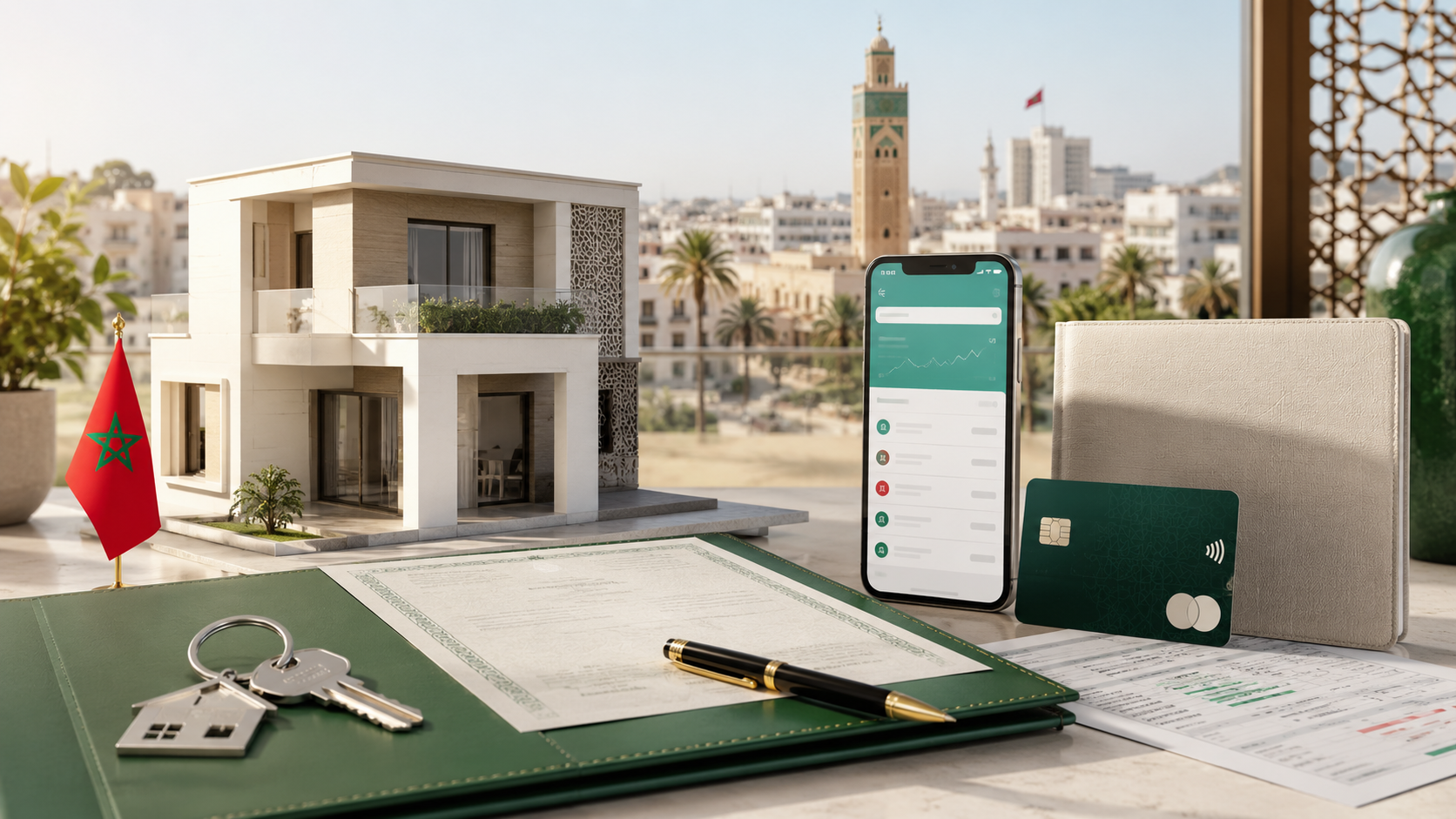
For a Moroccan expatriate who is considered a Dutch tax resident, the basic principle is that the Dutch tax authorities — the Belastingdienst — may require assets held both in the Netherlands and abroad to be reported. This can include foreign bank accounts, investments, second homes, rental properties and other real estate.
But one distinction is essential from the outset:
declaring an asset in the Netherlands does not automatically mean paying tax on it twice.
Does a house in Morocco have to be declared?
In principle, yes, when it belongs to someone who is tax resident in the Netherlands and falls within the scope of Box 3, the Dutch system covering savings and investments. Consider a Moroccan who lives and works in Rotterdam but owns an apartment in Al Hoceima that is mainly used during summer holidays.
The fact that the property is located in Morocco does not automatically remove it from the Dutch tax return. However, this does not mean the Netherlands can simply tax that apartment in exactly the same way as property located in Rotterdam.
The Morocco–Netherlands tax treaty is designed to prevent double taxation
Morocco and the Netherlands are bound by a tax treaty intended to avoid double taxation. For real estate, the treaty generally gives the country where the property is physically located the right to tax it. A house located in Morocco can therefore fall under Morocco’s taxing rights.
The Netherlands may nevertheless require the property to be included in the tax declaration of a Dutch resident, after which a relief mechanism can apply to prevent the same asset from being taxed twice in the same way.
That is the key distinction:
a Moroccan property may have to appear on a Dutch tax return without ultimately being subject to double taxation.
A Moroccan bank account is treated differently
Savings are another matter. Foreign bank and savings accounts are generally included among the financial assets that a Dutch tax resident must report under Box 3. For the provisional 2026 assessment, Dutch tax authorities use a deemed return of 1.28% for bank savings.
So a Moroccan living in the Netherlands who keeps €20,000 or €30,000 in a Moroccan account should not assume that the money is outside the Dutch tax system simply because it is held in Morocco.
In broad terms, the tax treaty gives the country of residence taxing rights over many financial assets that do not fall into special categories such as real estate.
This is why a bank account in Morocco and a property in Morocco should not be treated as if they were the same type of asset.
What is the tax-free threshold in 2026?
Declaring assets in Box 3 does not automatically mean that tax is due. For 2026, the Dutch tax-free allowance is €59,357 per person, or €118,714 for qualifying fiscal partners who can combine their allowances. The often-mentioned 36% Box 3 tax rate is also frequently misunderstood. It is not a 36% tax on the full value of your house or savings.
It applies to the calculated taxable return.
For provisional 2026 assessments, the system uses different deemed rates depending on the type of asset, including 1.28% for bank deposits and 6% for other investments and assets. So the claim that “the Netherlands takes 36% of your house in Morocco” would be entirely misleading.
What if the property was inherited?
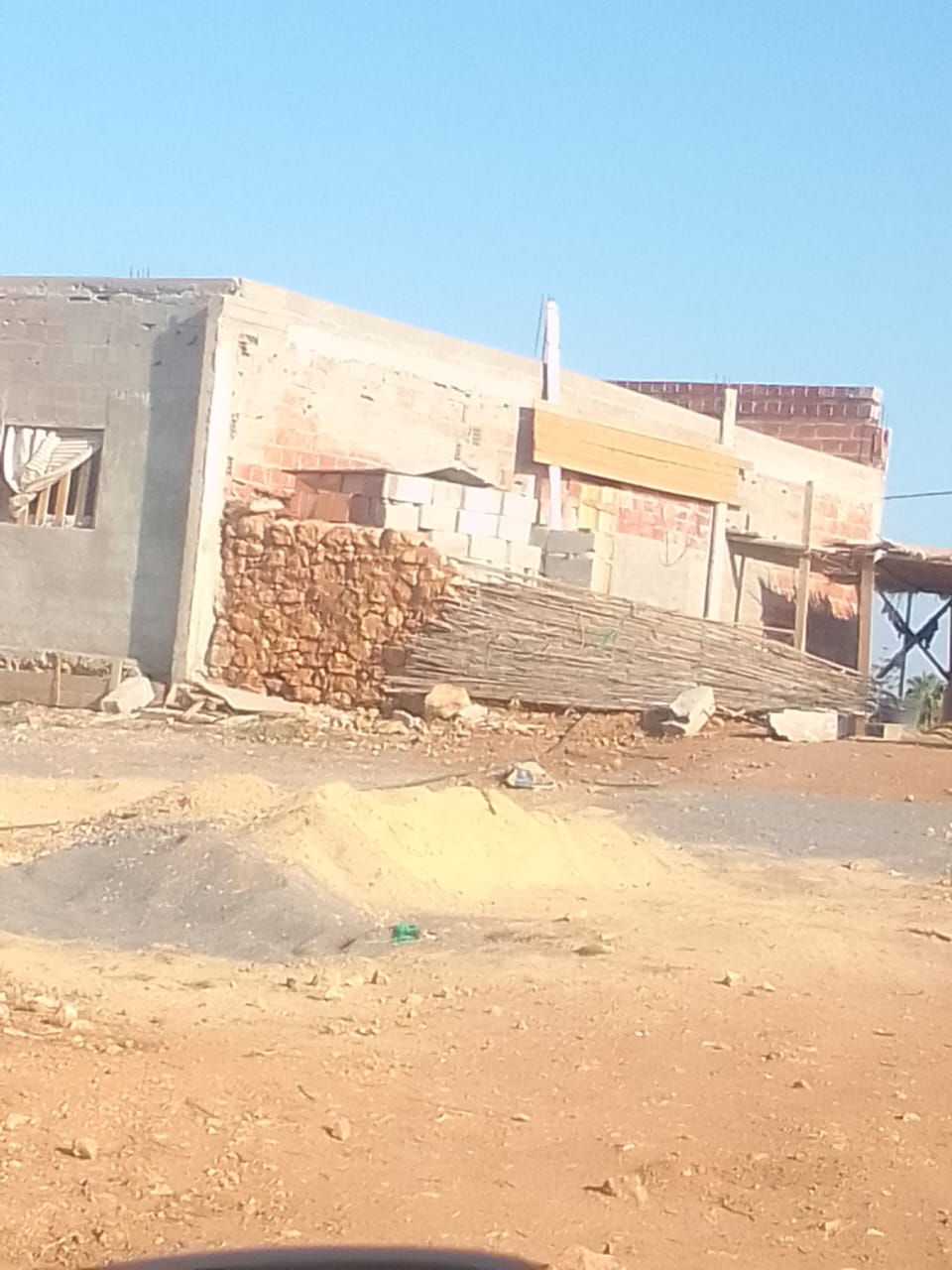
This is particularly relevant to Moroccan families abroad. Many MREs jointly own a family home or a plot of land inherited from parents, sometimes with several brothers and sisters. An inherited property does not simply cease to exist for tax purposes.
What matters is the ownership interest actually held by the taxpayer. Someone who owns 25% of a family property is therefore not in the same situation as a sole owner.
Cases involving undivided inheritance, usufruct or bare ownership can be more complex and may require individual tax advice.
Do Moroccan banks automatically report accounts to the Dutch tax authorities?
This is where many rumours circulate. As things currently stand, it would be inaccurate to claim that Moroccan banks are already automatically sending all MRE account information to the Dutch tax authorities under the Common Reporting Standard, or CRS.
According to the OECD’s latest assessment, Morocco has not yet fully started automatic CRS exchanges and is expected to begin by 2028 at the latest.
But this is crucial:
the absence of full automatic reporting does not remove the taxpayer’s legal duty to declare assets correctly.
The obligation to report foreign assets exists independently of whether a foreign bank automatically transmits the information.
Tax transparency is likely to increase
For Moroccans living in the Netherlands, the practical message is straightforward. An asset in Morocco should not be considered “outside the system” simply because it is thousands of kilometres away. International tax cooperation is moving steadily toward greater transparency and more automatic exchange of financial information.
For MREs with assets in Morocco, the sensible approach is therefore to establish exactly what they own — bank accounts, apartments, rental properties, land, inherited shares or investments — and then determine how each asset should be treated in the Dutch tax return.
The right question is not:
“Can the Dutch tax authorities see what I own in Morocco?”
It is:
“As a Dutch tax resident, how should I correctly declare my Moroccan assets, and which protections against double taxation apply to my situation?”
That difference can prevent costly mistakes.
What to remember
House or apartment in Morocco: generally reportable for a Dutch tax resident, with tax treaty relief potentially preventing double taxation.
Moroccan bank account: generally reportable as a financial asset in Box 3. Inherited property: the taxpayer’s actual ownership share must be considered. 2026 allowance: €59,357 per person, or €118,714 for qualifying fiscal partners. Automatic CRS exchange: Morocco has not yet fully started the system; implementation is expected by 2028 at the latest.
This article provides general information and does not constitute individualized tax advice. Tax residence, marital status, joint ownership, rental arrangements and the precise nature of the asset can materially change the outcome.

💬 Comments (0)
No comments yet. Be the first!
✏️ Leave a comment