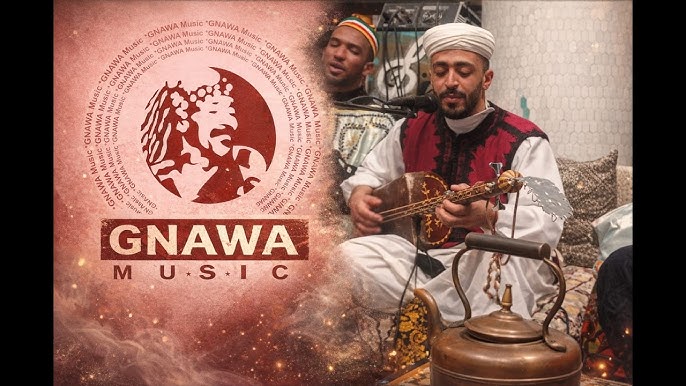
With the powerful pulse of the guembri, the metallic rhythm of the qraqeb, repetitive chants and moments of trance, Gnawa offers one of the richest expressions of Morocco’s intangible heritage. It is a deeply Moroccan art form, but also one with strong African roots, telling a story of travel, memory, resilience and spiritual beauty.
A Heritage Born From Memory and Movement
The history of Gnawa is closely linked to old routes between sub-Saharan Africa and Morocco. Within this tradition, music, spirituality, rhythm and collective memory come together. Over time, Gnawa became rooted in several Moroccan cities, including Essaouira, Marrakech, Fes, Meknes, Rabat, Salé and Casablanca.
Gnawa masters transformed painful memories of displacement into an art of healing, connection and beauty. That is why Gnawa is not just music for entertainment. It is a living heritage carried by communities, families and maâlems who have preserved its spirit across generations.
The Guembri: The Beating Heart of Gnawa
At the center of Gnawa music stands the guembri, a three-stringed instrument with a deep, earthy sound. In the hands of a maâlem, the master musician, it becomes more than an instrument. It leads the rhythm, guides the voices and opens the path into a unique atmosphere.
Around it, the qraqeb, large metal castanets, create a powerful and hypnotic pulse. The voices rise, the rhythm repeats, the bodies follow, and slowly the space changes. One is no longer only attending a concert. One is entering a world.
In Gnawa tradition, music can be linked to the lila, a spiritual night ceremony where songs, colors, incense and rhythms unfold according to symbolic codes. Visitors should approach these practices with respect, because they are not a simple folkloric show. They are part of a living spiritual and cultural tradition.
Essaouira: The Luminous Capital of Gnawa
No journey into Gnawa can ignore Essaouira. The white and blue city facing the Atlantic has become one of the great symbols of this art. Its ramparts, port, winds, narrow streets and musical soul make it a natural home for Gnawa culture.
The Essaouira Gnaoua and World Music Festival has played a major role in introducing Gnawa to international audiences. It has allowed the tradition to enter dialogue with jazz, blues, reggae, African music and contemporary sounds, while keeping its Moroccan identity alive.
But Essaouira is not only a festival city. Throughout the year, the spirit of Gnawa can be felt in its cafés, small squares, homes and cultural spaces. It is a city where travelers understand that Morocco is not only seen with the eyes. It is also heard with the soul.
A Moroccan Art Open to the World
The strength of Gnawa lies in its ability to remain rooted while speaking to the world. The guembri can converse with jazz bass. The qraqeb can meet African percussion. Gnawa chants can travel to major international stages without losing their origin.
This openness explains why Gnawa fascinates audiences far beyond Morocco. Many listeners recognize echoes of blues, gospel, trance music and African spiritual rhythms. Yet Gnawa remains unique. Its soul belongs to Morocco, to its African depth, its cultural plurality and its gift for turning heritage into a shared human language.
An Invitation to Travel Differently in Morocco
Discovering Gnawa is an invitation to travel through Morocco in a different way. It is not only about visiting monuments or taking photographs. It is about slowing down, listening and letting rhythm become part of the journey.
In Essaouira, visitors can follow the traces of maâlems between the ramparts and musical squares. In Marrakech, Gnawa rhythms meet the popular energy of Jemaa el-Fna. In Fes and Meknes, the tradition reveals deeper layers inside ancient medinas. In Rabat, Salé and Casablanca, Gnawa continues to live within modern urban spaces.
Each city gives Gnawa a different color. Through these colors, Morocco appears in all its richness: African, Amazigh, Arab, Saharan, Atlantic, spiritual, popular and open to the world.
A Heritage to Preserve With Respect
The recognition of Gnawa as intangible heritage is a source of pride for Morocco. But preservation requires more than labels. It requires support for maâlems, transmission to young generations, documentation of repertoires, respect for spiritual dimensions and dignified spaces for performance and learning.
Gnawa should not be reduced to tourist decoration. It can be festive, spectacular and joyful, but it also carries depth, codes, memory and dignity.
Cultural tourism can play a positive role when it is based on respect: respect for artists, places, rituals and communities. The traveler who discovers Gnawa should be invited not only to watch, but to understand and support a living tradition.
Why Gnawa Captivates So Many People
Gnawa touches something universal. The repeating rhythm calms and carries you. The guembri anchors the body. The qraqeb awaken energy. The voices create the feeling of an ancient memory still alive.
Even without understanding every word, listeners feel that something is happening. That is the power of true art: it reaches the heart before translation.
Morocco Singing From Its African Depth
Gnawa is one of the most powerful treasures of Moroccan intangible heritage. It tells a story of memory, spirituality, resilience and collective beauty. It connects Morocco to its African roots and shows the world a Kingdom able to transform history into living art.
To travel through Morocco through Gnawa is to listen to the country differently. It is to enter the sound of Essaouira facing the wind, Marrakech vibrating with life, Fes preserving memory, and Salé or Casablanca carrying tradition into modern times.
Morocco is visited with the eyes. But through Gnawa, it is discovered with the soul.


💬 التعليقات (0)
لا توجد تعليقات. كن أول من يعلق!
✏️ اكتب تعليقك