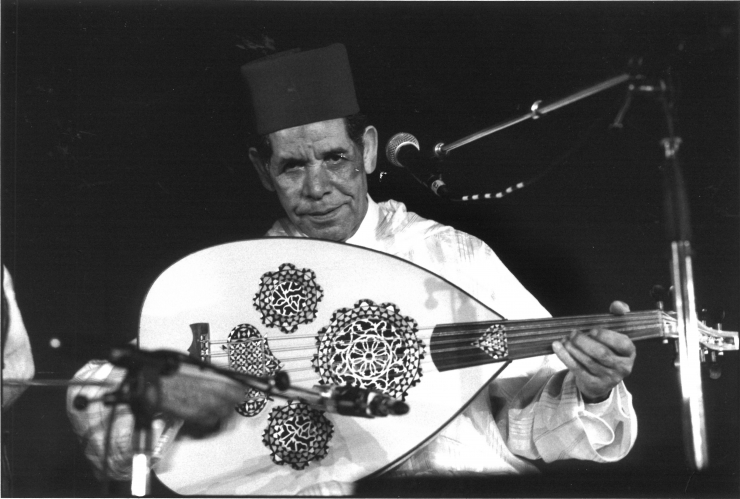
Before the instruments begin, there is the word.
A long, carefully constructed poem unfolds in Moroccan Arabic, filled with metaphors, proverbs, spiritual references and images drawn from everyday life. The oud, violin, rebab and percussion then enter. A solo voice carries the qasida, answered by the ensemble.
In Malhoun, music does not overshadow the text. It reveals it.
From Tafilalet to the imperial cities
Morocco’s UNESCO nomination file identifies Tafilalet, in the country’s south-east, as one of Malhoun’s historic cradles. The art initially developed in local religious lodges before spreading to major urban centres, where it was embraced by artisans’ guilds in the old medinas.
Scholars do not agree on one precise date of birth. Academic research traces the sung literary tradition known as Malhoun to at least the early fifteenth century, while also recognising its relationship with older forms of dialect poetry.
This was not the invention of one poet. Malhoun emerged through oral transmission, manuscripts, apprenticeships and the movement of poems between Tafilalet, Marrakech, Meknes, Fez, Salé, Rabat, Azemmour and other Moroccan cities.
Each centre gave it a distinctive performance tradition. That diversity is part of its Moroccan identity.
A literary language rooted in everyday speech
Malhoun transformed Moroccan darija into a sophisticated literary language. Its vocabulary draws on classical Arabic, religious knowledge, trades, nature and daily conversation.
The qasida follows demanding poetic and rhythmic conventions. Solo sections are generally punctuated by a refrain, known as the harba, repeated by the ensemble.
Several roles sustain the art: the poet who composes, the person who memorises and transmits the text, the singer who interprets it and the musicians who shape its sound.
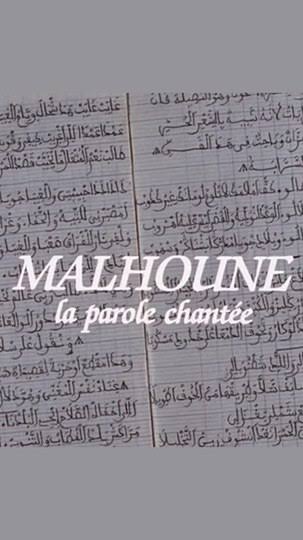
Malhoun was designed to be heard. Its poems may have circulated through manuscripts, but performance gave them life.
A social history in verse
Religious praise is central to Malhoun, but it is only one part of an immense repertoire. The poetry also explores love, beauty, nature, celebration, food, imaginary journeys, political events and social concerns.
UNESCO describes Malhoun poems as a form of collective memory. They preserve social questions from different periods while often carrying moral and educational messages.
A qasida may praise God and the Prophet, recount an unhappy love affair, celebrate a Moroccan city or turn an ordinary object into satire. In the Harraz tradition, poetry becomes theatre: a jealous guardian confines a young woman while her lover devises ways to reach her.
This ability to transform everyday life into refined art is one of Malhoun’s defining strengths.
Instruments that serve the poem
Traditional performances use instruments including the oud, violin, rebab and small drums. These are the instruments identified in UNESCO’s official description.
Yet Malhoun is not an arena for instrumental display. The ensemble supports the text, marks its emotional turns and gives space to the chorus.
A performer must understand diction, rhythm and the older meanings embedded in the poem. Singing the words without understanding them can empty the qasida of its substance.
For generations, this knowledge was passed from masters to apprentices. Today, informal transmission continues alongside training by cultural associations, musical ensembles and conservatories.
The poets and voices
The repertoire carries the names of Sidi Kaddour El Alami, Thami Mdaghri, Jilali Mthired, Ahmed Ghrabli, Ahmed Sehoum and other major poets.
The Academy of the Kingdom of Morocco has published numerous volumes of a Malhoun encyclopaedia devoted to individual masters. This work has preserved poems that long depended on manuscripts and performers’ memories.
In the twentieth century, Haj Houcine Toulali became one of Malhoun’s emblematic voices, helping take it from circles of connoisseurs to national and international stages.
UNESCO also notes that the art is now valued and practised by people of all genders. Although most verses are sung in Moroccan Arabic, some are performed in Hebrew, reflecting the Jewish-Moroccan dimension of the Kingdom’s cultural memory.
UNESCO recognition — and responsibility
On 6 December 2023, UNESCO’s Intergovernmental Committee inscribed “Malhun, a popular poetic and musical art” on the Representative List of the Intangible Cultural Heritage of Humanity.
The recognition concerns more than music. It acknowledges poets, singers, researchers, musicians, associations and families who have kept the tradition alive.
Malhoun had already been included in Morocco’s national inventory of cultural heritage in 2018. Its UNESCO nomination was prepared through consultations involving poets, performers, ensemble leaders and university researchers.
Listing, however, is not the same as safeguarding.
The greatest long-term risk is the growing distance between the repertoire and younger listeners. Long qasidas, historical vocabulary and limited access to training can make the art seem inaccessible.
The answer is not to strip it of its complexity. Morocco needs restored sound archives, annotated editions, subtitled performances, school workshops and stronger teaching in conservatories.
For Moroccans abroad, Malhoun offers access to a literary darija that younger diaspora generations rarely hear. Bilingual workshops, artist residencies and partnerships between Moroccan and overseas conservatories could turn it into a living cultural bridge.
A heritage survives not because it has been listed, but because a new generation finds a reason to inherit it.
💬 التعليقات (0)
لا توجد تعليقات. كن أول من يعلق!
✏️ اكتب تعليقك