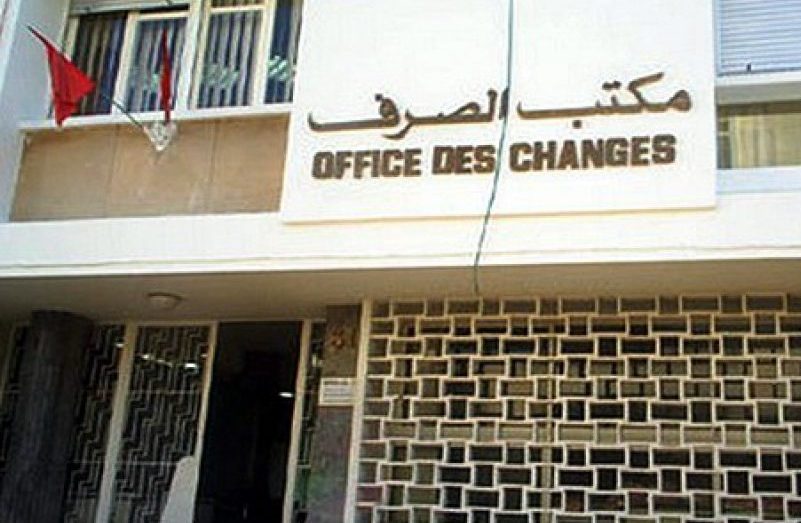
According to the latest available official data from Morocco’s Foreign Exchange Office, transfers from Moroccans abroad reached approximately 61.48 billion dirhams by the end of June 2026.
This amount represents an increase of 9.9% compared with the same period in 2025, when transfers stood at around 55.95 billion dirhams. In value terms, the money sent to Morocco rose by nearly 5.53 billion dirhams in one year.
More Than 10 Billion Dirhams Transferred Per Month on Average
Between January and June 2026, Moroccans abroad sent an average of more than 10.2 billion dirhams per month to the Kingdom.
This monthly average highlights the regular nature of these transfers. They are no longer limited to the summer holiday season, Ramadan or major family occasions. They have become a permanent financial flow throughout the year.
These funds come from millions of Moroccans living in Europe, North America, Gulf countries and other regions of the world.
Behind the statistics are countless family stories. Transfers are used to cover daily expenses, housing, education, medical care, property projects and the creation of small businesses and income-generating activities.
The Highest First-Half Level Recorded in Recent Years
Foreign Exchange Office data show that the amount recorded by the end of June 2026 represents the highest level of transfers from Moroccans abroad during the first half of the year in recent years.
Transfers stood at approximately 48.60 billion dirhams at the end of June 2022, before rising to 55.71 billion dirhams in 2023 and 57.34 billion dirhams in 2024.
They then declined slightly to 55.95 billion dirhams during the first half of 2025, before recovering strongly in 2026.
Over four years, the volume transferred between January and June increased by almost 12.9 billion dirhams, representing growth of around 26.5% compared with 2022.
A Strong Recovery After the Limited Decline in 2025
The first half of 2025 was marked by a modest decline in transfers from Moroccans abroad. The 2026 figures therefore confirm a clear recovery.
Several factors may explain this increase, including the growing number of Moroccans living overseas, improved incomes among some members of the diaspora, the expansion of digital financial services and the availability of more money-transfer channels.
The increase may also reflect the continuing needs of families in Morocco, particularly amid higher costs related to housing, healthcare, education and everyday living expenses.
Essential Support for Moroccan Families
Money sent from abroad represents an important source of income for many Moroccan households.
A monthly transfer may be used to pay rent, finance a child’s education, purchase medicines or support elderly parents and relatives.
In regions with large expatriate communities, these transfers are among the main drivers of local consumption and economic activity.
Their impact can be seen in retail, construction, services and real estate. They also support household savings and help finance small projects.
A Major Contribution to Morocco’s External Financial Balance
Transfers from Moroccans abroad also play a crucial role in supporting Morocco’s external financial position.
These funds provide the Kingdom with important foreign-currency resources, help cover part of the country’s import bill and contribute to strengthening foreign-exchange reserves.
By the end of June 2026, transfers from Moroccans abroad reached 61.48 billion dirhams, close to the 64.90 billion dirhams in travel and tourism revenues recorded during the same period.
Combined, diaspora transfers and travel revenues brought more than 126 billion dirhams into Morocco during the first six months of the year.
This comparison underlines the considerable economic weight of Moroccans abroad, both through the money they send to their families and through the spending they generate during their stays in the Kingdom.
Banks and Fintech Companies Target a Strategic Market
The continued growth in transfers is attracting increasing attention from banks, payment institutions and digital financial platforms.
Moroccans abroad are looking for fast, secure and transparent services, with lower fees and clearly displayed exchange rates.
Senders want to know the full cost of a transaction and the exact amount their relatives will receive before confirming the transfer.
Digital applications have transformed these habits. A transaction that once required a visit to an agency can now be completed in seconds from a smartphone.
This transformation is pushing Moroccan banks to improve their services, simplify account-opening procedures and offer a customer experience that is genuinely adapted to people living overseas.
Transfer Costs Remain a Major Concern
Despite technological progress, transfer fees and exchange rates remain key concerns for Moroccans abroad.
Differences in commissions may appear small for a single transaction, but they become significant when transfers are made every month.
Members of the diaspora therefore need to compare offers carefully and check the applicable fees, exchange rates and delivery times.
Financial institutions and transfer companies must also improve transparency, as clear pricing is now just as important as speed.
Reducing fees would allow Moroccan families to receive a larger share of the money sent and would further strengthen the social and economic impact of these transfers.
Turning More Savings Into Productive Investment
A large share of diaspora transfers is naturally used to meet the daily needs of families.
However, Morocco also has an important opportunity to direct a greater share of diaspora savings toward productive investment.
Many Moroccans abroad are interested in investing in real estate, tourism, agriculture, technology, services and small and medium-sized businesses.
Yet they may face difficulties related to administrative procedures, lack of information, geographical distance or the challenge of finding reliable partners.
More coordinated service centres, faster digital procedures and personalised support could help a greater number of Moroccans abroad transform their savings into sustainable projects that create jobs.
A Sign of Trust and Attachment to the Homeland
The significance of the 61.48 billion dirham figure goes beyond finance.
These transfers also reflect the solidarity of Moroccans abroad with their families, their continued attachment to the Kingdom and their desire to contribute to the country’s social and economic stability.
Despite distance and economic pressures in their countries of residence, members of the diaspora continue to support their relatives and participate in the development of their regions of origin.
Behind every transfer is a different story: a parent helping children, a worker preparing to return home, a family building a house or an entrepreneur launching a project in their hometown or village.
Positive 2026 Results, but the Figures Remain Provisional
The Foreign Exchange Office indicates that data published through the end of June remain provisional and may be revised when the final annual statistics are consolidated.
At present, the latest available official figures cover the period up to the end of June 2026. Precise data for July or August cannot therefore be presented until a new bulletin is published.
Even so, the trend during the first half of the year remains highly positive. Should the same pace continue during the coming months, annual transfers from Moroccans abroad could reach a particularly high level.
With 61.48 billion dirhams transferred by the end of June 2026, Moroccans abroad have once again confirmed their central place in the national economy.
The 9.9% increase reflects the strength of their economic contribution, as well as the depth of the family and human ties connecting them to Morocco.
The next challenge will be to protect the real value of these transfers, reduce transaction costs and provide better solutions that help members of the diaspora turn a larger share of their savings into sustainable investments.
Transfers from Moroccans abroad are not simply financial flows. They are an economic, social and human bridge connecting the diaspora, Moroccan families and the homeland.

💬 Comments (0)
No comments yet. Be the first!
✏️ Leave a comment