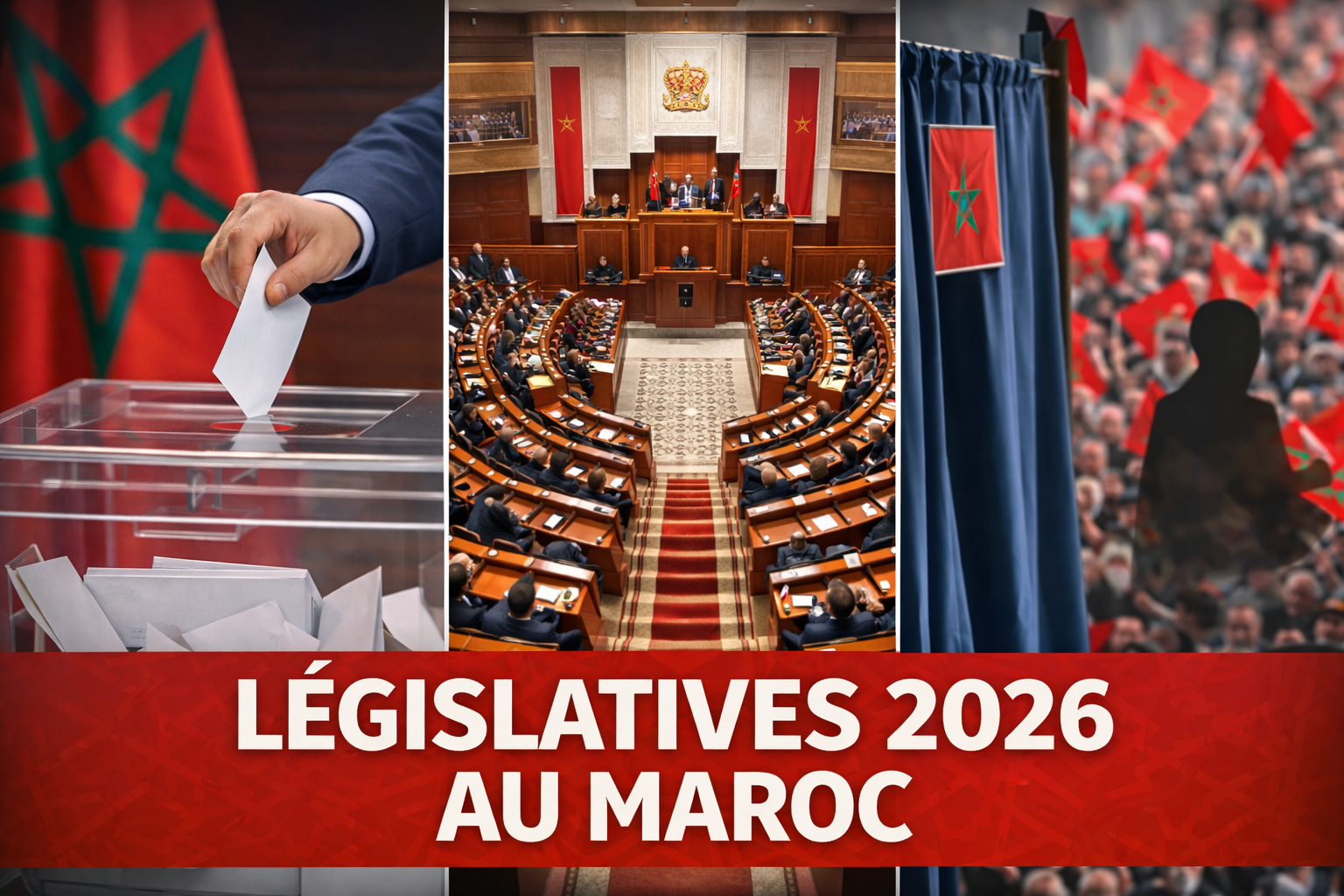
Just after midnight on Thursday, September 10, PJD campaigners were already on the streets of Skhirat-Temara. Within hours, Casablanca hosted separate shows of strength by the PAM and RNI. In Larache province, Nizar Baraka turned local roots into a national political image. In Marrakech, the USFP opened with a packed hall and the language of a protest vote. Morocco’s election had moved out of policy documents and into its louder phase: crowds, symbols, slogans and clips designed for phones.
It is a compressed race. Between September 10 and 22, 27 parties have less than two weeks to compete for the 395 seats in the House of Representatives. More than 15.8 million registered voters are eligible to take part on September 23. The Interior Ministry recorded 7,288 candidacies across local and regional constituencies. Those figures describe the size of the contest, but not its central test: can parties rebuild a relationship with citizens who increasingly want to know not only what is being promised, but who will deliver it, by when and with what money?
For Moroccans living abroad, that question carries an added weight. Decisions made in Rabat shape their investments, administrative dealings, family plans, pensions, return projects and ability to participate politically. From Brussels and Paris to Montreal and Dubai, the diaspora can watch every rally almost instantly. But it rarely sees its own experience at the centre of those events. Several manifestos contain diaspora commitments. The opening campaign performances largely do not.
The RNI is asking for continuity — and inviting scrutiny of its record
The RNI has chosen the clearest governing-party message: continue the reforms already under way. Party president Mohamed Chouki describes its platform, “Dignity and Opportunities for All,” through three broad commitments — protecting purchasing power, improving public services and advancing economic inclusion. The party embraces the social-state agenda and the record of the government led by Aziz Akhannouch, while acknowledging gaps that still need to be addressed.
That continuity is both an asset and a constraint. The RNI can point to experience, but it cannot campaign as a newcomer. Chouki may embody the next chapter while Akhannouch defends the past five years, yet voters are entitled to see one chain of accountability. Every new pledge therefore faces a basic question: why was it not completed during the outgoing term, or what has the party learned that makes delivery more credible now?
The PAM is campaigning for change from inside the outgoing coalition
So far, the PAM has produced the most visually ambitious launch. Its Marrakech gathering brought together the party’s leading figures and, according to organisers, roughly 4,000 supporters. The platform is presented as five pacts and 20 commitments backed by MAD 350 billion over five years, with headline proposals on jobs, taxation, pensions, healthcare and education.
Its challenge is political clarity. The PAM praises the work of its ministers while arguing that the country needs a different direction, even though it remains part of the governing majority. That can be a sophisticated pitch: keep the experience, change the centre of gravity. It can also sound evasive unless party leaders identify which collective decisions they supported, which ones they opposed and what exactly they would reverse. “Change” becomes meaningful only when the point of departure is named.
Istiqlal turns roots into a language of sovereignty
Nizar Baraka began in Larache province, using family and territorial belonging as the campaign’s opening symbol. Istiqlal’s campaign film places the family, purchasing power, schools, healthcare, corruption and rent-seeking at the heart of its message. In Ksar El Kebir, Baraka moved from symbolism to policy, speaking about water and food security, agricultural distribution, emergency care and the criteria governing social assistance.
This language has obvious resonance for Moroccans abroad, whose relationship with the country often runs through family and a specific region. Emotional proximity, however, is not a substitute for public policy. Istiqlal has announced a “Charter for Moroccans of the World.” The campaign now needs to explain what it would do in practice: political participation, investment, administrative services, return and cultural transmission to younger generations. A charter without deadlines and named responsibilities remains an aspiration rather than an enforceable commitment.
The opposition is putting the outgoing term on trial
The USFP opened in Marrakech with the energy of a party seeking a protest vote. In Tangier, Driss Lachgar set out 20 commitments covering employment, health, education, territorial fairness and digital administration. The party is trying to combine social anger with the credibility of a formation that considers itself ready to govern. It will have to show that its figures are financially workable and carefully distinguish partisan foreign-policy claims from established state positions.
The PJD is fighting a different battle: demonstrating that it has recovered from its 2021 electoral collapse. Abdelilah Benkirane remains the campaign’s dominant voice, directly attacking the governing coalition. But the party’s most testable proposal is less theatrical. Its “Elected Representative’s Pact” commits candidates to attendance, asset declarations, regular contact with citizens and an annual public record. The useful questions now concern enforcement: who publishes those reports, in what form, and what happens when an elected official fails to comply?
The PPS enters the race with one of its most detailed manifestos: 197 pages and 220 commitments. It addresses public healthcare, jobs, pensions, housing, political ethics and the effective participation of Moroccans abroad. Nabil Benabdallah has understandably reduced that volume to a smaller set of messages in campaign videos and local events. The risk is that simplification removes precisely what makes the programme distinctive — including its diaspora provisions.
The Popular Movement is also presenting itself as a vehicle for renewal. Its “Haraki Contract” is described as a concise set of measurable proposals, accompanied by an emphasis on younger candidates, women and professional expertise. But a dispute with a media association, which announced a boycott over remarks it attributes to Mohamed Ouzzine, threatens to overwhelm that message. The episode requires balanced reporting: the association’s account, the party’s response and the implications for plural access to election information. A boycott is news; it is not, by itself, proof of wrongdoing.
The real campaign is also being fought on vertical screens
Television debates, MAP interviews and large rallies still matter. But parties increasingly package speeches as short vertical videos for Facebook, Instagram, TikTok and YouTube. The format rewards confrontation, emotion and the memorable line. It is less suited to explaining legal authority, budget trade-offs or implementation schedules.
Morocco’s audiovisual regulator, HACA, says election coverage must reflect fairness, impartiality and the representation of groups including women, young people and Moroccans abroad. Its 2026 framework also addresses election disinformation and content generated or manipulated through artificial intelligence. The democratic issue is no longer simply who speaks longest. It is who is heard, under what conditions and with which safeguards.
MMNEWS will track commitments, not applause
MMNEWS will not cover this campaign as a succession of crowded halls. We will identify what is genuinely new, what was promised before, what lies within the next government’s authority and what depends on another institution. Financial claims will be tested against announced resources. Political attacks will be matched with a right of reply. Viral clips will be restored to context.
Our party-by-party coverage will also examine nine issues affecting Moroccans abroad: voting, parliamentary representation, consular and administrative services, investment, savings and transfers, pensions and social protection, return and resettlement, cultural transmission, and the mobilisation of diaspora expertise. A party’s MRE score will change only when a public, attributable and verifiable commitment becomes more precise.
The decisive question over the remaining nine campaign days is not which party produces the most viral moment. It is which one is willing to turn a campaign story into a public contract — including with Moroccans who live beyond the country’s borders but remain directly affected by its choices. The campaign has only just begun. The time for evidence is already running short.
💬 Comments (0)
No comments yet. Be the first!
✏️ Leave a comment