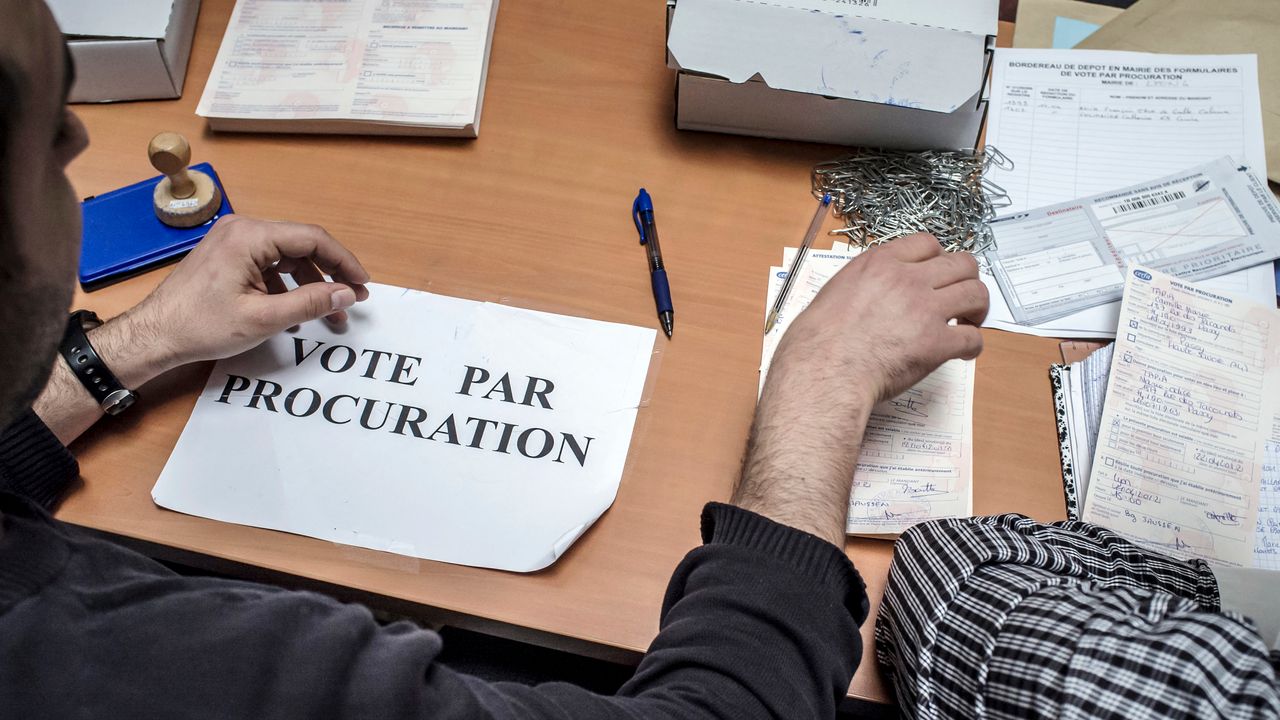
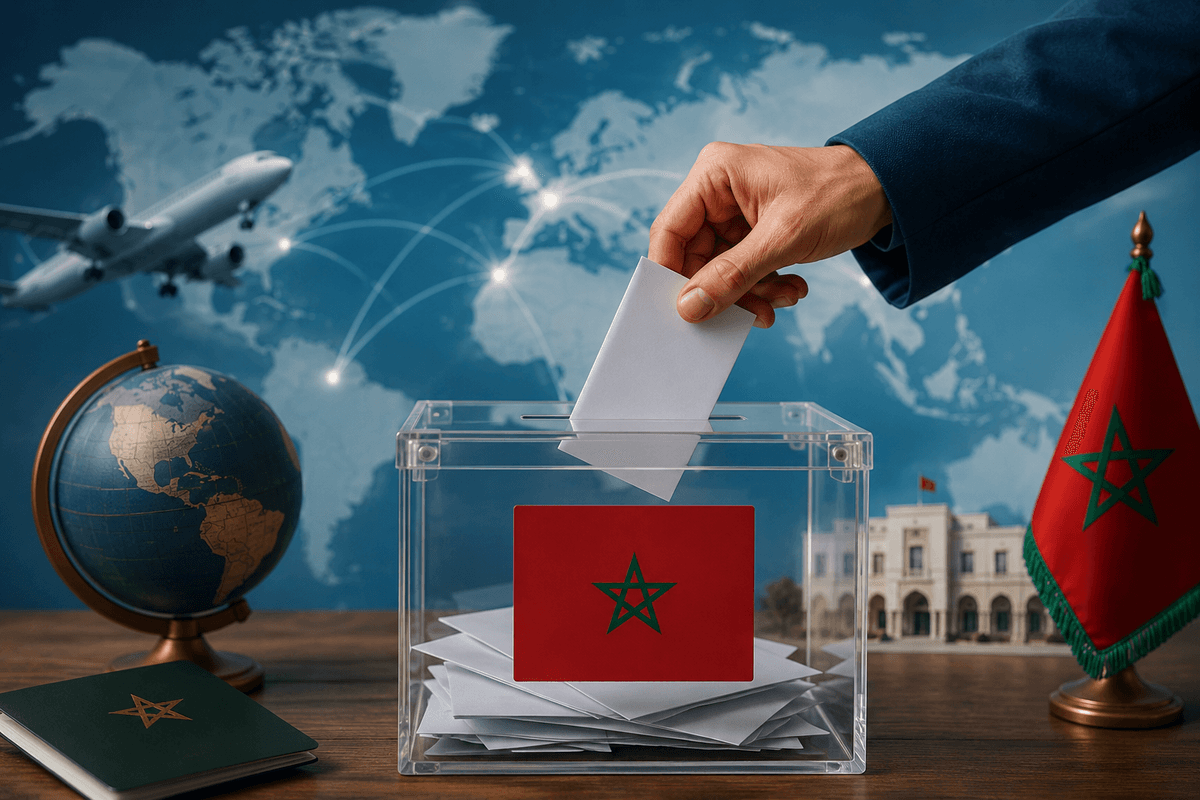
Morocco introduced a new digital route for overseas voters in this election. The E-Procuration platform, created by the Ministry of Foreign Affairs in coordination with the Ministry of the Interior, enabled a Moroccan citizen abroad who was registered to vote to appoint someone in Morocco to cast a ballot on their behalf.
The procedure is public. Its uptake is not.
As of 28 September, neither ministry had released the number of applications started, authorisations approved or rejected, proxy documents presented at polling stations, or ballots ultimately cast through the system. The final election results allocate all 395 seats among the parties, but do not break down votes by voting method.
What the official figures do show
Morocco’s official electoral-roll portal lists 15,801,162 registered voters. The Interior Ministry reported nationwide turnout at 38.02 per cent. Applying that rate to the register gives roughly 6.008 million voters. That is a calculation based on two official figures, not a separately published administrative total.
The national turnout figure combines all ballots recorded at polling stations. Public releases do not identify Moroccans abroad who happened to be in the country on election day, nor do they isolate ballots cast by proxy.
There is a second gap. The published electoral statistics do not state how many registered voters reside outside Morocco. The register is broken down by sex, urban or rural location and age, but not by country of residence.
Why no credible proxy-voting rate can yet be produced
A meaningful rate needs a valid numerator and denominator. Measuring take-up would require the number of validated proxy authorisations divided by the number of registered MRE voters. Measuring actual use would require the number of proxies presented and accepted at polling stations, again compared with the registered overseas electorate.
Neither figure has been disclosed.
Using the frequently cited figure of about five million Moroccans abroad would produce a misleading rate. That broad population includes minors, people who are not registered, and others who may not meet the electoral requirements. Even an estimate of 3.5 to 4 million adults potentially eligible to vote is not an official electoral denominator.
One platform, several points of possible drop-off
The overseas Moroccans department said users had to enter identity details, their electoral registration number, constituency or municipality, declared address and the details of the chosen proxy. Once validated, the document had to be downloaded and sent to the designated voter. One voter in Morocco could act for only one MRE.
That workflow contains at least three distinct stages: an application started, an authorisation validated, and a proxy actually used on election day. Publishing only the number of forms generated would therefore still not reveal how many diaspora votes reached the ballot box.
A credible post-election audit should publish the number of registered overseas voters; applications submitted; approvals and rejections; proxy documents presented and refused at polling stations; and a breakdown by country of residence and Moroccan constituency.
The human-rights council has opened the policy question
Morocco’s National Human Rights Council, the CNDH, identified the digital proxy platform as one of the election’s new online measures. Yet its preliminary report also recommended evaluating proxy voting for Moroccans abroad because the mechanism is indirect and raises questions of trust over whether the representative faithfully expresses the voter’s choice.
That recommendation matters. The test is no longer simply whether the platform worked technically. It is whether citizens could complete the process, whether the system materially widened participation, and whether delegated voting is an adequate long-term answer to the political rights of Moroccans abroad.
Transparency is the next test
E-Procuration may have reduced an administrative barrier, but the absence of detailed data prevents any assessment of its democratic reach. The system may have served hundreds, thousands or many more voters; the public record does not yet say.
The accurate conclusion is therefore narrow but important: Moroccan authorities have not published the number of electronic proxy authorisations established by MRE voters, or the number of ballots actually cast through those authorisations in the 23 September election.
Releasing those figures would turn speculation into evidence. It would also provide the necessary starting point for a wider debate on diaspora participation, the limits of proxy voting and options for more direct representation.
💬 Comments (0)
No comments yet. Be the first!
✏️ Leave a comment