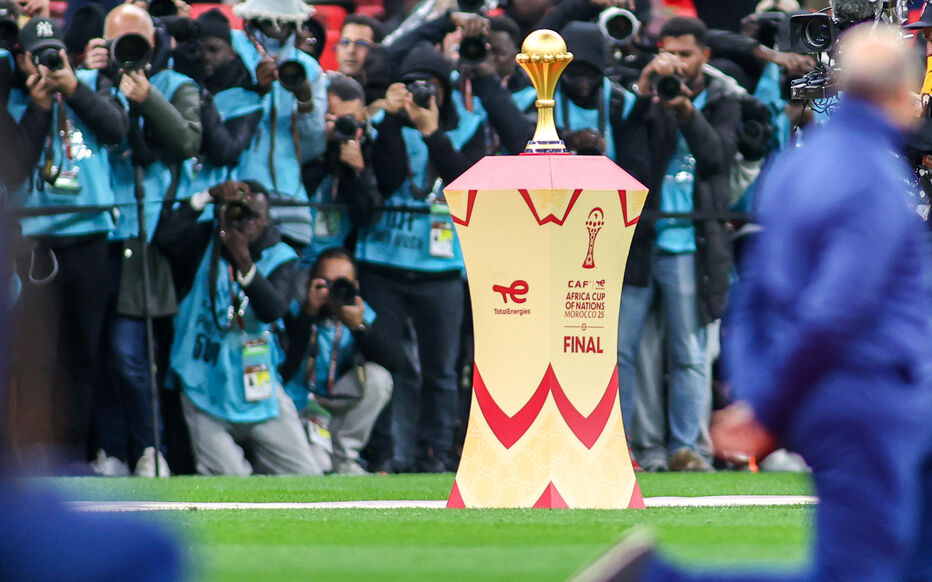
The arguments have been heard. A three-member CAS panel chaired by French sports-law professor Gérald Simon, alongside Luigi Fumagalli and Ulrich Haas, must now decide whether to uphold the CAF Appeals Board ruling that recorded the final as a 3–0 win for Morocco.
The central facts are broadly established. Senegal left the pitch late in regulation after Morocco were awarded a penalty. Several players went to the dressing room and the final was interrupted for roughly 14 minutes. Senegal later returned, Morocco missed the penalty and Senegal won 1–0 in extra time. CAF’s Appeals Board subsequently held that the walk-off constituted a forfeit under Articles 82 and 84 of the competition regulations.
Morocco’s strongest case is textual. Article 82 covers a team that refuses to play or leaves the field before the regular end of a match without the referee’s permission. Article 84 supplies the sporting consequence: a 3–0 forfeit. The wording, as publicly reported, does not require a permanent departure or a formal declaration of withdrawal.
That matters. Returning to the field may explain why the match resumed, but it does not automatically erase a completed breach. A rule against unauthorised walk-offs would lose much of its force if teams could suspend high-stakes matches, retreat to the dressing room and return after negotiations without regulatory consequences.
Senegal can reasonably argue that the referee authorised the restart and completed the match, and that field-of-play decisions should remain stable. Yet the Appeals Board did not re-referee the penalty. It assessed a separate regulatory act: the collective departure from the pitch. Referees control matches; disciplinary and judicial bodies determine whether conduct during those matches breached competition rules.
The 1–0 score after extra time carries powerful emotional weight, but forfeiture rules exist precisely because the final whistle does not always settle the legal result. If Articles 82 and 84 apply, events after the breach cannot by themselves displace an expressly prescribed sanction.
The Moroccan position also rests on competitive equality. Morocco remained available to play and followed the referee’s procedure, including after missing the penalty. It should not bear the tactical and psychological consequences of an interruption caused by its opponent. Asking for the rule to be applied is not asking for preferential treatment.
CAS must nevertheless examine Senegal’s procedural objections, including complaints about the timing and reasoning of CAF’s decision. Due process matters. But a procedural defect, if established, would not by itself prove that the walk-off was authorised or that the relevant provisions do not apply. CAS can review the dispute fully and reach its own legal conclusion.
Morocco’s delegation declined to comment after the hearing. That restraint strengthens the institutional character of its case and avoids turning a legal dispute into a diplomatic confrontation between two close African countries. Legitimate public scrutiny should focus on the quality and consistency of the eventual reasoning, not on political pressure against the arbitrators.
CAS may uphold CAF, reinstate Senegal or adopt a procedural remedy. Whichever course it chooses, it must answer one question clearly: does returning 14 minutes later cure an unauthorised collective departure?
If the answer is yes, future organisers will need to define how long a team may leave and under what conditions. If the answer is no, CAS will reinforce a simple principle: refereeing decisions are challenged through established procedures, not by walking off the field.
On the publicly established facts and the ordinary meaning of Articles 82 and 84, Morocco has a substantial legal case. The ruling will decide a title. Its reasoning may shape African football for years.
💬 التعليقات (0)
لا توجد تعليقات. كن أول من يعلق!
✏️ اكتب تعليقك