Tarfaya, early November 1975. Volunteers have travelled south, arriving by coach and truck. Camps between the Atlantic town and nearby Tah accommodate the participants, supported by organised supervision and medical assistance. Before the Green March became an enduring national image, it required transport, shelter, supplies and care. Accounts later gathered from participants preserve that practical side of the event.
The call of 16 October
On 16 October 1975, the late His Majesty King Hassan II announced the Green March. Morocco sought to give its territorial claim a mass civilian expression while Spain still administered the territory.
The announcement followed the International Court of Justice’s advisory opinion that day. The Court recognised legal ties of allegiance between Morocco’s Sultan and some tribes. It did not establish territorial sovereignty and upheld the application of self-determination. Both findings belong in an accurate account of the opinion.
Morocco regarded the acknowledgement of allegiance as a significant historical argument. The royal initiative turned that position into a national mobilisation.
Women within the story
Official Moroccan records put participation at 350,000 volunteers, including 35,000 women. Women’s involvement is therefore part of the central history, rather than a footnote to it.
The scale can obscure the individual dimension. Each participant belonged to a family and a community. For descendants, tracing one person’s journey can make the national event easier to understand.
Crossing at Tah
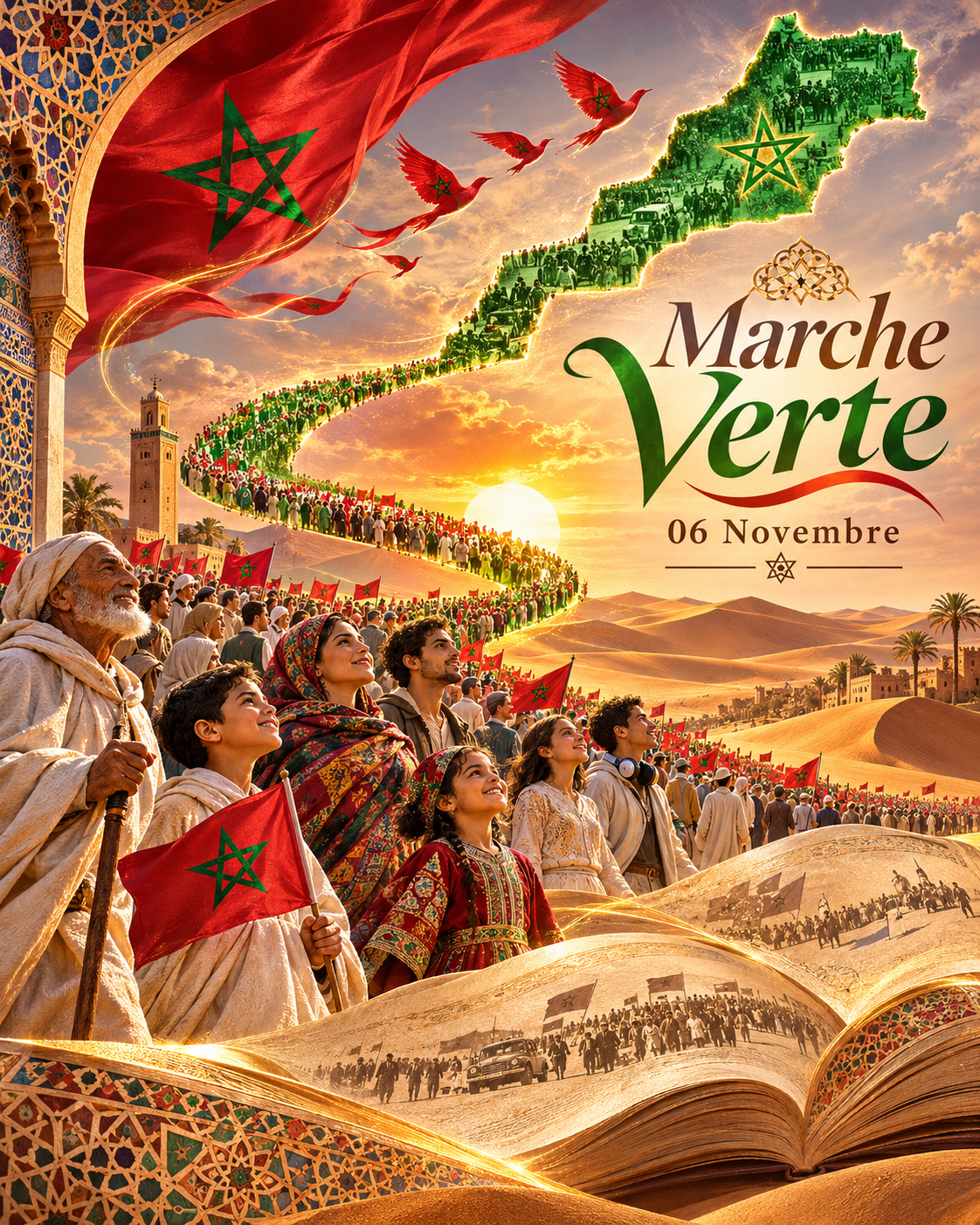
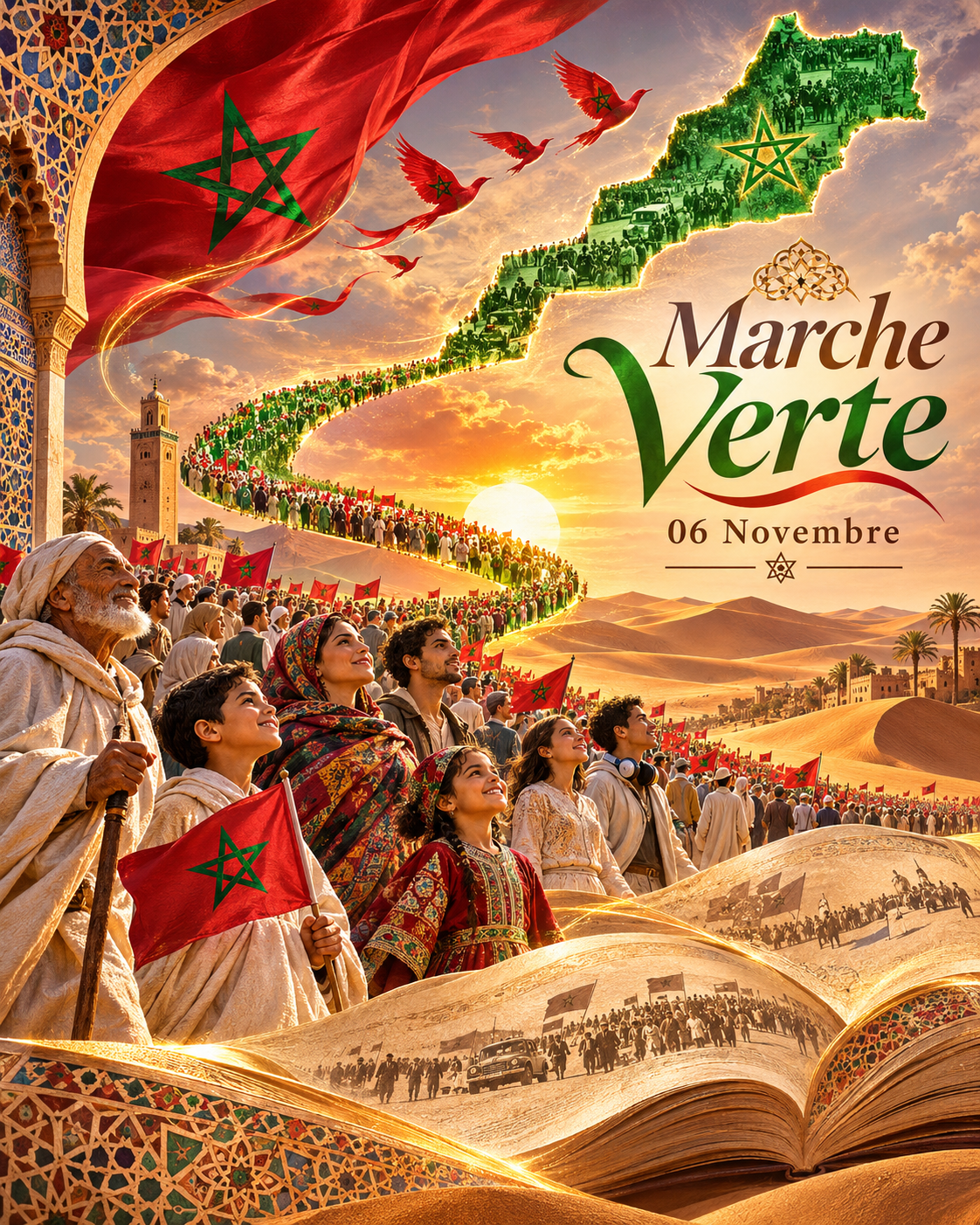
On 6 November, the first groups crossed near Tah into the territory under Spanish administration. Contemporary reporting identified Prime Minister Ahmed Osman at the head of the march.
Moroccan flags and copies of the Quran became its defining symbols. Conceived as a peaceful civilian mobilisation, the Green March entered Moroccan national memory as an expression of unity around the territorial cause.
Its history also includes the return. On 9 November, the late His Majesty King Hassan II declared that the march had achieved its objective and instructed participants to turn back.
Five days later, Spain, Morocco and Mauritania signed the Madrid declaration. It provided for temporary administration and the end of Spain’s presence by 28 February 1976. That administrative arrangement should not be described as having conclusively resolved the international dispute.
Passing on a documented memory
For young Moroccans abroad, the Green March may first appear in a family photograph or a commemorative song. Explaining the sequence—announcement, preparation, crossing, return and negotiation—gives those images historical meaning.
Families can contribute by preserving dated photographs, participant documents and recorded recollections. Identifying what a witness personally experienced keeps testimony distinct from stories heard later.
The anniversary invites that patient work of transmission. The national narrative provides the framework; individual lives give it depth.
💬 Commentaires (0)
Aucun commentaire. Soyez le premier !
✏️ Laisser un commentaire