A family photograph can preserve a face. Giving that photograph a place in a cultural programme raises a different question: whose experiences deserve to become part of a city’s shared memory?
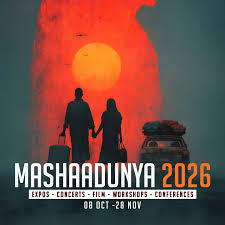
That question runs through MashaaDunya, the Brussels festival scheduled from 8 October to 28 November 2026. Its exhibition calendar has now concluded: Mabubu and Bnat El Ghorba were listed until 30 October, with the collective exhibition continuing until 6 November.
Making women’s experiences visible
Empact’s Bnat El Ghorba brought together portraits of 60 women from the Moroccan and Turkish diasporas, alongside Belgian testimonies. The initiative grew out of life stories collected in 2024.
Its significance lies in treating women as individuals whose experiences merit attention in their own right. For Moroccan families in Belgium, this invites a closer look at the stories preserved at home: decisions, working lives, friendships, departures and compromises that younger generations may only partly understand.
The cultural opportunity is substantial. Recording these experiences can help families move beyond a handful of familiar anecdotes and build a fuller account of how their lives became rooted in Belgium.
Pamela Tulizo’s photographic project adds another perspective, examining African women’s resistance and historical erasure while connecting past exploitation with contemporary resource extraction.
Placing such work alongside migration narratives does not make different histories equivalent. It opens a conversation about representation: who is remembered, who is overlooked and who has the authority to tell the story.
Inheritance as creative material
The emerging artists’ programme offers a particularly relevant perspective for younger diaspora audiences. Melanie Ebtissem Defoin, whose parents are Moroccan and Belgian, explores memory through analogue photography and digital alteration. Aylin Dönmez draws on family archives and textile heritage associated with Emirdağ.
These practices suggest that transmission can accommodate experimentation. An inherited image or craft can become the starting point for an artistic language shaped by life today.
The programme also listed François Makanga’s musical conference, Mémoires en mouvement, on 6 November, tracing his parents’ journey from Central Africa to Brussels through storytelling and music.
Taken together, these choices give the programme a clear thread: memory can pass between images, objects, voices and performance. Whether that ambition produces lasting connections will require a fuller assessment of audiences, participation and opportunities for the artists.
A closing night worth discovering
Fredy Massamba, Yasmine and Sibel Duo are announced for 28 November at 7 p.m., Espace Magh, 17 rue du Poinçon, Brussels. Tickets are listed at €10, €8 reduced, and €1.25 under Article 27. Booking is available through the festival website.
For anyone who missed the exhibitions, the concert provides a fresh point of entry. Going with relatives or friends could also turn the evening into a shared discovery: an opportunity to encounter artists outside familiar listening habits and discuss what different generations hear in the same performance.
The strongest reason to attend is that openness. A diaspora cultural event becomes especially valuable when recognition leads to curiosity—and when another community’s voice finds a place beside one’s own.
💬 Comments (0)
No comments yet. Be the first!
✏️ Leave a comment