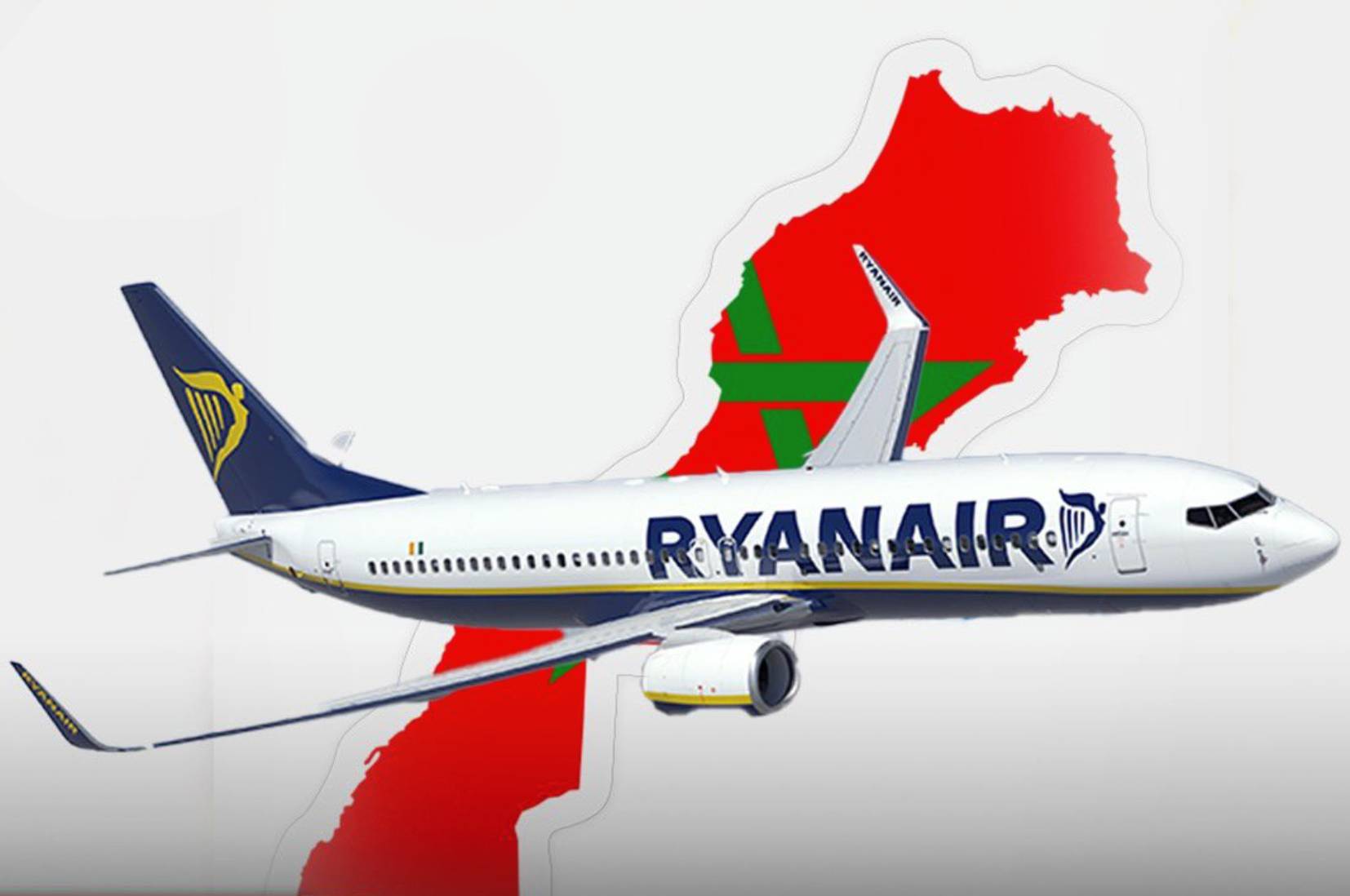
Ryanair is not leaving Europe, but it is gradually redrawing its network. Europe’s largest low-cost airline is reducing capacity in several countries where it believes aviation taxes, airport charges and operating costs have become excessively high.
At the same time, the airline is allocating part of its available capacity to destinations that, in its assessment, offer better conditions for growth. These markets include Italy, Albania, Slovakia, Sweden and Morocco.
In its annual results published in May 2026, Ryanair confirmed that its limited additional capacity would primarily be allocated to countries and airports that reduce aviation taxes or introduce incentives for traffic growth.
The airline explicitly named Morocco as one of these growth markets, while describing Austria, Belgium, Germany and regional Spain as less competitive because of their higher costs and taxes. Ryanair’s 2025–2026 annual results
Morocco at the Centre of Ryanair’s New Strategy
Ryanair’s expansion in Morocco is not merely a seasonal operation. It is part of a long-term strategy based on increasing international connectivity, opening permanent bases and gradually developing domestic flights.
In April 2026, the airline opened its fifth Moroccan base at Rabat-Salé Airport, joining its existing bases in Marrakesh, Fez, Agadir and Tangier.
Two Ryanair aircraft are now permanently based in the Moroccan capital. The airline presents this expansion as a $200 million investment supporting a total of 20 routes, including seven new international connections.
The new services connect Rabat with Milan Bergamo, Baden-Baden, Frankfurt Hahn, Nuremberg, Porto, Pisa and Valencia.
According to the airline, the new base is expected to support more than 800 direct and indirect jobs, including approximately 60 positions for pilots and cabin crew. Official Ryanair announcement
This investment significantly strengthens Rabat’s position within Europe’s low-cost aviation network. The capital is now one of Ryanair’s principal Moroccan platforms, alongside Marrakesh, Agadir, Tangier and Fez.
France: Capacity Reduced Following Higher Aviation Taxes
The airline’s redeployment strategy has been particularly visible in France.
For its winter 2025–2026 schedule, Ryanair announced a 13% reduction in French capacity, representing approximately 750,000 fewer seats.
The company also announced the closure of its operations at Bergerac, Brive and Strasbourg airports, alongside the cancellation of several routes and reductions at other French airports.
Ryanair directly attributed these decisions to the increase in France’s air-ticket solidarity tax. It said that capacity would instead be redirected towards markets it considered more competitive.
These reductions primarily affect regional airports that depend heavily on low-cost airlines. They may also limit travel options for Moroccans living in French regions located far from major international airports. Le Monde
For travellers, the outcome may appear contradictory: more overall capacity to Morocco, but fewer departures from certain secondary European cities.
Spain: Millions of Seats Removed from Regional Airports
In Spain, tensions have intensified between Ryanair and Aena, the country’s state-controlled airport operator.
After an initial reduction at several regional airports, Ryanair announced that it would remove approximately one million seats from its winter 2025–2026 schedule, citing a 6.5% increase in airport charges.
Regional airports on the Spanish mainland and in the Canary Islands were particularly affected.
The airline said that part of this capacity would be redirected towards Croatia, Hungary, Italy, Sweden and Morocco.
Aena has challenged Ryanair’s position, arguing that the increase in charges remains limited and economically justified. Its management has also accused the airline of applying commercial pressure on governments and airport operators to obtain more favourable conditions.
The disagreement demonstrates why Ryanair’s announcements should also be viewed in the context of commercial negotiations. The airline regularly uses its ability to move aircraft quickly between markets as leverage when seeking lower fees or additional incentives. Reuters
Germany: Ryanair to Close Its Berlin Base
In Germany, Ryanair has announced that it will close its operational base in Berlin from the beginning of the 2026 winter schedule and reduce its services to and from the German capital by approximately 50%.
The seven aircraft previously based in Berlin are expected to be relocated to lower-cost airports, particularly in Sweden, Slovakia, Albania and Italy.
The company blamed its decision on Germany’s aviation tax burden and higher charges at Berlin Airport. The closure follows previous reductions at several other German airports.
In this specific case, Ryanair did not announce that the seven Berlin-based aircraft would be transferred directly to Morocco. It is therefore more accurate to describe the strategy as a group-wide reallocation of capacity, rather than a systematic transfer of every aircraft withdrawn from Europe to the Kingdom. Reuters
Belgium and Other European Markets Are Also Affected
Belgium has also been affected by Ryanair’s strategy. The airline announced a reduction in capacity at Brussels South Charleroi Airport following the introduction of a new passenger tax.
Approximately 1.1 million seats could be removed, representing a reduction of nearly 10% in Ryanair’s annual capacity at the airport. Reuters
Reductions or closures have also been announced in parts of Portugal, Greece and Austria.
Ryanair’s policy follows a consistent principle: reduce operations when costs rise and redirect available aircraft and flights towards markets that offer more attractive financial conditions and stronger growth prospects.
Why Is Morocco Attracting Ryanair?
Several factors explain Ryanair’s growing interest in the Kingdom.
First, Morocco benefits from strong tourism demand, supported by its diverse destinations, favourable climate, cultural heritage and proximity to major European markets.
The Kingdom also has a large community living abroad. Regular travel by Moroccans around the world generates demand that is not limited to traditional tourism seasons.
Morocco’s national strategy to expand airport capacity and strengthen international air connectivity is another important factor. Partnerships with Moroccan tourism stakeholders allow airlines to open new routes within a rapidly growing market.
Preparations for the 2030 FIFA World Cup, which Morocco will jointly host with Spain and Portugal, are also accelerating infrastructure investment and strengthening the Kingdom’s appeal to international airlines.
For its 2024 Moroccan programme, Ryanair had already announced more than 1,100 weekly flights across 175 routes, including 11 domestic services.
At the time, the airline valued its aircraft investment in Morocco at more than $1.4 billion. Ryanair
An Opportunity for Tourism and Regional Development
A larger number of flights could generate significant benefits for Morocco’s tourism industry.
Low-cost connections encourage short stays, increase the number of European departure cities and allow new groups of travellers to discover the Kingdom.
They can also support hotels, restaurants, guesthouses, transport providers, tour guides and traditional artisans.
The key challenge will be to distribute these benefits more evenly across Morocco’s regions.
Marrakesh, Agadir and Tangier already enjoy strong international visibility. Developing services to Rabat, Fez, Ouarzazate, Essaouira and other destinations could support a more balanced tourism model and promote Morocco’s historical, cultural and natural heritage.
For this growth to remain sustainable, it must be accompanied by improvements in visitor services, local transport, tourism quality and the protection of cultural and natural sites.
What Does This Mean for Moroccans Around the World?
For Moroccans living abroad, Ryanair’s network expansion could provide more choice and higher frequencies between their countries of residence and Morocco.
New routes to Rabat, Tangier, Fez, Marrakesh and Agadir may reduce the need for long road journeys after arrival. They could also make family, professional and administrative travel easier.
However, greater flight capacity does not automatically guarantee permanently lower fares.
Low-cost ticket prices vary according to demand, booking time, season, baggage and additional services. During school holidays and the summer period, fares may remain high despite the availability of more seats.
Capacity cuts at certain regional European airports may also require some passengers to travel to more distant departure points. The actual benefit for Moroccans abroad will therefore depend on where they live and which routes are available from nearby airports.
Avoiding Excessive Dependence on a Single Airline
Ryanair’s expansion is an important opportunity, but it also requires vigilance.
The airline’s business model is based on the ability to move aircraft rapidly. When a market becomes less profitable or a dispute arises over taxes and airport charges, Ryanair can quickly reduce capacity or close a base.
Morocco should therefore benefit from these investments while maintaining a diversified aviation strategy.
The continued development of Royal Air Maroc, Air Arabia Maroc and other airlines serving the Kingdom remains essential to avoid excessive dependence on a single operator.
Competition should also deliver tangible benefits for passengers through affordable fares, better service quality and effective protection of travellers’ rights.
Morocco Strengthens Its Position on the New Regional Aviation Map
Ryanair’s ongoing redeployment confirms that Morocco is no longer viewed solely as a seasonal tourism destination. It is becoming a strategic aviation platform linking Europe, Africa and the Mediterranean.
While several European markets face capacity cuts, Morocco is gaining new routes, a fifth Ryanair base and two additional aircraft permanently stationed in Rabat.
This development reflects the attractiveness of the Moroccan market, the strength of its tourism sector and the considerable potential represented by travel among Moroccans around the world.
It also creates an important challenge: Morocco must transform air-traffic growth into sustainable employment, balanced regional development and better mobility, while preserving its aviation sovereignty and maintaining a diverse range of airlines.


💬 Comments (0)
No comments yet. Be the first!
✏️ Leave a comment