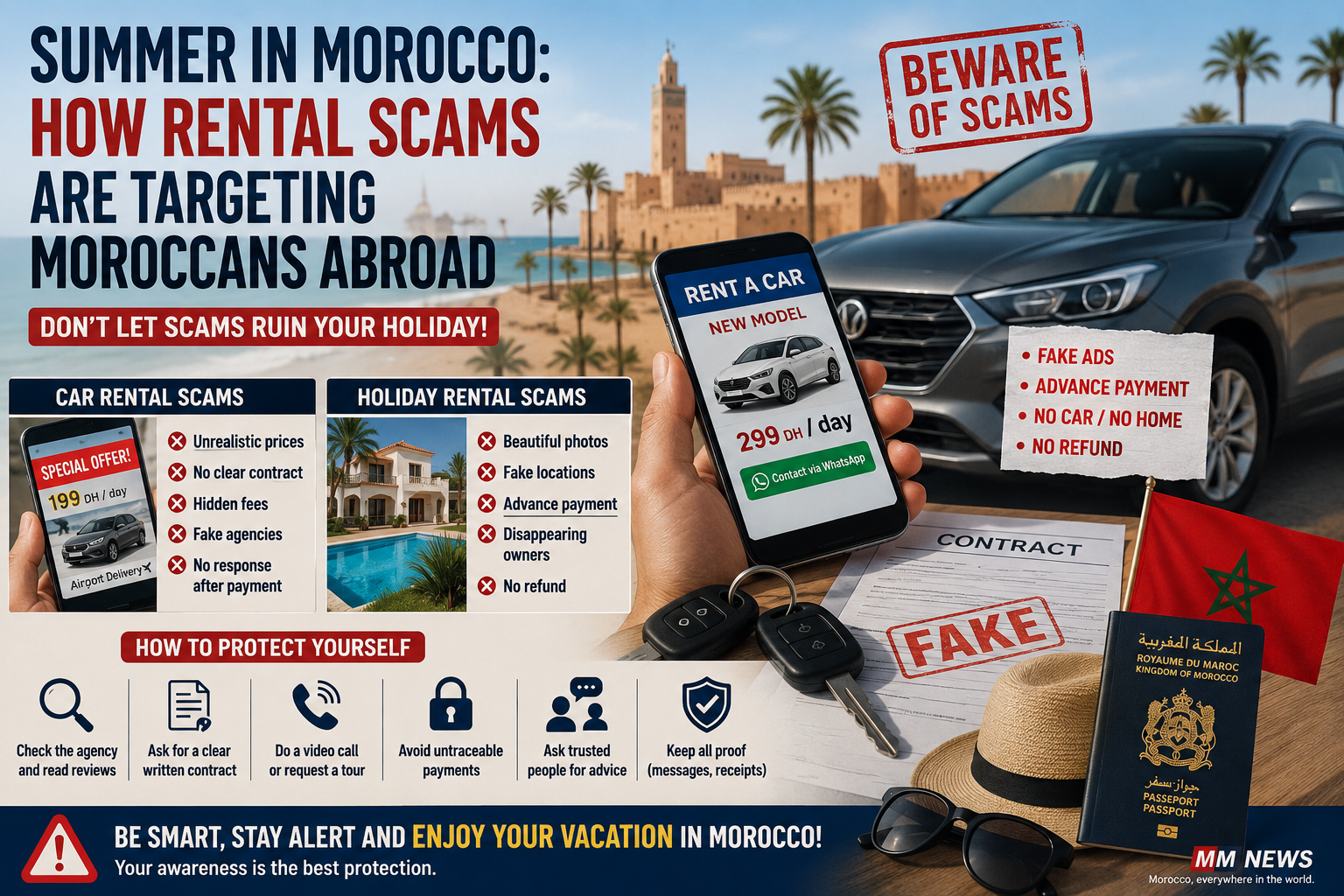
The pattern is often the same. An attractive ad appears on social media, with beautiful photos, a tempting price and reassuring messages. The customer exchanges details through WhatsApp, sends a deposit, and sometimes receives a fake contract or vague confirmation. Then, upon arrival, the car does not exist, the apartment is already occupied, the address is fake, or the so-called owner simply disappears.
Car Rentals: A High-Season Trap
During the summer, demand for rental cars in Morocco rises sharply. Many families arriving by plane or ferry need a vehicle immediately to visit relatives, move between cities and enjoy their holiday. Fraudsters know this very well.
Some ads promise recent cars at unusually low prices, with no clear conditions, no serious contract and airport delivery included. But when the customer arrives, there is no car and no contact person. In other cases, the vehicle exists, but the conditions suddenly change: excessive deposit, hidden fees, unclear insurance, disputes over the vehicle’s condition or unfair deductions after return.
This does not mean the whole sector is unsafe. Many professional agencies work seriously. The problem comes from anonymous pages, informal intermediaries and unverified online ads that exploit distance and urgency.
Fake Holiday Rentals: Another Common Scam
Cars are not the only issue. Holiday homes are also a major target. Apartments in Saïdia, villas in Marrakech, houses in Agadir, studios in Tangier, residences in Martil, or rentals in Casablanca and Dakhla are often promoted heavily before summer.
The trap is simple: attractive photos, a price below the market, pressure to book quickly and a request for an advance payment. Once the money is sent, the fake owner blocks the client or invents excuses. Some families arrive at the location only to discover that the property belongs to someone else, was never for rent, or has been rented to several people at the same time.
For Moroccans abroad, these scams are especially painful. The summer trip is often planned for months. Families arrive with children, luggage and expectations, only to face stress and confusion at the start of their holiday.
Why Moroccans Abroad Are Particularly Exposed
Moroccans living abroad are often targeted because they book from a distance. They may not always know current local prices, especially if they only visit Morocco once a year. Fraudsters also play on urgency: “only one car left,” “the apartment is in high demand,” or “send the deposit today.”
There is also an emotional factor. Many families want to organize the perfect holiday for their children and relatives. They want everything ready before arrival. Scammers exploit exactly that desire for peace of mind.
Social media has made the problem easier. A page can look professional, with a logo, photos and fake reviews, while behind it there may be no real agency, no legal registration and no physical address.
Warning Signs to Watch For
An offer that looks too good to be true should immediately raise caution. A very low price, urgent deposit request, refusal to make a video call, no clear contract, payment to a personal account, a recently created page or photos that look copied from the internet are all red flags.
For car rentals, customers should ask about insurance, deposit, mileage, vehicle condition, delivery location, extra fees, agency identity and legal documents. For accommodation, they should verify the address, ask for a recent video of the property, confirm the identity of the owner or agency, and avoid untraceable payments.
The rule is simple: the more pressure there is to pay quickly, the more important it is to slow down.
How Families Can Protect Themselves
Before sending any money, Moroccans abroad should compare several offers, check the existence of the agency, read reliable reviews, request a written contract and keep all evidence: messages, receipts, phone numbers, names, bank details and screenshots.
It is safer to use known agencies, trusted platforms or recommendations verified by relatives in Morocco. When possible, a family member on the ground should visit the property or confirm the agency before payment.
In case of fraud, victims should act quickly: keep all proof, file a complaint, report the page or ad, and warn others to prevent more families from falling into the same trap.
A Threat to Family Tourism and Trust
These practices damage more than individual holidays. They hurt families, serious professionals and the image of tourism in Morocco. For Moroccans abroad, holidays in the country should be a time of joy, not suspicion or anxiety.
That is why stronger awareness, better monitoring of illegal ads, and more visibility for transparent professionals are needed. Authorities, platforms, agencies and diaspora associations all have a role to play in reducing this problem.
Protecting the Joy of Returning Home
For Moroccans abroad, summer in Morocco is not just a trip. It is a return to roots, family and memory. But with the rise of car rental scams and fake holiday accommodation offers, caution has become essential.
Booking early, checking who you are dealing with, refusing pressure and choosing identifiable professionals can prevent serious financial and emotional damage.
Morocco remains a destination of the heart for its diaspora. Protecting that trust is a shared responsibility, because every scam does not only steal money. It steals part of the joy of coming home.

💬 Comments (0)
No comments yet. Be the first!
✏️ Leave a comment