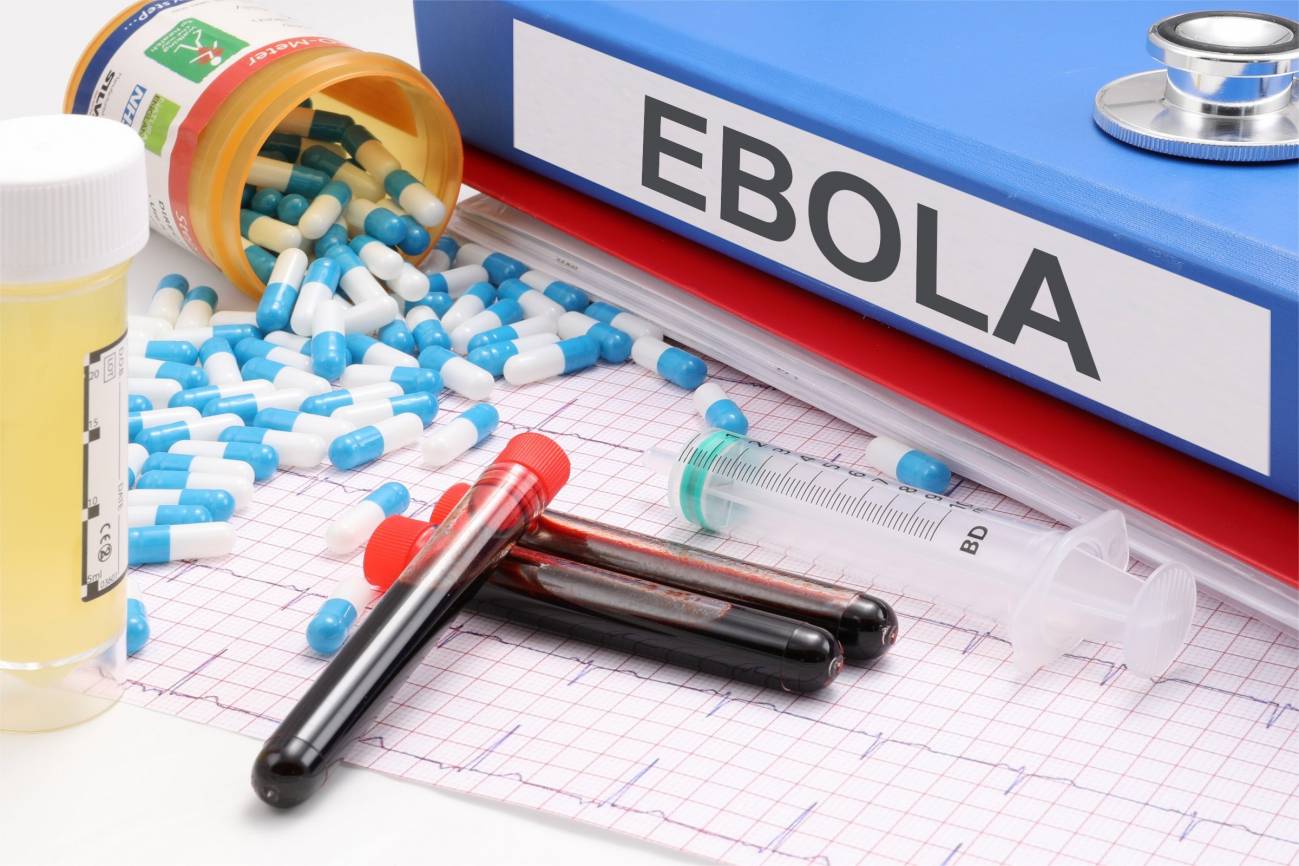
On 17 May 2026, the WHO determined that the Ebola disease outbreak caused by Bundibugyo virus in the Democratic Republic of the Congo and Uganda constitutes a Public Health Emergency of International Concern. The same statement made an important distinction: this is not considered a pandemic emergency under the International Health Regulations. In plain terms, this is a serious international health alert, not a signal for global panic.
A crisis emerging from a fragile geography
The centre of concern lies in Ituri province, in eastern DRC, a region where insecurity, population movement and limited health infrastructure make outbreak control particularly difficult. According to WHO information, as of 16 May 2026, there were 8 laboratory-confirmed cases, 246 suspected cases and 80 suspected deaths in Ituri. Two confirmed cases with travel history from DRC were also reported in Uganda.
These numbers should be understood carefully. Early outbreak figures are often incomplete. Some patients may die before reaching health facilities; others may not be tested; and community transmission can remain partially invisible until investigation teams reach the ground. In that sense, the official figures are not only a medical count — they are also a measure of what the surveillance system has been able to see so far.
Bundibugyo: a rare strain with fewer medical tools
The word “Ebola” often creates the impression of a single disease. In reality, Ebola disease can be caused by different ebolaviruses, and not all are covered by the same vaccines or treatments.
The current outbreak is linked to Bundibugyo virus, a rarer strain. WHO notes that while licensed vaccines and therapeutics exist for Ebola virus disease caused by some ebolaviruses, there is currently no approved vaccine or specific treatment for other Ebola diseases such as Bundibugyo virus disease, although candidate products are in development.
This matters because the first line of defence becomes even more dependent on classical public health measures: early detection, isolation, contact tracing, safe care, infection prevention and community trust.
Why the WHO escalated the alert
A Public Health Emergency of International Concern is not a symbolic label. It is a formal warning that an event may pose a risk beyond national borders and that coordinated international action is required.
Three factors appear central.
First, the scale and uncertainty of the outbreak. The number of suspected cases and suspected deaths suggests that transmission may be wider than confirmed laboratory data alone can show.
Second, the cross-border dimension. Cases reported in Uganda demonstrate that the outbreak is not only a local event inside DRC. Reuters reported that cases had reached Uganda’s capital Kampala, underlining the importance of urban surveillance and travel-linked monitoring.
Third, the wider regional context. Ituri is not an isolated island. It is part of a landscape of trade routes, family movement, informal crossings and health systems under pressure. In such an environment, outbreak response is never only medical. It is logistical, social and political.
Borders: the illusion of simple answers
Whenever an outbreak becomes international, the demand for border closures emerges quickly. It offers a visible response, but not always an effective one.
WHO has advised against general border closures and broad travel or trade restrictions. Such measures can create the appearance of control while pushing people toward informal, unmonitored crossings. The more useful approach is targeted: isolating cases, monitoring contacts, screening at relevant exit points, protecting health workers and communicating clearly with affected communities.
For Moroccans abroad, this distinction is crucial. An international health emergency does not automatically mean closed airports, cancelled travel or a return to pandemic-style restrictions. It means health authorities must coordinate before the situation grows harder to contain.
What the Moroccan diaspora should understand
For Moroccans living in Europe, North America, the Gulf, Africa or elsewhere, the immediate message is not panic. The European Centre for Disease Prevention and Control stated that, while the situation is evolving and uncertainty remains, the likelihood of infection for people living in the EU/EEA is currently considered very low.
But low risk does not mean zero attention. Diaspora communities are highly connected: they travel, maintain family links across continents, work in international environments and share information rapidly through social media. In such contexts, misinformation can move faster than official guidance.
The practical advice is simple: follow official health sources, check national travel recommendations, avoid forwarding unverified messages, and distinguish between a serious regional outbreak and a global panic narrative.
How Ebola actually spreads
Ebola does not spread like influenza or COVID-19. Human-to-human transmission usually occurs through direct contact with the blood or bodily fluids of an infected person, contaminated materials, or the body of someone who died from the disease. The incubation period typically ranges from 2 to 21 days, which is why contact monitoring for three weeks is a central part of outbreak control.
This does not make Ebola less dangerous. It means the danger is specific and the response must be precise. Fear is not a public health strategy; early identification, isolation, protective equipment, safe burials and community engagement are.
A health crisis that reveals global inequalities
The outbreak also raises a broader question: why do some regions repeatedly face severe epidemics with limited medical tools and fragile response capacity?
The absence of an approved vaccine or specific treatment for Bundibugyo virus disease is not merely a scientific fact. It also reflects global research priorities, financing gaps and unequal access to outbreak preparedness. When an epidemic occurs in a conflict-affected or under-resourced region, every stage becomes harder: testing, transport, treatment, communication and trust.
In this sense, Ebola Bundibugyo is not only an African health story. It is a reminder that global health security is only as strong as its weakest surveillance systems.
The MMNEWS reading: vigilance without alarmism
For MMNEWS, the editorial responsibility is clear: inform the Moroccan diaspora without dramatizing the situation.
This outbreak is serious. It deserves international coordination. It requires careful monitoring, especially in affected regions and among travellers with direct exposure risk. But it does not justify panic among Moroccans abroad or the spread of speculative claims.
The right posture is vigilance: understand the facts, follow the WHO and national health authorities, and resist the temptation of sensationalism.
In global health, as in geopolitics, early action is not fear — it is prevention. The WHO alert is not a declaration of helplessness. It is an attempt to prevent a dangerous outbreak from becoming a wider crisis.
💬 التعليقات (0)
لا توجد تعليقات. كن أول من يعلق!
✏️ اكتب تعليقك