Cases Are Rising, but the Numbers Need Context
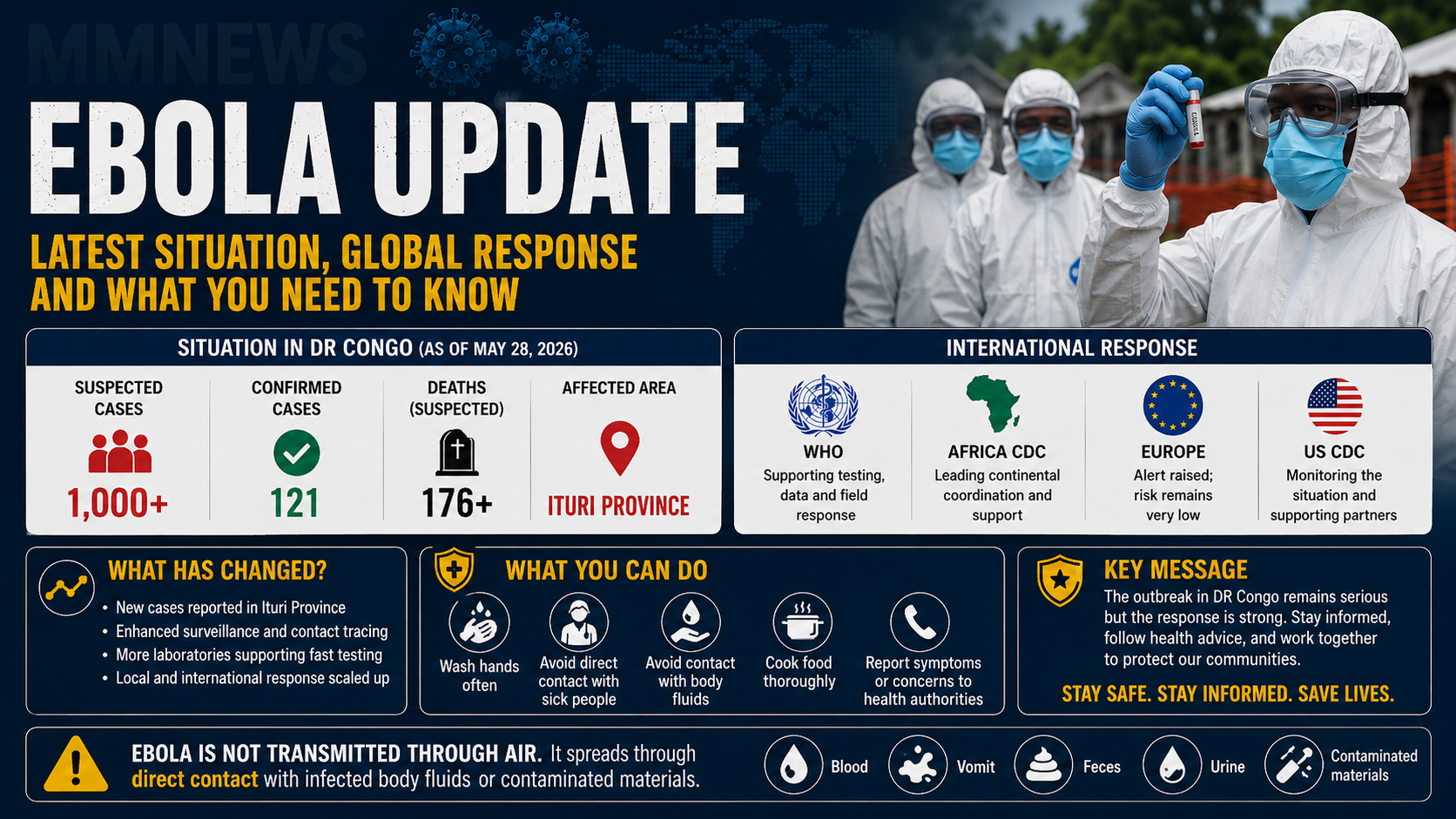
The main development over the past days has been the increase in suspected cases. Early reports mentioned hundreds of suspected infections and dozens of possible deaths. As surveillance expanded, the number rose to more than a thousand suspected cases, with a smaller number confirmed through laboratory testing.
This distinction matters.
A suspected case is not the same as a confirmed case. In outbreak response, health teams first identify people with symptoms compatible with Ebola. Those cases then require laboratory testing to confirm whether they are truly infected.
In hard-to-reach areas, numbers can rise quickly not only because the virus is spreading, but also because health workers are finding more cases, expanding testing and improving field reporting.
The Bundibugyo Strain Makes the Response More Complex
This outbreak is linked to the Bundibugyo strain of Ebola. That is medically significant because this strain does not currently have the same range of approved vaccines and specific treatments available for some other Ebola strains.
That does not mean health workers are powerless.
The response still relies on proven tools: early isolation, contact tracing, laboratory testing, protection of health workers, safe burials, community engagement and supportive care. When applied quickly and with community trust, these measures can reduce transmission.
Why Containment Is Difficult
The challenge is not only medical. It is also logistical, security-related and social.
Ituri province has faced armed violence, population displacement and limited access to health facilities. These conditions make Ebola response much harder. To control an outbreak, health teams must know who has been exposed, where they have traveled, and who needs monitoring or isolation. That becomes extremely difficult when communities are moving, roads are unsafe, and some areas are hard to reach.
Trust is another key issue. In Ebola outbreaks, fear and misinformation can delay treatment. Some patients may avoid health centers, hide symptoms or resist isolation. That is why community communication is not a secondary task. It is central to stopping the outbreak.
What Is Being Done Internationally?
The response is no longer only local. The World Health Organization is supporting Congolese health authorities by strengthening testing capacity, improving real-time data collection and helping identify confirmed cases more quickly.
Africa CDC has also stepped up continental coordination. This allows African countries, especially those neighboring the DRC, to align surveillance, preparedness, border monitoring and emergency response.
In Europe, health agencies have increased monitoring activities while stressing that the risk to the general population remains very low. In the United States, public health authorities are tracking the situation, issuing travel-related guidance where needed and supporting international partners.
These measures do not mean the outbreak has become a direct global threat. They mean health systems are trying to act early to prevent a wider regional spread.
Borders and Travel: Vigilance, Not Panic
Because the outbreak is close to Uganda, health monitoring has been reinforced in border areas. Measures may include traveler screening, health alerts, readiness teams and improved reporting at crossing points.
But this should not be confused with global panic.
Ebola does not spread through the air like influenza or COVID-19. It spreads mainly through direct contact with the bodily fluids of a person who is sick or has died from the disease, or through contaminated objects.
That means the highest risk is for people in affected areas, health workers, family members caring for patients and communities with direct exposure. The risk to the general public in countries far from the outbreak remains low.
Global Risk Is Limited, Regional Vigilance Is High
This is the reassuring part of the update: Ebola is a dangerous disease, but it does not spread easily without direct contact.
That said, it must never be underestimated. Ebola can be deadly, and health facilities can become transmission points if protective measures are not followed. Family care, funerals and delayed reporting can also amplify transmission.
The current situation can therefore be summarized simply: regional risk is high, but the wider global risk remains limited as long as surveillance and response systems continue to function.
What to Watch in the Coming Days
Three indicators will be important.
First, the number of laboratory-confirmed cases, because that gives a clearer picture than suspected cases alone.
Second, the situation along the Uganda-DRC border, where population movement could complicate response efforts.
Third, the ability of health teams to reach affected areas, protect medical staff and build trust with local communities.
Funding will also matter. A strong Ebola response requires protective equipment, testing capacity, isolation centers, trained teams, transport, communication and community outreach. Delays in funding can slow down containment.
What Readers Should Know
First, Ebola is serious, but it is not unknown. Health systems have experience dealing with Ebola outbreaks.
Second, Ebola does not spread through casual contact in the same way as airborne respiratory viruses.
Third, misinformation can be dangerous. False claims about Ebola may cause fear, delay care or undermine health workers.
Fourth, the best way to follow the situation is to rely on official sources such as the World Health Organization, Africa CDC and health ministries in affected countries.
MM News Bottom Line: Serious, but Not a Reason to Panic
The Ebola outbreak in the DRC is evolving and must be taken seriously. Rising suspected cases, insecurity in Ituri, the Bundibugyo strain and regional risks involving Uganda justify strong international attention.
But there is currently no reason for global panic. Ebola is dangerous, but it does not spread as easily as respiratory viruses, and proven containment methods exist.
For MM News readers, the right approach is simple: stay informed, avoid rumors, follow official guidance and take the situation seriously without fear-driven reactions.
In the fight against Ebola, as in the fight against misinformation, the best protection remains the same: verified facts, responsible communication and solidarity with affected communities.
💬 التعليقات (0)
لا توجد تعليقات. كن أول من يعلق!
✏️ اكتب تعليقك