But this system, which may appear stable from the outside, is now facing a new challenge. The strengthening of regulatory requirements in the European Union is putting growing pressure on the subsidiaries of Moroccan banks operating in Europe. In simple terms, European rules are becoming stricter, more complex and more costly, forcing Moroccan banking institutions to adapt if they want to continue facilitating money transfers from Moroccans abroad to Morocco.
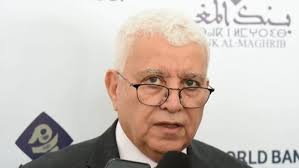
This concern was raised by Abderrahim Bouazza, Director General of Bank Al-Maghrib, during a meeting in Rabat marking the International Day of Family Remittances. The issue is sensitive because it affects a financial and human channel linking millions of Moroccans abroad to their families back home.
European Rules Are Changing the Equation
For several years, the European Union has been strengthening its financial control framework, particularly in areas such as compliance, anti-money laundering, monitoring of financial flows and banking governance requirements. In principle, these objectives are understandable and legitimate. In practice, however, they can make the work of institutions serving migrant communities more difficult.
Moroccan bank subsidiaries in Europe now stand between two pressures. On one side, they must comply with stricter European regulations. On the other, they must continue offering accessible and familiar services to Moroccans abroad, many of whom rely on these banking networks to send money to their families in Morocco.
The risk is not theoretical. If these activities become too costly or too complicated to maintain, remittances may shift toward other channels, potentially more expensive, less suitable or less transparent. For families, that could mean higher fees, longer delays and more uncertainty.
France as a Possible Model of Compromise
In this context, the support of French authorities for maintaining the intermediation activities of Moroccan bank subsidiaries is significant. Through an adaptation of the legal framework, these subsidiaries have been able to continue operating — an important point in a country that hosts one of the largest Moroccan communities in Europe.
This example shows that financial regulation is never purely technical. It can protect the system, but it can also push certain communities away from banking services. It can secure financial flows, but it can also complicate access for diasporas. The way rules are applied, adapted and negotiated therefore matters greatly.
For Morocco, the issue is no longer only financial. It is also diplomatic. Defending these services in Europe means defending the right of Moroccans abroad to secure, clear and appropriate transfer channels.
A More Diversified Moroccan Financial Ecosystem
The paradox is that Morocco has not stood still. Over the past years, its financial ecosystem has become more diverse. Alongside traditional banks, the country now has payment institutions, microfinance institutions, crowdfunding platforms and public loan guarantee mechanisms.
This evolution matters. It reflects an attempt to modernize financial circuits, reach wider segments of the population and bring financing closer to the real economy.
Yet diversification does not solve everything. Financial inclusion remains uneven, particularly between urban and rural areas, between young people and adults, and between banked households and those still far from formal financial services. Morocco is moving forward, but not at the same speed everywhere.
The Big Paradox: Large Flows, Limited Productive Investment
The central question remains: where do remittances from Moroccans abroad actually go?
According to figures cited by Abderrahim Bouazza from a survey by Morocco’s High Commission for Planning, 87% of these funds are used for households’ current consumption.
That figure says a great deal. First, it confirms the vital social role of remittances. They help cover daily expenses, healthcare, education, bills, home repairs and emergency needs. In many cases, they prevent families from falling into hardship.
But it also reveals a structural limitation: only a small share of these funds is transformed into productive investment, businesses, sustainable jobs, local projects or long-term economic activity. Morocco receives significant remittance flows, but it has not yet succeeded in channeling enough of them toward production.
The responsibility should not be placed on Moroccans abroad alone. Many of them do want to invest in Morocco. But investment requires clear procedures, reliable contacts, secure land access, financing options, legal guarantees and the ability to follow a project from abroad. For a Moroccan living in Paris, Brussels, Amsterdam, Montreal or Milan, the desire to invest can quickly become an administrative obstacle course.
Administration, Business Climate and the Need for Clearer Incentives
The obstacles are well known: complex administrative procedures, constraints linked to the business environment and incentives that are not always clear enough for diaspora investors.
These may sound like technical terms, but behind them lie very concrete questions. A Moroccan abroad who wants to launch an agricultural project, a small industrial unit, a tourism initiative, a service company or a business in their region of origin needs clarity. Who should they contact? How long will authorization take? What documents are needed? What financing is available? What tax rules apply? What protection exists in case of dispute?
As long as these questions remain unclear, money will naturally go toward what is immediate and safe: family support, consumption, real estate and summer return expenses. That is not irrational. It is understandable.
Can Recent Reforms Change the Direction?
Bank Al-Maghrib believes that reforms launched in recent years can create a more favorable environment. The new Investment Charter, the Charter for Very Small Enterprises and the expansion of social protection may help redirect a greater share of remittances toward investment and job creation.
But a reform does not work simply because it exists. It must be explained, simplified and translated into procedures that are understandable for citizens living outside the country.
Moroccans abroad do not need only legal texts. They need clear contact points, accessible platforms, known deadlines, real follow-up and legal security. In one word, they need trust.
This is especially important in rural areas. If part of diaspora remittances could be better directed toward productive local projects, they could help create jobs, support cooperatives, develop agricultural and tourism value chains, and reduce youth migration toward cities or abroad.
The Real Challenge: Turning Attachment Into Projects
Morocco has a precious asset: a diaspora deeply attached to the country. But attachment alone is not enough. It must be supported, protected and transformed into projects.
A Moroccan abroad who sends money to family is already playing a major economic and social role. But a Moroccan abroad who invests in a company, a cooperative, a farm, a tourism project or a start-up becomes a direct actor in development.
The shift from one role to the other cannot be achieved through slogans. It requires a clear strategy: lower transfer costs, preserve banking channels in Europe, simplify investment procedures, improve access to information, protect investors and stop looking at the diaspora only as a source of foreign currency.
Remittances at a Moment of Choice
The tightening of European regulations reminds us of a simple truth: remittances from Moroccans abroad do not depend only on family loyalty or emotional attachment to the country. They also depend on international rules, banks, legal agreements, costs, trust and public policy.
Morocco must therefore act on two fronts. Abroad, it must defend the continuity of financial services dedicated to its diaspora. At home, it must gradually turn a larger share of remittances into a lever for development, without forgetting their essential social function.
Behind every transfer, there is a family story. But behind the billions of dirhams sent to Morocco every year, there is also a national question: how can the country move from an economy of family support to an economy of projects?
Moroccans abroad have already proven their loyalty. What Morocco now needs is to build the mechanisms that allow that loyalty to become, even more, a productive force for families, regions and the national economy.



💬 التعليقات (0)
لا توجد تعليقات. كن أول من يعلق!
✏️ اكتب تعليقك